


India Moves Closer To A Future Where It Can Power Itself Using Its Own Resources
The CSR Journal Magazine

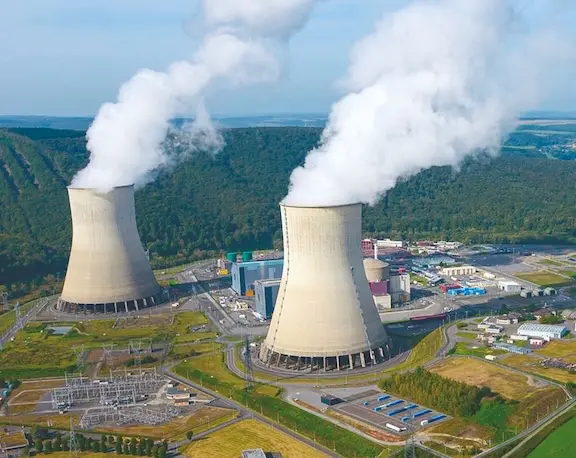
India has made a notable advancement in its nuclear energy capabilities with the successful attainment of criticality in the Prototype Fast Breeder Reactor (PFBR) located in Kalpakkam, Tamil Nadu. This achievement occurred on April 6, 2026, marking a vital step forward in the country’s ongoing nuclear programme. Criticality refers to the state in which a nuclear reactor’s chain reaction becomes self-sustaining, indicating that the reactor can maintain a consistent level of energy production.

Prime Minister Narendra Modi publicly acknowledged this landmark occasion, referring to it as a defining step in India’s journey towards harnessing its extensive thorium resources. The PFBR is designed to enhance India’s energy independence and facilitates a more sustainable nuclear fuel cycle.

Unique Features of the PFBR

The PFBR operates with a capacity of 500 megawatts electric (MWe), providing enough electricity for approximately four to five lakh homes. Distinct from traditional reactors, which utilise water for cooling, this reactor employs liquid sodium. The choice of sodium allows for more efficient heat transfer and prevents the slowing of fast-moving neutrons, which are crucial for the reactor’s operation.

This reactor utilises Mixed Oxide (MOX) fuel, created by blending uranium and plutonium oxides. The plutonium used comes from the spent fuel of existing Indian reactors, while surrounding the core is a blanket of uranium-238, which is typically non-reactive. The reactor’s neutron bombardment converts this uranium-238 into fresh plutonium, thus enabling it to produce more fuel than it consumes. Such capability is characteristic of breeder reactors, of which India will be the second country to possess a commercially operational example, after Russia.

The design and construction of the PFBR have been conducted entirely within India, thanks to the Indira Gandhi Centre for Atomic Research (IGCAR) and contributions from over 200 domestic industries, including small and medium enterprises.

Understanding Criticality in Nuclear Reactors

Criticality plays a crucial role in the operation of a nuclear reactor. It is the precise condition where the chain reaction maintains a balance, with each fission event effectively generating enough neutrons to trigger further reactions. This consistent stability is essential for the reactor to function without escalating uncontrollably or extinguishing.

Obtaining criticality is a preliminary achievement that differs from the actual generation of electricity. Following this milestone, a series of low-power experiments will be carried out to further evaluate the reactor’s dynamics prior to connecting it to the electrical grid.

Long-term Vision for Nuclear Power in India

The foundation of India’s nuclear energy strategy was envisioned by physicist Homi Bhabha in the 1950s, aiming to secure energy independence through the utilisation of the nation’s uranium and thorium reserves, primarily found in the monazite-rich sands along the southern coastline. The nuclear programme comprises three stages, with the PFBR representing the second phase that utilises plutonium created from the first stage reactors.

India possesses approximately 25 per cent of the world’s known thorium reserves, making it a crucial resource for the country’s future energy needs. Although thorium-232 requires conversion to uranium-233 through neutron bombardment, the PFBR is specifically designed to facilitate this process.

As the Indian nuclear energy mission targets an ambitious 100 gigawatts (GW) of capacity, plans for additional fast breeder reactors at Kalpakkam are in the pipeline following successful operations of the PFBR. This milestone represents a significant achievement in a 70-year vision, advancing steadily towards realising India’s energy potential.

Long or Short, get news the way you like. No ads. No redirections. Download Newspin and Stay Alert, The CSR Journal Mobile app, for fast, crisp, clean updates!

App Store –  https://apps.apple.com/in/app/newspin/id6746449540 

Google Play Store – https://play.google.com/store/apps/details?id=com.inventifweb.newspin&pcampaignid=web_share

Latest News

Popular Videos
