


U.S.–Israel Efforts Struggle to Break Iran’s Resilience Amid Ongoing Conflict
The CSR Journal Magazine

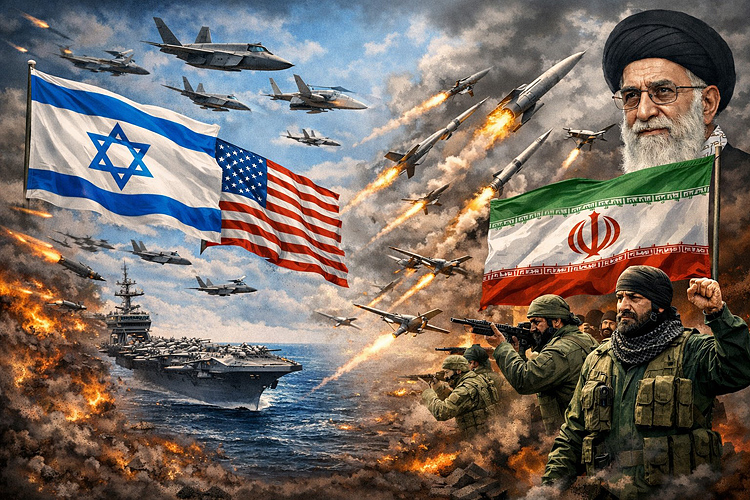
Waiel Awwad, a foreign expert and journalist specializing in South and West Asian affairs, stated that efforts by the United States and Israel to destabilize Iran have not succeeded, despite targeted assassinations of key figures and infrastructure damage. Awwad emphasized that the situation in Iran remains resilient against external pressures, noting that since the onset of the ongoing conflict, the US has enacted strict economic sanctions against the nation, attempting to incite internal discord.

According to Awwad, the current military strategies employed by the US and Israel are indicative of their desperation to achieve strategic advantages. He commented on the maritime security landscape, explaining that any vessel departing from a country aligned with the US will now require explicit permission from Iran to navigate through the strategic Strait of Hormuz. This highlights Iran’s significant control over critical maritime routes amidst ongoing tensions.

Further elaborating on the actions taken against Iran, Awwad pointed out that the recent assaults have seen attacks on civilian infrastructure, including educational institutions. He described this as part of a broader attempt to weaken the Iranian government through sustained military and economic pressure. Despite these efforts, he affirmed that the fundamental structure of Iran’s governance has not been compromised as intended. Awwad remarked on the long history of US sanctions against Iran, arguing that these unilateral measures have not only failed to elicit the desired outcome but have also solidified resistance within the Iranian populace.

Iran Considers Escalation of Maritime Strategies

In response to the escalating maritime tensions, Iranian officials have indicated plans to exert additional pressure on adversary nations. Mohammad Bagher Ghalibaf, the Speaker of the Iranian Parliament, has alluded to the potential targeting of the Bab el-Mandeb Strait, another vital maritime chokepoint. This strategic consideration comes amidst heightened maritime security concerns and aims to leverage global supply chain vulnerabilities.

Ghalibaf posed critical questions regarding global reliance on the Bab el-Mandeb Strait, highlighting its importance for the transit of key commodities such as oil, liquefied natural gas, and food supplies. His comments underscore a strategic recalibration by Iran to capitalize on its position in global maritime logistics, suggesting that Tehran is weighing the impacts of increased control over this pivotal route.

Overview of Recent Conflicts

The conflict involving Iran escalated dramatically on February 28, when US and Israeli military operations resulted in the death of Supreme Leader Ayatollah Ali Khamenei. This assassination was seen as a significant turning point. In retaliation, Iranian military forces reportedly achieved a notable victory by downing a US F-15E Strike Eagle fighter jet, reflecting the ongoing hostilities between the nations.

In a recent development, US forces were able to recover a crew member involved in the incident, showcasing the complexities of the military engagement currently underway. The continued cycle of attacks and retaliatory actions further demonstrates the fragile state of geopolitical relations in the region, as both sides reassess their strategies amidst a backdrop of escalating violence and turbulence.

Long or Short, get news the way you like. No ads. No redirections. Download Newspin and Stay Alert, The CSR Journal Mobile app, for fast, crisp, clean updates!

App Store –  https://apps.apple.com/in/app/newspin/id6746449540 

Google Play Store – https://play.google.com/store/apps/details?id=com.inventifweb.newspin&pcampaignid=web_share

Latest News

Popular Videos
