


Race to the Moon: China Plans First Human Landing by 2030 with Lanyue Lander
The CSR Journal Magazine

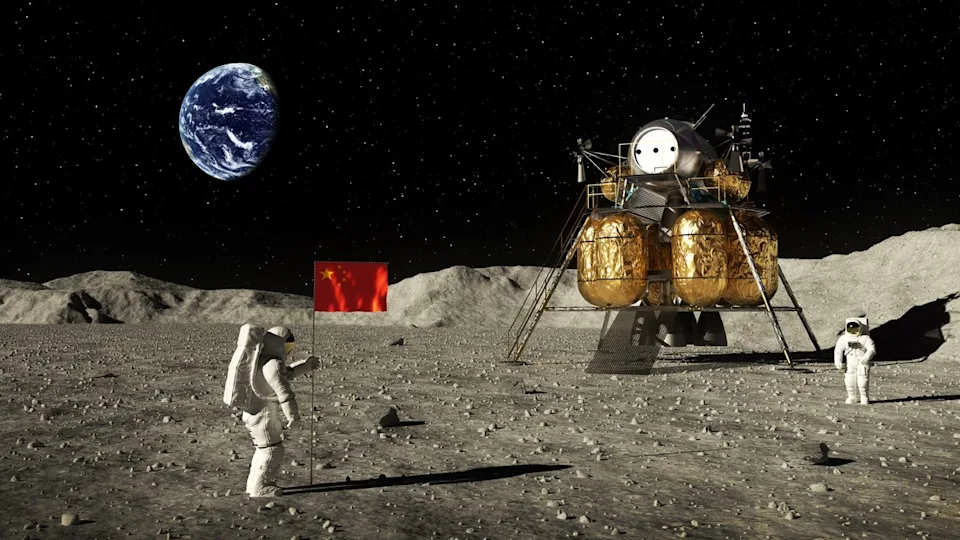
China is setting its sights on achieving its first crewed lunar landing by 2030. To facilitate this goal, the country is developing advanced space technology, including the Long March 10 heavy-lift rocket, which will support the Mengzhou spacecraft’s journey to orbit.

This upcoming mission is distinct from previous robotic missions, incorporating a specialized lander named Lanyue, which translates to ‘Embrace the Moon’. This lander is designed to create a bridge between lunar orbit and the Moon’s surface, functioning as both a home for astronauts and a power station during their lunar expeditions.

Testing and Development of Lunar Hardware

China has initiated extensive testing of its hardware aimed at lunar exploration. Engineers successfully verified the ascent and descent systems of the Lanyue lander in August at a test facility in Hebei province. This facility has been equipped to simulate lunar conditions, including rocks, craters, and a surface coating that mimics lunar soil’s reflective properties.

These simulations are essential for evaluating navigation and communication systems, ensuring they can endure the severe conditions of the lunar South Pole. As preparations advance, China’s timeline for the 2030 lunar mission remains aggressive, with NASA’s Artemis II mission also targeting the Moon.

The ongoing rivalry in lunar exploration is intensifying, especially concerning the ambition to establish a permanent base on the Moon’s South Pole. The development of reliable systems is crucial for both missions as they aim for long-term human presence on the lunar surface.

Operation Details for Astronauts

The astronauts participating in China’s lunar mission will be equipped with custom-designed spacesuits and will use crewed rovers for surface navigation. This mission extends beyond mere exploration; it aims to create a functional lunar base.

The Lanyue lander is designed not only as a data centre but also as a source of power, supporting prolonged astronaut stays on the Moon. This initiative is being integrated with remote sensing satellites to provide the necessary navigation tools for a safe landing and return.

Future Lunar Endeavours Beyond 2030

The lunar landing planned for 2030 is positioned as a critical step towards the development of the International Lunar Research Station. In partnership with Russia, China hopes to establish a basic model of this station by 2035, which may later include a nuclear reactor aimed at generating consistent power.

Looking further ahead, by 2045, plans are in place for a lunar orbital station that will facilitate resource exploitation and also serve as a launching point for future missions to Mars. This extensive vision demonstrates China’s commitment to advancing its space exploration capabilities over the coming decades.

Robotic missions play an essential role in gathering data necessary for the crewed lunar programme. The successful Chang’e-6 mission in June 2024 marked a historic achievement, retrieving samples from the Moon’s far side. Upcoming missions, Chang’e-7 and Chang’e-8, aim to explore the South Pole-Aitken basin to identify vital resources such as water ice, crucial for future human endeavours on the lunar surface.

Long or Short, get news the way you like. No ads. No redirections. Download Newspin and Stay Alert, The CSR Journal Mobile app, for fast, crisp, clean updates!

App Store –  https://apps.apple.com/in/app/newspin/id6746449540 

Google Play Store – https://play.google.com/store/apps/details?id=com.inventifweb.newspin&pcampaignid=web_share

Latest News

Popular Videos
