


Historical Significance of Rakesh Sharma’s Space Mission
The CSR Journal Magazine

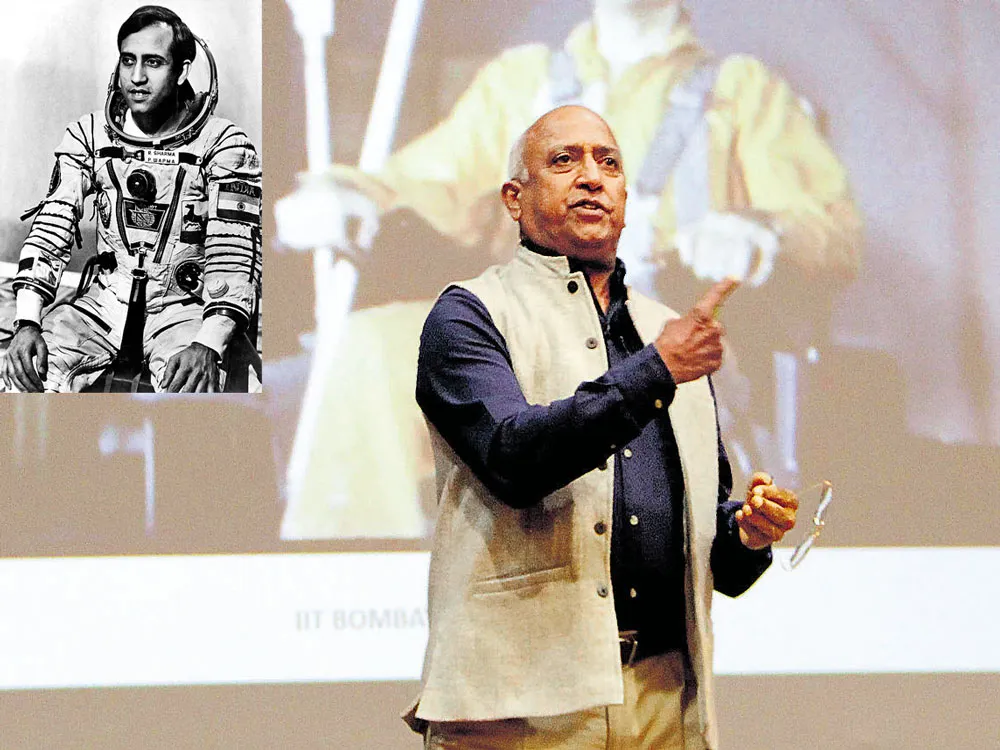
The Indian Space Research Organisation (ISRO) is poised to launch Indian astronauts into space on an indigenous spacecraft. However, the roots of Indian human spaceflight extend back many decades. On April 3, 1984, Indian Air Force pilot Rakesh Sharma made history by becoming the first Indian to travel into space when he lifted off aboard the Soviet spacecraft Soyuz T-11 from Baikonur Cosmodrome.

This mission, conducted under the Soviet Union’s Intercosmos programme, was not only a scientific achievement but also a diplomatic milestone amidst the tensions of the Cold War. The collaboration between India and the USSR enabled a developing nation to engage in significant advancements in human spaceflight before establishing its independent capabilities.

Rakesh Sharma’s Preparations and Flight

Rakesh Sharma was a wing commander and test pilot chosen from a select group of Indian Air Force aviators. His preparation involved extensive training at Star City near Moscow, where he underwent rigorous physical conditioning, learned Russian, and adapted to zero gravity while mastering the spacecraft’s systems. This intense training was crucial for the success of the mission.

One of the most memorable moments occurred during a live conversation with then Prime Minister Indira Gandhi. When asked how India appeared from space, Sharma’s iconic response, “Saare Jahan Se Achha,” reflected the sentiments of millions back home, cementing his place in India’s space history.

During his nearly eight-day tenure aboard the Salyut 7 space station, Sharma undertook various scientific and biomedical experiments, examining the effects of microgravity on the human body and capturing remote sensing images of India. This data later contributed significantly to resource mapping efforts.

Collaboration and Legacy of the Mission

Achieving this historic spaceflight required effective coordination between Indian and Soviet space agencies, along with meticulous mission planning. Indian scientific objectives had to be integrated within the constraints of Soviet technology, highlighting the collaborative efforts necessary for such an ambitious undertaking.

Moreover, dietary considerations were factored in, with specially prepared Indian meals being sent along to ensure the astronaut’s comfort while in orbit. Sharma’s journey served as an important inspiration to future generations of scientists and space enthusiasts in India.

Decades later, as ISRO gears up for its own human spaceflight missions, the legacy of Rakesh Sharma’s expedition continues to be celebrated. His contributions stand as a testament to determination, collaboration, and vision in the realm of space exploration.

In 2025, India launched its first astronaut to the International Space Station, Gp Captain Shubhanshu Shukla, who undertook an 18-day mission aboard the Axiom-4 spacecraft. Shukla regards Rakesh Sharma as both his idol and mentor, having received valuable guidance from the pioneering astronaut.

Long or Short, get news the way you like. No ads. No redirections. Download Newspin and Stay Alert, The CSR Journal Mobile app, for fast, crisp, clean updates!

App Store –  https://apps.apple.com/in/app/newspin/id6746449540 

Google Play Store – https://play.google.com/store/apps/details?id=com.inventifweb.newspin&pcampaignid=web_share

Latest News

Popular Videos
