


Why Did Nepal PM Balen Shah Ban Student Politics? Full Reform Plan Explained
The CSR Journal Magazine

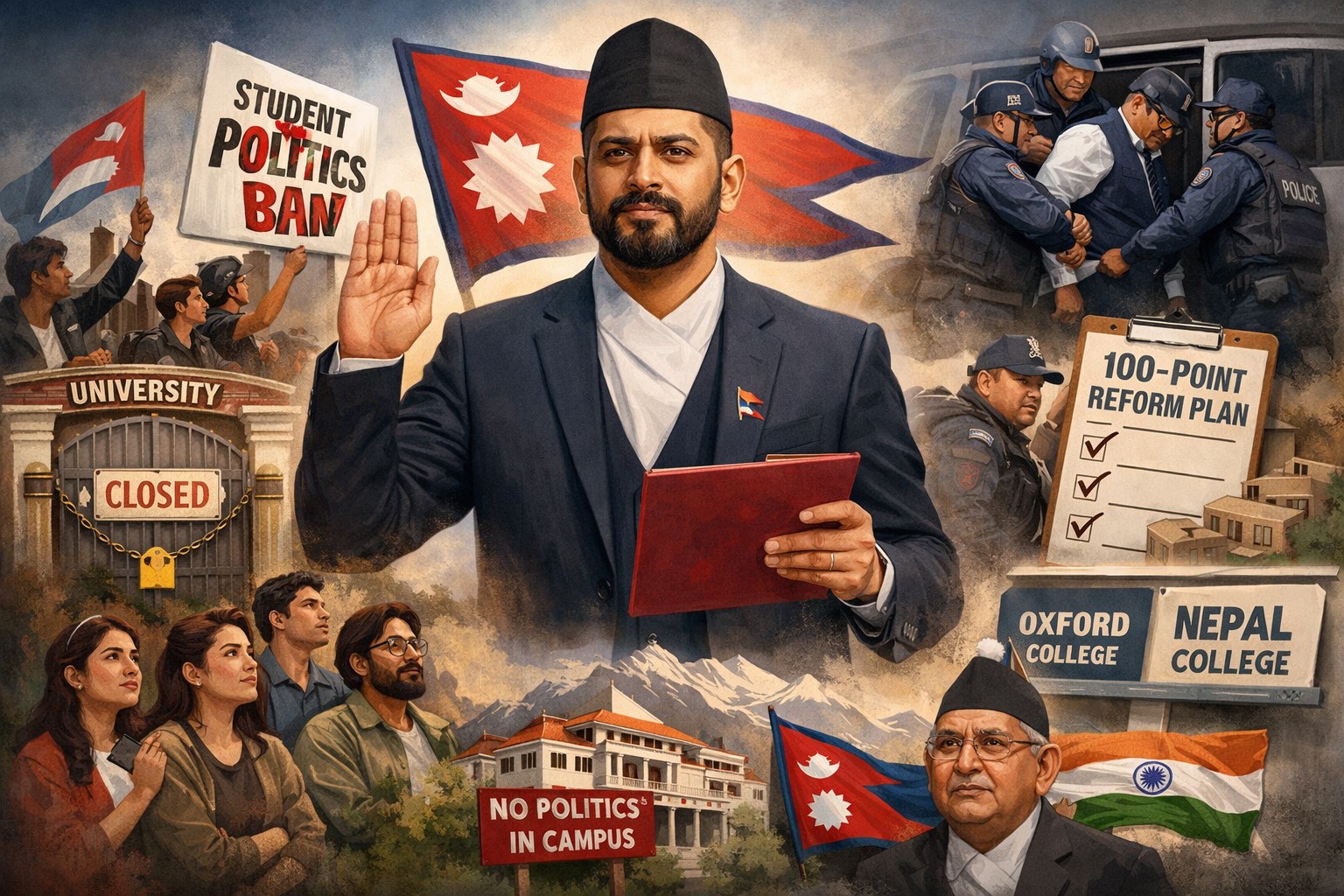
Nepal’s newly appointed Prime Minister Balendra ‘Balen’ Shah has quickly made headlines following his swearing-in. Within just 48 hours, he introduced a detailed 100-point action plan aimed at reforming government institutions. A particularly controversial move is his decision to impose a complete ban on student politics. At 35 years old, Shah has become the youngest Prime Minister in Nepal in recent history, following his Rastriya Swatantra Party’s decisive victory in the national elections held on March 5. His rise to power has ignited hopes among youth in Nepal who now expect significant changes from his administration. However, the same Gen Z voters who propelled him into office are now facing restrictions on their political expression in educational institutions.

Political Restrictions on Campuses

One of the initial actions taken by Shah’s administration was to remove political student unions from campuses. Instead, the government plans to establish non-partisan organizations such as ‘Student Council’ or ‘Voice of Students’ within a 90-day timeframe. This move seems contradictory to Shah’s past as an anti-establishment figure, especially considering that he inspired youth activism through his music. However, he maintains that educational institutions should not serve as hubs for political activity. Over the years, student factions associated with major political parties have faced accusations of violent behavior, disruption in academic settings, and misuse of authority. According to Shah, the only way to safeguard the integrity of education is to eliminate political influence from campuses. Conversely, some critics argue that this decision could hinder democratic engagement and weaken an essential arena for developing political leaders.

Changes in Bureaucratic Structure

The new Cabinet has instituted regulations that prevent civil servants and educators from being affiliated with political parties. Political trade unions within governmental organizations will also be disbanded. Supporters of Shah suggest that this approach may lead to more effective governance and reduced interference in state functions. Detractors express concern that these changes could undermine worker protections and suppress dissent within government institutions.

Education System Overhaul

Shah’s proposed reforms also delve deeply into the education sector. Notably, the government plans to eliminate citizenship requirements for undergraduate admissions and enforce mandatory academic schedules for the timely publication of exam results. Internal exams for students up to Grade 5 will be abolished starting from the next academic year, to be substituted with alternative assessment methods. In an initiative to distance institutions from colonial influences, universities that currently bear foreign names, such as Oxford and St Joseph’s, will be required to adopt original titles effective immediately.

Crackdown on Political Opponents

Simultaneously, the new government has begun taking action against political adversaries. Former Prime Minister KP Sharma Oli was detained on Saturday, just a day after the findings of an investigation into protests from the previous year were implemented. Another former Minister, Ramesh Lekhak, has also been arrested. Both individuals are facing serious allegations associated with the suppression of the September protests, which resulted in at least 77 fatalities. Initially sparked by a brief ban on social media, the protests overwhelmed the Oli administration and evolved into a broader anti-corruption movement. In a separate incident, MLA Rekha Sharma was arrested on charges of abusing a minor domestic worker, a case that had remained unaddressed under the previous government.

Promise to Victims’ Families

In an effort to solidify his reformist image, Shah has committed to providing job opportunities for the families of 27 students who lost their lives during the protests. This pledge was approved during his first Cabinet meeting and is being acted upon immediately. The Nepal Electricity Authority has begun notifying families about recruitment opportunities, allowing one eligible member per victim to secure positions within their home districts based on qualifications.

Diplomatic Engagement with India

In his initial communication with Indian Prime Minister Narendra Modi, Balen Shah expressed his eagerness to enhance ties with India. Modi congratulated Shah and emphasized the goal of elevating India-Nepal relations. Shah concurred with this sentiment, suggesting a potential reset in diplomatic relations, which have historically oscillated between cooperation and tension. As the Mayor of Kathmandu, Shah exhibited a strong nationalist stance and criticized Indian influence in Nepal, a position that had raised eyebrows in New Delhi. Although Modi’s message included an offer of collaboration, it did not extend an invitation for a visit to India, indicating that New Delhi is currently adopting a cautious, observational approach towards Shah’s administration.

Long or Short, get news the way you like. No ads. No redirections. Download Newspin and Stay Alert, The CSR Journal Mobile app, for fast, crisp, clean updates!

App Store –  https://apps.apple.com/in/app/newspin/id6746449540 

Google Play Store – https://play.google.com/store/apps/details?id=com.inventifweb.newspin&pcampaignid=web_share

Latest News

Popular Videos
