




Standing at a traffic light in any Indian city, you’ll witness a peculiar ballet: vehicles creeping forward during red signals, pedestrians weaving through moving traffic like they’re auditioning for an action film, and someone casually tossing a plastic wrapper onto the street while standing next to an empty dustbin.
Welcome to the theater of civic chaos, where the rules are made up and the civic sense doesn’t matter.
The question isn’t whether Indians lack civic sense—that’s been established every time someone parks their car blocking an entire lane.
The real question is why this deficit persists across generations, income groups, and education levels.
The answer lies deeper than simple negligence or willful ignorance. It’s woven into the fabric of how Indian society evolved, how cities were built, and how collective consciousness was shaped over millennia.
Indian social structures have historically operated on an inverse civic principle: the smaller your circle, the stronger your obligations. Family comes first, then extended family, then caste or community, and somewhere way down that list—perhaps after your neighbor’s cousin’s wedding planner—comes the abstract concept of public good.
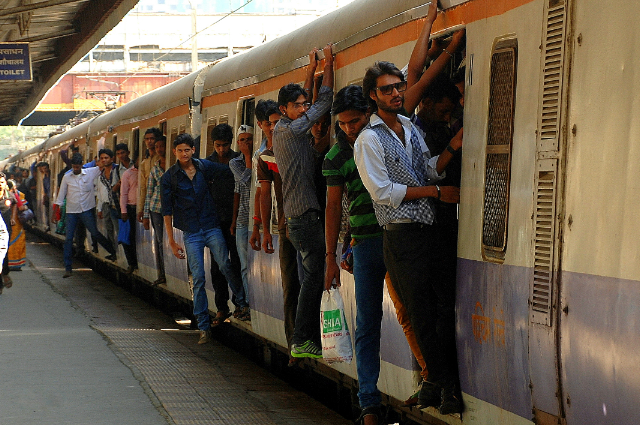
This isn’t unique to India, but what makes it particularly entrenched here is the sheer scale and persistence of these tight social networks. When your primary identity and security come from your immediate group rather than broader civic institutions, public spaces become nobody’s responsibility and everyone’s dumping ground. The street outside your house? That’s public property, which in practice means it belongs to no one, so feel free to use it as an extension of your garbage bin.
The joint family system, for all its virtues of support and solidarity, inadvertently taught generations that private space matters and shared space doesn’t. Inside the home, there’s order and cleanliness. Step outside the threshold, and suddenly littering becomes acceptable, noise pollution is a constitutional right, and traffic rules are mere suggestions for the less creative drivers.
Also Read: After IndiGo’s Debacle, Ask Yourself: “Who Really Governs India: Voters or Market Titans?”
Economic disparities compound this problem exponentially. When a significant portion of the population struggles for basic survival, civic sense becomes a luxury good. Can’t blame someone for spitting paan on the wall when they’re more concerned about whether they’ll eat that evening.
But here’s where it gets interesting: climb up the economic ladder, and you’ll find BMW drivers cutting across traffic with the same enthusiasm as auto-rickshaw drivers. Wealth doesn’t automatically purchase civic consciousness; it often just buys better-looking transgressions.
In other realm,
India’s religious landscape presents a fascinating contradiction. We have religions that emphasize dharma, karma, and righteous conduct. Religious complexes are maintained with obsessive cleanliness. People will remove their shoes before entering sacred spaces and follow strict protocols. Then these same individuals step outside and immediately forget that public roads aren’t personal toilet facilities.
The problem isn’t religion itself but how religious identity has been compartmentalized from civic identity. Spiritual pollution matters; environmental pollution is negotiable. You’ll bathe in a river to purify your soul while simultaneously contributing to the plastic waste choking that same river. The cognitive dissonance would be impressive if it weren’t so ecologically catastrophic.
Hindu philosophy speaks of vasudhaiva kutumbakam—the world is one family.
Buddhism emphasizes mindfulness of one’s actions. Islam stresses cleanliness as half of faith. Sikhism promotes selfless service. Yet somewhere between scripture and street, these principles get lost in translation. Religious festivals become exercises in public inconvenience, with loudspeakers blaring at decibel levels that would make a jet engine jealous, roads blocked without notice, and tons of waste left behind for someone else to clean. The devotion is admirable; the execution is a civic nightmare.
And,
Here’s where things get philosophically messy.
India never developed a strong tradition of individual property rights in the Western sense. Land ownership was often communal, managed by villages or allocated by rulers. Even after independence, the socialist framework reinforced collective ownership and state control rather than individual autonomy.
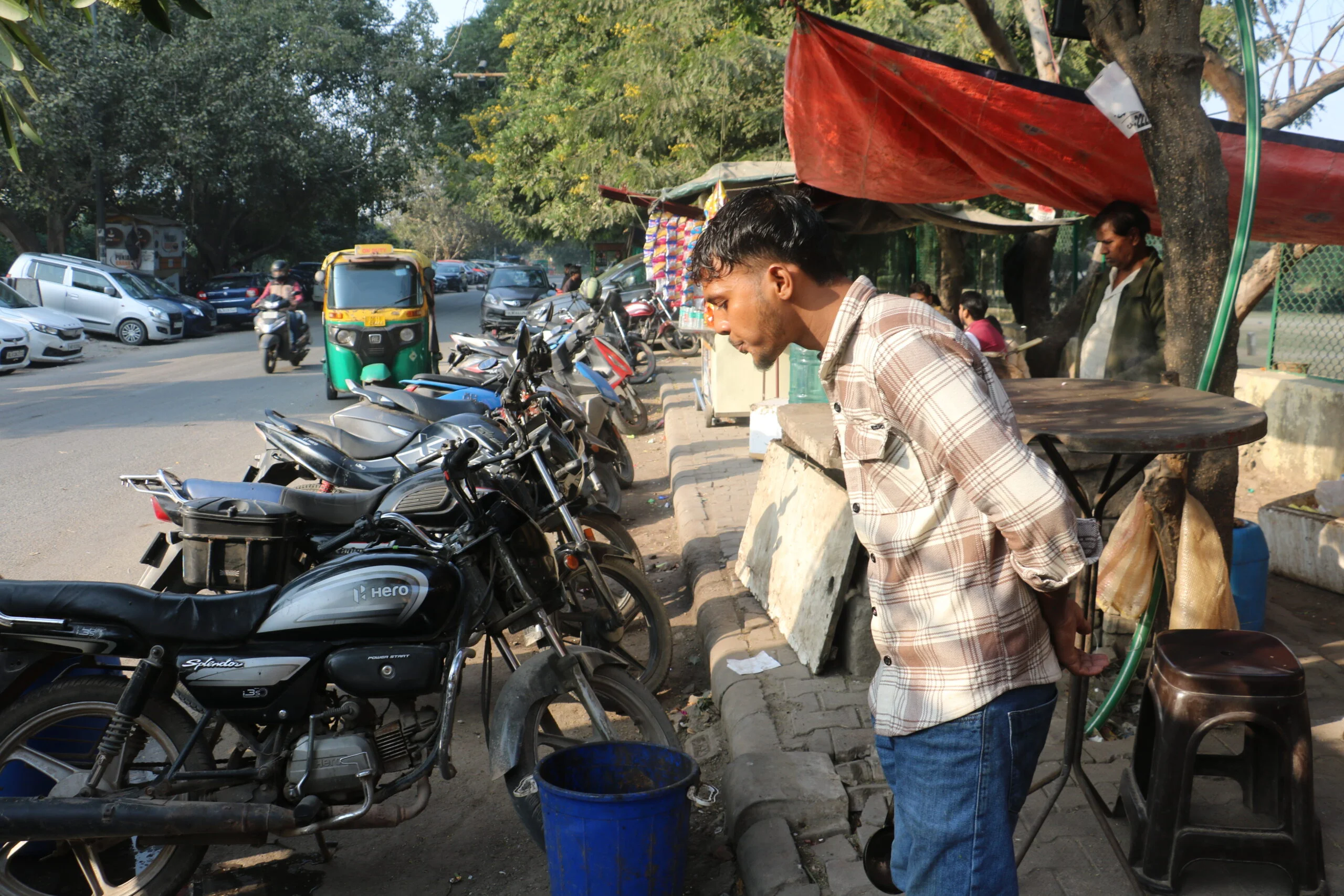
This created a peculiar relationship with public property. If nothing truly belongs to individuals in the strong sense, then nothing really belongs to everyone either. Public property becomes ‘res nullius’—a thing belonging to no one rather than ‘res communis’—a thing belonging to everyone.
The result?
Parks turn into private picnic grounds with families leaving behind enough trash to start a small landfill. Public walls become free advertising space for everything from tuition classes to kidney stone treatments.
The libertarian instinct—that your rights end where another person’s begin—never took deep root.
Instead, we developed a more flexible interpretation where your rights extend as far as you can push them before someone pushes back harder. It’s not that Indians don’t understand boundaries; it’s that boundaries are seen as negotiable rather than fixed.
This manifests in countless ways. Property disputes drag on for generations because the concept of clear, inviolable property lines feels almost foreign. Building codes exist on paper but mean little when everyone expects to “adjust” the rules. The right to open spaces gets reinterpreted as the right to encroach on open spaces. Every square foot of public land becomes a potential commercial opportunity, whether it’s vendors on sidewalks or illegal constructions on parks.
Therefore,
Indian urban planning deserves its own category of dysfunction. Most cities except Chandigarh weren’t designed; they evolved, or perhaps mutated, from villages, colonial outposts, and industrial zones stitched together with the architectural philosophy of “let’s see what happens.”
Also Read: India’s Biggest ‘Education Reform’ is Struggling. Here’s The Data.
Take sidewalks, that radical concept where pedestrians can walk without risking life and limb. In Indian cities, sidewalks serve every purpose except walking. They’re parking lots, vendor stalls, construction material storage, motorcycle showrooms, and occasionally, after navigating all of the above, you might find a sliver of space to actually walk. But good luck doing that in a straight line.
The infrastructure doesn’t support civic behaviour even if people wanted to follow rules.
Where exactly should you throw garbage when municipal bins are rarer than honest politicians?
How do you cross roads safely when zebra crossings are treated as abstract art rather than functional traffic management?
How do you avoid honking when traffic systems are so chaotic that your horn becomes the only communication device that might prevent an accident?
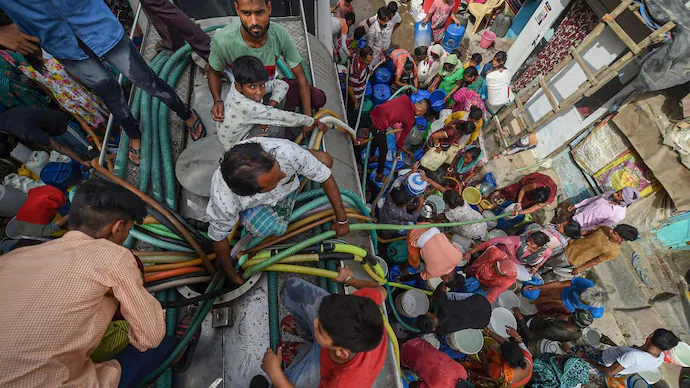
Cities lack the basic design elements that make civic compliance natural rather than heroic. Public toilets are scarce or so disgusting that relieving yourself behind a tree seems like the more hygienic option. Parking spaces are inadequate, so everyone parks everywhere. Traffic signals are timed by someone who clearly never drives, leading to jams that encourage everyone to create their own rules.
The chicken-and-egg problem is real: do people lack civic sense because infrastructure is poor, or is infrastructure poor because people don’t care enough? The answer is probably yes to both, creating a doom loop where bad behavior and bad design reinforce each other.
Democracy was supposed to fix everything. People power, accountability, elected representatives—surely this would create pressure for civic improvement. Instead, India perfected the art of democratic dysfunction where everyone complains, nobody changes, and politicians win elections by providing band-aid solutions to self-inflicted wounds.
Vote banks get cultivated through ethnic and religious identities rather than civic competence. A politician who promises a temple or reserved quotas will win over one who promises functional sewage systems. It’s harder to take credit for roads that don’t flood or traffic that flows smoothly. It’s much easier to inaugurate a statue, cut a ribbon, and declare victory.
Citizens themselves participate in this bargain. We want civic amenities, but we also want exemptions for ourselves.
Strict traffic enforcement? Absolutely, for everyone else.
Property tax increases for better services? Sure, but not in my ward.
Public parks? Essential, unless the land could be used for something that benefits me personally.
The Way Forward (That Won’t Be Taken)
Fixing India’s civic sense deficit isn’t impossible, but it requires confronting some uncomfortable truths.
First, education alone won’t solve this. We’ve produced graduates who litter and doctors who jump red lights. Knowledge doesn’t automatically translate to behavior change when the social incentives point elsewhere.
Second, enforcement matters more than awareness campaigns. Tokyo and Singapore didn’t become clean because citizens spontaneously developed civic consciousness; they became clean because breaking civic rules carried actual consequences. India has laws; it just lacks the institutional capacity or political will to enforce them consistently.
Third, infrastructure must precede expectation. You can’t demand that people don’t urinate in public without providing accessible, clean public toilets. You can’t expect orderly traffic without proper road design, clear signage, and functional signals.
Fourth, the social contract needs renegotiation. Civic sense requires a basic trust that others will also follow rules, that authorities will enforce them fairly, and that collective benefit outweighs individual convenience. India hasn’t built that trust, perhaps because the state has spent decades proving itself alternately incompetent, corrupt, or absent.
The ‘Uncomfortable’ Conclusion
Will Indians ever develop strong civic sense?
The honest answer is: probably not anytime soon, and definitely not as long as the underlying structural issues remain unaddressed. This isn’t genetic or cultural determinism—it’s acknowledgment that civic behavior is a product of incentives, institutions, and infrastructure, all of which are currently misaligned in India.
The optimistic take is that change happens slowly, then suddenly.
South Korea was once as chaotic and corrupt as any developing nation; today it’s a model of civic order.
China transformed its cities through authoritarian force—not exactly a model India should emulate, but proof that change is possible.
Singapore went from developing to developed in a generation by actually enforcing rules and designing cities for function rather than chaos.
The pessimistic take is that India’s problems are at a scale that defies easy solutions. Adding 10-15 million people to cities annually, with political systems that resist structural reform, creates conditions where civic sense remains a luxury few can afford to practice and fewer see reason to adopt.
 Dr. Jaimine Vaishnav is a faculty of geopolitics and world economy and other liberal arts subjects, a researcher with publications in SCI and ABDC journals, and an author of 6 books specializing in informal economies, mass media, and street entrepreneurship. With over a decade of experience as an academic and options trader, he is keen on bridging the grassroots business practices with global economic thought. His work emphasizes resilience, innovation, and human action in everyday human life. He can be contacted on jaiminism@hotmail.co.in for further communication.