app-store-logo
play-store-logo
February 25, 2026

Why Arunachal Pradesh is the real test of India’s “Act East” vs. China’s “Belt & Road”?
The CSR Journal Magazine

Arunachal Pradesh, often called India’s “Land of the Rising Sun,” stretches across the eastern Himalayas like a verdant sentinel. This northeastern state, home to diverse indigenous communities and breathtaking landscapes, is far more than a remote outpost. It represents a critical juncture where geography, economics, and security intersect, shaping India’s broader position in Asia. Bordering China to the north, Bhutan to the west, and Myanmar to the east, Arunachal’s location makes it a linchpin in regional dynamics. Yet, its significance is amplified by ongoing tensions with Beijing, which claims the entire state as “Zangnan” or “South Tibet.”

As we navigate 2026, with fresh insights from global reports and on-ground developments, it’s clear that Arunachal isn’t just strategically vital—it’s a test of India’s resolve in an era of assertive neighbors.

To grasp why Arunachal matters so profoundly, consider its geopolitical role first. The state shares over 1,080 kilometers of frontier with China, forming a significant portion of the Line of Actual Control (LAC), the de facto border that has been a flashpoint since the 1962 war. This boundary isn’t merely a line on a map; it’s a high-altitude arena where control translates to military advantage.

Tawang, a key district in Arunachal, exemplifies this. Its elevated terrain offers vantage points for surveillance and defense, making it a potential gateway for operations in either direction. From an Indian perspective, holding Tawang ensures oversight of the Siliguri Corridor, the narrow “Chicken’s Neck” linking mainland India to its northeast—a vulnerability that Beijing could exploit in any escalation. Moreover, Arunachal’s rivers, including the origins of the Brahmaputra, add a hydrological dimension. These waters sustain millions downstream in India and Bangladesh, and any upstream interference could trigger floods or shortages, turning nature into a strategic tool.

Recent assessments underscore this urgency. In late 2025, the U.S. Pentagon’s annual report to Congress highlighted China’s expansion of its “core interests” to explicitly include Arunachal Pradesh, tying it to Beijing’s national rejuvenation goals by 2049. This shift signals a hardening stance, where sovereignty claims are non-negotiable, complicating any LAC resolution.

China’s use of terms like “Zangnan” and its rejection of the McMahon Line—the 1914 British-drawn boundary—further entrenches the dispute. From a broader angle, Arunachal serves as India’s bridge to Southeast Asia under the Act East Policy. Governor KT Parnaik noted in January 2026 that the state has emerged as a pivotal hub, with over 4,000 kilometers of new roads built in the last 5 years alone, enhancing connectivity and integration. This isn’t just infrastructure; it’s a counter to China’s Belt and Road Initiative, positioning India as a reliable partner in the Indo-Pacific.

Economically, Arunachal’s value is equally compelling. The state boasts immense hydropower potential, with projects like the 3,096-megawatt Etalin Dam poised to transform energy security. The Dibang Multipurpose Project, construction of which ramped up in 2025, will be the world’s tallest concrete gravity dam, asserting India’s control over the Brahmaputra’s tributaries and countering China’s upstream dams on the Yarlung Tsangpo.

Beyond water, Arunachal is rich in minerals, biodiversity, and geothermal resources. At the India Energy Week in early 2026, the state pitched for global investments in clean energy sectors like hydrogen and geothermal, aligning with India’s green transition goals.

The 2026-27 Union Budget reflects this priority, allocating funds for the Kund railway line and a Buddhist Circuit scheme across the northeast, boosting tourism and commerce while reinforcing cultural ties with Asia.

Trends show a surge in regional development: over the past decade, investments have led to 30,000 kilometers of new railway tracks nationwide, with strategic lines extending to Arunachal, Sikkim, and other border states. This connectivity not only spurs growth but also integrates remote areas, reducing vulnerabilities to external influence.

Yet, China’s actions around Arunachal cast a long shadow. Beijing has accelerated infrastructure near the border, building what it calls “xiaokang” or prosperous villages—dual-use settlements that serve civilian and military purposes. By mid-2024, over 600 such villages were completed in Tibet, many clustered along the LAC facing Arunachal. Reports from 2026 indicate plans for 175 more, part of a push toward 900 border villages, including 200 near India. These aren’t benign; they function as monitoring posts and potential bases, equipped with roads, power grids, and internet to support permanent populations.

Highways like the G-219 and G-318 run parallel to the border, enhancing mobility for the People’s Liberation Army. In Arunachal’s vicinity, projects such as the Lhuntse-Mazar road merge with existing networks, bolstering logistics. This buildup, ongoing since the 2017 Doklam standoff, has intensified the infrastructure race. India responds with initiatives like the 1,840-kilometer Arunachal Frontier Highway, running within 20 kilometers of the LAC for better surveillance and troop movement.

Still, the asymmetry prompts reflection: Is India matching pace, or merely reacting?

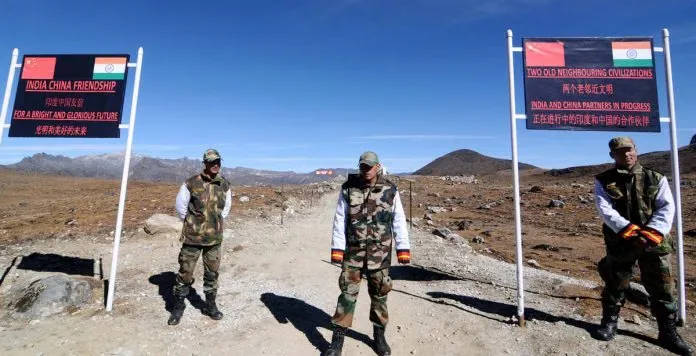
Trade across this frontier offers another lens, one often overshadowed by security concerns. Informal exchanges persist, but their lack of formal structure limits potential. The Nathula Pass in neighboring Sikkim exemplifies this. I visited Nathula in recent years, witnessing firsthand the vibrant yet unregulated interactions. Traders from both sides haggle over goods like blankets, tea, and cycles, often under the watchful eyes of soldiers. The pass, at 14,300 feet, buzzes with makeshift stalls where Indian merchants swap spices for Chinese electronics, evoking the ancient Silk Route’s spirit. Yet, the absence of robust protocols means deals rely on trust, vulnerable to disruptions like weather or tensions. Official trade resumed in 2006 after a 44-year hiatus, but volumes remain modest—far below the pre-1962 levels when it handled 80% of Indo-Tibetan commerce.

In 2025, amid thawing relations post-Galwan, both sides agreed to restart trade at Nathula, Shipki La, and Lipulekh, signaling opportunity. However, without formalization—expanded item lists, digital payments, or joint customs—economic ties lag. Extending similar mechanisms to Arunachal could build confidence, turning the border from a barrier into a bridge.

This brings us to India’s foreign policy toward China, where a more assertive posture might yield better results. New Delhi’s approach has often been characterized by caution, prioritizing dialogue over decisive action, which allows Beijing to incrementally advance its claims.

For instance, despite multiple rounds of talks, the LAC remains unresolved, with incidents like the 2020 Galwan clash and 2022 Yangtse skirmish highlighting vulnerabilities.

Critics argue that India’s reactive diplomacy—issuing demarches after provocations, such as the 2025 detention of an Arunachali citizen at Shanghai airport—fails to deter Beijing’s salami-slicing tactics. Beijing’s stapled visas for Arunachalis and objections to Indian leaders’ visits underscore this.

While Modi government’s infrastructure push is commendable, with 32 BRO projects inaugurated in Arunachal in late 2025, foreign policy could benefit from bolder alliances, like deepening Quad ties, to counterbalance China. Hesitancy risks ceding initiative, as seen in Beijing’s “core interest” designation, which ties Arunachal to Taiwan-like non-negotiables.

A proactive strategy—combining deterrence with economic engagement—could provoke thoughtful recalibration in Beijing.

Perspectives vary across stakeholders. Indians view Arunachal as integral, bolstered by satellite studies showing stronger Indian outposts (500 vs. China’s 200 in Ladakh, with similar advantages eastward). Chinese narratives frame it as historical Tibetan land, rooted in Mao’s “five-finger policy.” Internationally, bodies like the Pentagon warn of escalating tensions, with mega-dams exacerbating risks since 1962.

Trends point to a crowded border: India’s repopulation of 500 villages and China’s village expansions signal a new normal of militarized development. Amid this, gestures like soldiers exchanging sweets at Nathula in 2026 hint at humanity persisting.

Arunachal Pradesh’s strategic weight demands India rethink its playbook. By formalizing trade, accelerating infrastructure, and adopting a firmer diplomatic stance, New Delhi can transform vulnerabilities into strengths.

The question isn’t just why Arunachal matters—it’s how India will safeguard it in a world where borders are battlegrounds for influence.

A balanced, forward-looking approach could not only secure the frontier but inspire regional stability.

The time for reflection is now; inaction invites regret.

Views of the author are personal and do not necessarily represent the website’s views.

Dr. Jaimine Vaishnav is a faculty of geopolitics and world economy and other liberal arts subjects, a researcher with publications in SCI and ABDC journals, and an author of 6 books specializing in informal economies, mass media, and street entrepreneurship. With over a decade of experience as an academic and options trader, he is keen on bridging the grassroots business practices with global economic thought. His work emphasizes resilience, innovation, and human action in everyday human life. He can be contacted on jaiminism@hotmail.co.in for further communication.

Long or Short, get news the way you like. No ads. No redirections. Download Newspin and Stay Alert, The CSR Journal Mobile app, for fast, crisp, clean updates!

App Store – https://apps.apple.com/in/app/newspin/id6746449540

Google Play Store – https://play.google.com/store/apps/details?id=com.inventifweb.newspin&pcampaignid=web_share

Latest News

Popular Videos