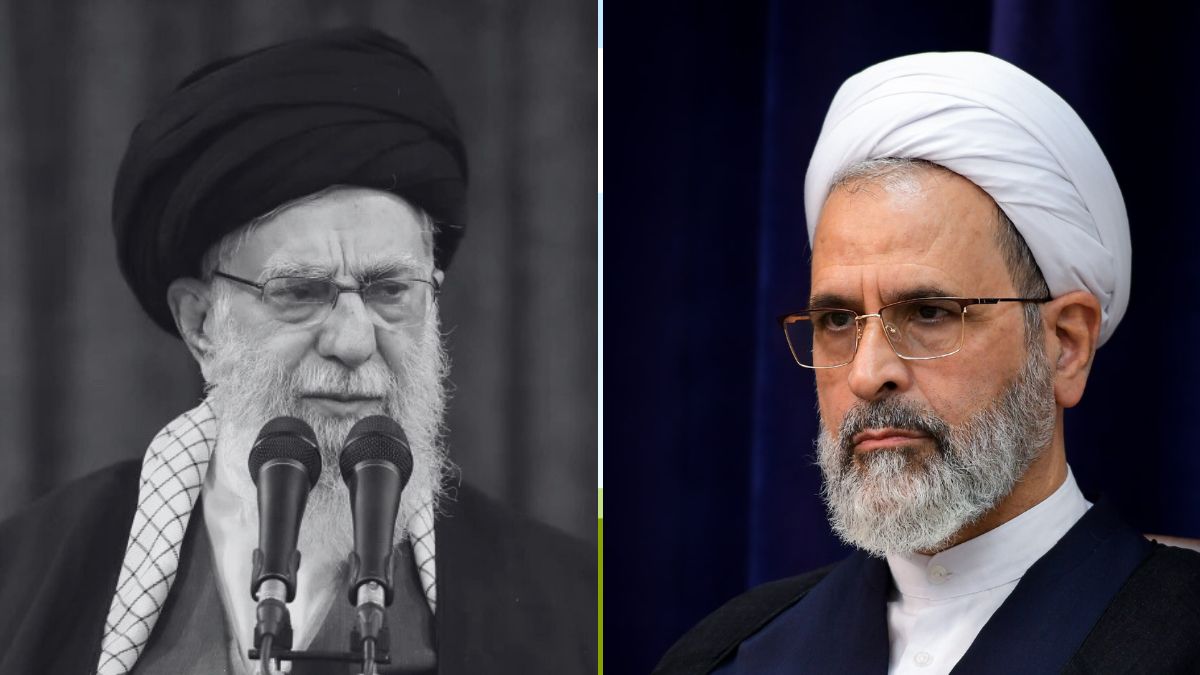
In a swift move to ensure stability in governance, Iran has appointed Ayatollah Alireza Arafi, aged 67, as the interim Supreme Leader following the death of Ali Khamenei, who led the nation for years. Khamenei was killed in coordinated airstrikes conducted by the United States and Israel in Tehran early Saturday.
This event is significant as it marks only the second leadership transition since the 1979 Islamic Revolution in Iran. According to the nation’s constitution, the Assembly of Experts, which is made up of approximately 90 senior clerics elected every eight years, is responsible for selecting the new supreme leader. An interim leadership arrangement has come into effect until a permanent successor is determined.
Arafi’s Role and Leadership Council
In his new role, Arafi will serve as a jurist member of a temporary Leadership Council alongside President Masoud Pezeshkian and Chief Justice Gholamhossein Mohseni Ejei. This council is responsible for executing the duties typically assigned to the supreme leader during this transitional phase.
Background of Ayatollah Alireza Arafi
Ayatollah Alireza Arafi was born in 1959 in Meybod, located in Yazd province. Coming from a family with clerical heritage, he pursued his education in Qom, which is recognized as Iran’s principal seminary city. Arafi achieved the rank of Mujtahid, enabling him to issue independent Islamic legal rulings. His rise to prominence has been marked by a series of institutional roles rather than direct engagement in popular politics.
Key Positions and Influence
From 2009 to 2018, Arafi headed Al-Mustafa International University in Qom, an institution that trains clerics from both Iran and abroad. During his time there, he claimed that his network had converted 50 million individuals globally to Shi’ite Islam within eight years, a claim met with skepticism yet reflecting his aspirations for expanding Iran’s religious influence.
Khamenei backed Arafi’s ascent to pivotal roles, including his positions as Friday prayer leader in Meybod and Qom, and later as a member of the Guardian Council, a powerful entity responsible for vetting legislation and candidates for elections. Analysts interpret these appointments as a testament to Khamenei’s trust in Arafi’s ideological alignment and administrative capabilities.
Arafi’s Electoral Journey
Arafi’s record in electoral politics has been variable. He did not secure a seat in the 2016 Assembly of Experts election in Tehran but later gained entry via a midterm by-election in 2021. In the elections scheduled for March 2024, Arafi was the top vote-getter in Tehran, subsequently becoming the Assembly’s second deputy chairman, positioning him close to the upcoming succession process.
Unyielding Rhetoric Amid National Changes
In his public speeches, Arafi’s statements have often conveyed a hardline stance. He was quoted as saying, “America will take its wish for Iran to abandon production of military hardware to the grave,” and described the United States as the “epicenter of the violation against human rights.”
As Iran enters a 40-day mourning period for Khamenei, the focus will gradually shift to the timetable for the Assembly of Experts to name a permanent Supreme Leader. At this critical juncture, Alireza Arafi stands at the forefront of a historically significant transition.
Long or Short, get news the way you like. No ads. No redirections. Download Newspin and Stay Alert, The CSR Journal Mobile app, for fast, crisp, clean updates!
Israeli Prime Minister Benjamin Netanyahu said on Wednesday that Iran was close to defeat as fighting across West Asia intensified, while asserting that Israel...
Iran's Supreme Leader, Ayatollah Mojtaba Khamenei, has appealed to Islamic nations to unite against Israel and the United States amid escalating tensions in the...
The Israeli Cabinet unanimously decided on Sunday to support a proposal recognising the violence against Armenians by the Ottoman Empire during World War I...