


app-store-logo
play-store-logo
March 9, 2026

What Was That in the Sky? Mysterious Object Over Europe Skies Triggers Probe
The CSR Journal Magazine

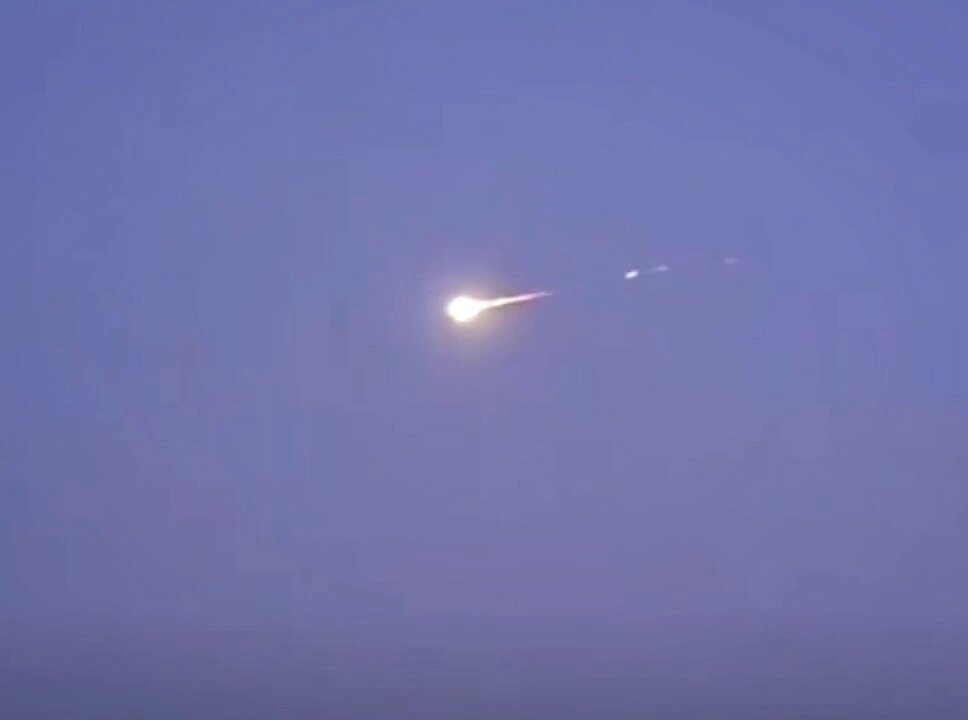
A strikingly bright object was seen traversing the skies over several European nations on the evening of March 8, leading to a wave of intrigue and prompting an investigation by the European Space Agency.

The fireball was reported in Belgium, France, Germany, Luxembourg, and the Netherlands, captivating witnesses who observed its brilliant path from southwest to northeast, accompanied by a glowing trail that marked its descent before disintegration.

Details of the Phenomenon

Preliminary assessments from the European Space Agency’s Planetary Defence team indicate that the object was likely a small natural space rock. Estimated to be just a few meters in diameter, it entered the Earth’s atmosphere at a high velocity, resulting in a vivid display that lasted approximately six seconds.

This extended visibility is considered unusual for meteor events, which typically last for a shorter duration, enabling widespread observation across a significant area.

Videos and Scientific Monitoring

Numerous recordings of the meteor became available online almost immediately, as individuals captured the spectacle using various devices. In addition to public footage, scientific monitoring systems, including cameras from the European AllSky7 Fireball Network, effectively recorded the occurrence, helping scientists analyze the object’s trajectory and identify potential locations of any surviving fragments.

Potential Impact in Germany

Reports have emerged indicating that small meteorite fragments may have landed in Koblenz-Guls, a district within Koblenz, Germany. Authorities mentioned that no injuries have been reported thus far; however, investigations are underway to verify whether the debris corresponds to the observed event.

Frequency of Such Events

Despite the dramatic nature of the display, experts emphasize that occurrences of this type are not exceedingly rare. Objects similar in size to the one observed are thought to strike Earth every few weeks to years, with most disintegrating harmlessly in the atmosphere. The fireball’s timing and trajectory suggested it may have approached Earth from a bright area in the sky near sunset, complicating prior detection efforts by ground-based telescopes.

Advancements in Detection Technology

In total, astronomers have successfully identified only eleven natural objects before their entry into the Earth’s atmosphere. Scientists from the European Space Agency are currently working on initiatives such as the Flyeye asteroid survey telescope, designed to enhance the early detection of such objects and bolster planetary defence mechanisms for future threats.

Long or Short, get news the way you like. No ads. No redirections. Download Newspin and Stay Alert, The CSR Journal Mobile app, for fast, crisp, clean updates!

App Store –  https://apps.apple.com/in/app/newspin/id6746449540 

Google Play Store – https://play.google.com/store/apps/details?id=com.inventifweb.newspin&pcampaignid=web_share

Latest News

Popular Videos
