



Cataracts progress gradually, often without immediate disruption to daily life. Patients who delay their treatment face greater difficulties which lead to worse health outcomes. The arrival of laser eye surgery for cataracts enables surgeons to determine surgery times through individual patient needs and exact surgical requirements. The assessment of optimal surgical times now relies on both cataract maturity, functional vision, lifestyle requirements, and clinical assessment.
The blog explains when patients should think about laser eye surgery for cataracts and which factors affect the surgery schedule and recovery time and financial aspects of their treatment.
Understanding Cataracts and Their Progression
The definition of cataracts is cataract in both eyes or both lenses. It is caused by the thickening of natural eye lenses leading to a loss of visual acuity. Symptoms include poor vision, sensitivity to light and glare, and reduced ability to distinguish colors; these typically improve as the cataracts mature over time. Similarly, many people will have trouble performing essential daily activities (e.g., reading, driving, working on screens).
Although doctors have traditionally recommended waiting to perform cataract surgery until after the cataract has reached its mature stage, current recommendations support the earlier intervention of laser RLE surgery, which provides greater accuracy and reliability of visual results.
The main reason for intervening earlier is that soft cataracts make RLE easier with less stress on surrounding structures in the eye.
What Is Laser Cataract Surgery?
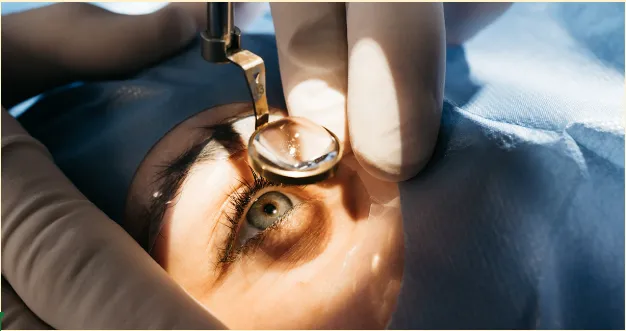
Laser eye surgery for cataracts refers to femtosecond laser-assisted cataract surgery (FLACS). This procedure utilizes cutting-edge laser technology to execute essential elements which include corneal incisions and capsulotomy and lens fragmentation.
The benefits of laser-assisted procedures when compared to traditional methods include:
-
Improved accuracy for lens extraction
-
Decreased need for human operators
-
More precise positioning of intraocular lenses
-
Increased protection during complicated procedures
-
The new development has affected how physicians determine the appropriate surgical time.
Signs That Indicate the Right Time for Surgery
-
Vision Interferes with Daily Activities
The most critical indicator is functional impairment. When blurred vision begins to affect routine activities such as reading, driving, or using digital devices, surgical intervention should be considered.
-
Increased Sensitivity to Light and Glare
Difficulty driving at night or discomfort in bright lighting conditions suggests progression. This is a strong clinical indicator for cataract surgery.
-
Frequent Prescription Changes
If glasses or contact lens prescriptions change frequently without satisfactory improvement, the cataract is likely advancing.
-
Reduced Contrast and Colour Perception
Patients may notice faded colours or difficulty distinguishing objects. This often signals worsening lens opacity.
-
Medical Recommendation
An ophthalmologist’s evaluation remains the most reliable factor. Diagnostic imaging and visual acuity tests determine whether laser eye surgery for cataracts is appropriate at that stage.
Why Early Intervention Matters?
Delaying surgery causes patients to experience additional medical problems which require more complicated surgical procedures. As cataracts harden over time, removal becomes technically challenging.
Clinical research studies show that early treatment provides the following benefits:
-
Safer surgical conditions
-
Reduced energy usage during lens removal
-
Faster visual recovery
-
Lower risk of complications
The presence of advanced cataracts increases both surgical duration and the chances of developing inflammation or experiencing higher eye pressure.
Laser Cataract Surgery Recovery Time
The laser cataract surgery recovery time is generally faster compared to traditional methods due to minimally invasive techniques.
-
Recovery Timeline
-
First 24–48 hours: Mild blurriness and light sensitivity
-
2–5 days: Noticeable improvement in vision
-
1–2 weeks: Stabilisation of visual clarity
-
4–6 weeks: Complete healing and final visual outcome
Most patients experience improved vision within 24 to 48 hours, while full recovery continues over several weeks.
Adherence to post-operative care, including prescribed eye drops and activity restrictions, plays a key role in optimising laser cataract surgery recovery time.
Factors That Influence the Right Timing
Age and Lifestyle Needs
There is no fixed age for surgery. Patients with active lifestyles or professional visual demands may opt for earlier intervention.
Overall Eye Health
Conditions such as glaucoma, diabetic retinopathy, or corneal disorders influence surgical timing and approach.
Cataract Density
Softer cataracts are easier to treat with laser eye surgery for cataracts, making earlier procedures more efficient.
Patient Readiness
Decision-making receives contributions from both psychological readiness and procedural understanding.
Laser Cataract Surgery Cost Considerations
The laser cataract surgery cost varies depending on multiple factors The cost of laser cataract surgery depends on three main factors which include The technology used for surgery requires femtosecond laser systems The selection of intraocular lens needs to consider three options which include monofocal and multifocal and toric lenses The hospital infrastructure together with its medical staff expertise determine the overall treatment cost of laser cataract surgery.
Pre- and post-operative care
Laser-assisted procedures are typically priced higher than conventional surgery due to advanced technology and precision. However, the benefits—such as improved outcomes and faster laser cataract surgery recovery time—often justify the investment.
When Not to Delay Surgery?
Certain situations require immediate intervention in three situations which include:
-
People who experience rapid vision deterioration need immediate medical attention.
-
Cataracts prevent proper retinal examination which requires urgent medical attention.
-
The development of secondary complications will occur when glaucoma develops after cataracts surgery.
-
People who experience vision problems face higher chances of falling or getting into accidents.