


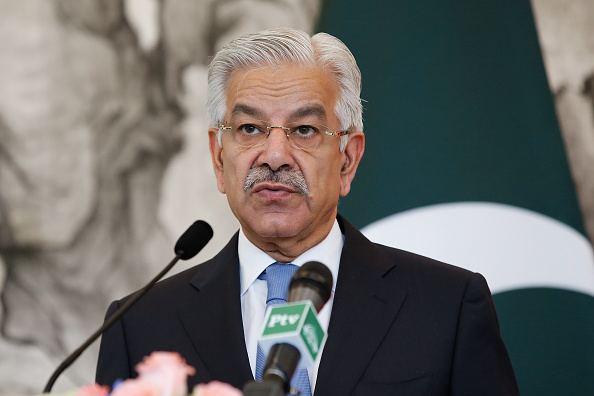

Pakistan’s Defence Minister Khawaja Asif has made notable remarks during a recent session of Parliament. He emphasized the detrimental impact of reconsolidating ties with the United States post-1999, particularly following the September 11, 2001 attacks.
Khawaja Asif has accused the United States of “exploiting” Pakistan for its strategic interests and then discarding it “like a piece of toilet paper” after its objectives were met. Speaking in Pakistan’s National Assembly, Asif admitted that Pakistan often denies its terror history, calling it a “mistake committed by dictators in the past.”
The Pakistani minister also termed Islamabad’s involvement in two Afghan wars ‘a mistake,’ saying that the terrorism in Pakistan today was the blowback of past mistakes. He said the costs of realigning with the US after 1999, particularly following the September 11, 2001, attacks, were devastating. “Pakistan was treated worse than a piece of toilet paper and was used for a purpose and then thrown away,” he said.
Asif’s comments shed light on the complex dynamics of Pakistan’s foreign relations, indicating that the partnership with the US has had adverse effects on the country.
Controversial Engagement in Afghan Conflicts
During his address, Asif contended that Pakistan’s involvement in the two Afghan wars was a misguided decision. He expressed regret over the alignment with US interests during periods of conflict, suggesting that this course of action ultimately worked against Pakistan’s national interests. His critique reflects a broader sentiment about the consequences of foreign military engagements and alliances.
Historical Context of Pakistan-US Relations
The relationship between Pakistan and the United States has evolved significantly over the decades. After 9/11, Pakistan emerged as a crucial ally in the US-led War on Terror, which marked a period of increased military and financial aid from Washington. However, Asif’s statements indicate a growing disillusionment with the partnership, illustrating the intricate and often fraught history between the two nations.
Pakistan’s Strategic Calculations
Khawaja Asif’s reflections on Pakistan’s strategic choices underline a critical view of the country’s foreign policy decisions. He alluded to the potential long-term implications of aligning too closely with external powers, prompting a reevaluation of Pakistan’s diplomatic strategies. The consideration of national sovereignty and independent policymaking appears to be a focal point of his address.
Response to Domestic and International Criticism
Asif’s remarks also serve as a response to both domestic criticisms and international narratives that question Pakistan’s role in regional security. By addressing the historical miscalculations in the context of US relations, he aims to foster a more nuanced discussion about the necessity of realigning Pakistan’s foreign policy to better serve its own interests.
Future of Pakistan’s Defense Policy
Looking ahead, the statements made by the Defense Minister open a dialogue about the future trajectory of Pakistan’s defense and foreign policies. There is an increased call for reassessing international alliances and focusing on domestic stability and regional cooperation. The emphasis seems to be on establishing a more autonomous foreign policy that prioritizes Pakistan’s national interests.
Repercussions for Regional Alliances
The ramifications of Asif’s statements may extend beyond bilateral relations with the United States. Other regional stakeholders are likely to take note of Pakistan’s reassessment of its strategic alignments. The developments could influence Pakistan’s interactions with neighboring countries, particularly in the context of geopolitical tensions in South Asia.
Broader Implications for Global Security
As discussions unfold regarding Pakistan’s past and future relationships with global powers, the implications for international security frameworks will also be significant. Khawaja Asif’s comments highlight the need for comprehensive dialogue on how nations navigate diplomatic relations amid changing global dynamics.
Long or Short, get news the way you like. No ads. No redirections. Download Newspin and Stay Alert, The CSR Journal Mobile app, for fast, crisp, clean updates!
App Store – https://apps.apple.com/in/app/newspin/id6746449540
Google Play Store – https://play.google.com/store/apps/details?id=com.inventifweb.newspin&pcampaignid=web_share