


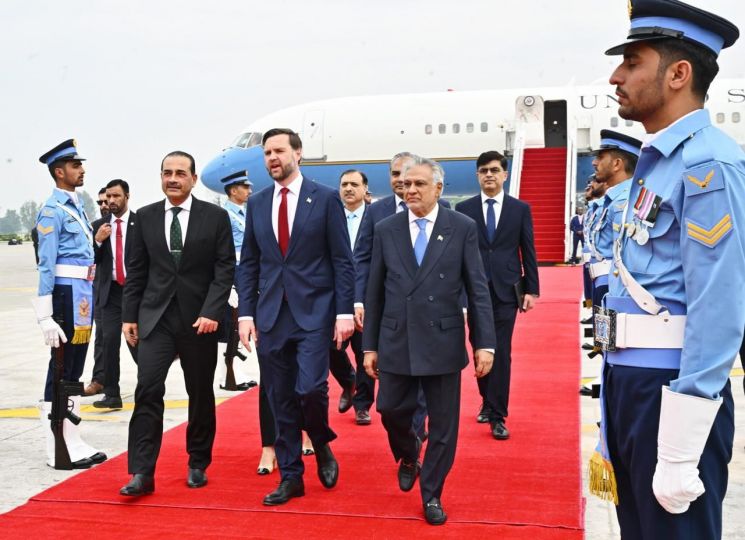

The United States and Iran began in-person discussions in Islamabad on Saturday, aiming to resolve their ongoing conflict that has lasted six weeks. High-ranking officials from both nations gathered in the Pakistani capital to negotiate terms for a ceasefire and potentially more comprehensive agreements.
The US delegation is headed by Vice President JD Vance, who is accompanied by key figures including Jared Kushner and Steve Witkoff, representatives from former President Donald Trump’s administration. On the Iranian side, the delegation consists of more than 70 members, led by Parliamentary Speaker Mohammad Bagher Ghalibaf and Foreign Minister Abbas Araghchi.
Prior to the formal negotiations, both delegations engaged in separate meetings with Pakistani Prime Minister Shehbaz Sharif, who expressed Islamabad’s commitment to facilitating dialogue between the two countries. This collaborative approach aims to enhance peace and stability in the region amidst rising tensions.
Challenges Before the Negotiations
The commencement of talks took place despite earlier statements from Tehran, which suggested that Iran would not participate without assurances regarding the inclusion of Lebanon in ceasefire discussions and resolution of US sanctions. The specific terms surrounding these issues have not been confirmed, adding uncertainty to the dialogue.
In a statement on social media platform X, Ghalibaf indicated that Washington had previously indicated a willingness to unblock Iranian assets and agree to a ceasefire in Lebanon. This agreement is critical given the violence that has erupted in Lebanon, where Israeli military operations against Iran-backed Hezbollah have resulted in significant casualties since March.
Officials from the US and Israel have clarified that their military actions in Lebanon are not encompassed within the framework of the US-Iran ceasefire negotiations. In contrast, the Iranian government and Pakistani authorities maintain that addressing the issue is essential for any agreement to hold. This fundamental difference highlights the complexity of the current diplomatic landscape.
Statements from Leadership
Speaking just before the meeting, Vice President Vance conveyed optimism regarding the negotiations, though he warned against any tactics that could be perceived as manipulative during discussions. His anticipation is based on the potential for a constructive dialogue, although caution is advised as geopolitical dynamics continue to evolve.
Former President Trump also provided commentary on the situation through social media, claiming that Iran’s participation in negotiations is driven by a lack of leverage. He emphasised that Tehran must understand its limited position in the ongoing geopolitical landscape, suggesting that its capacity for prolonged resistance is diminished.
The discussions initiated a two-week ceasefire announced by Trump, which temporarily suspended US and Israeli air strikes against Iran. However, this ceasefire has not resolved the blockade on the Strait of Hormuz imposed by Iran, a significant factor contributing to disruption of global energy supplies. The strain on international relations remains palpable as both parties navigate the intricacies of this sensitive diplomatic engagement.