


app-store-logo
play-store-logo
March 5, 2026

Upcoming Tax Deadlines: Key Dates for Revised Returns and Advance Tax
The CSR Journal Magazine

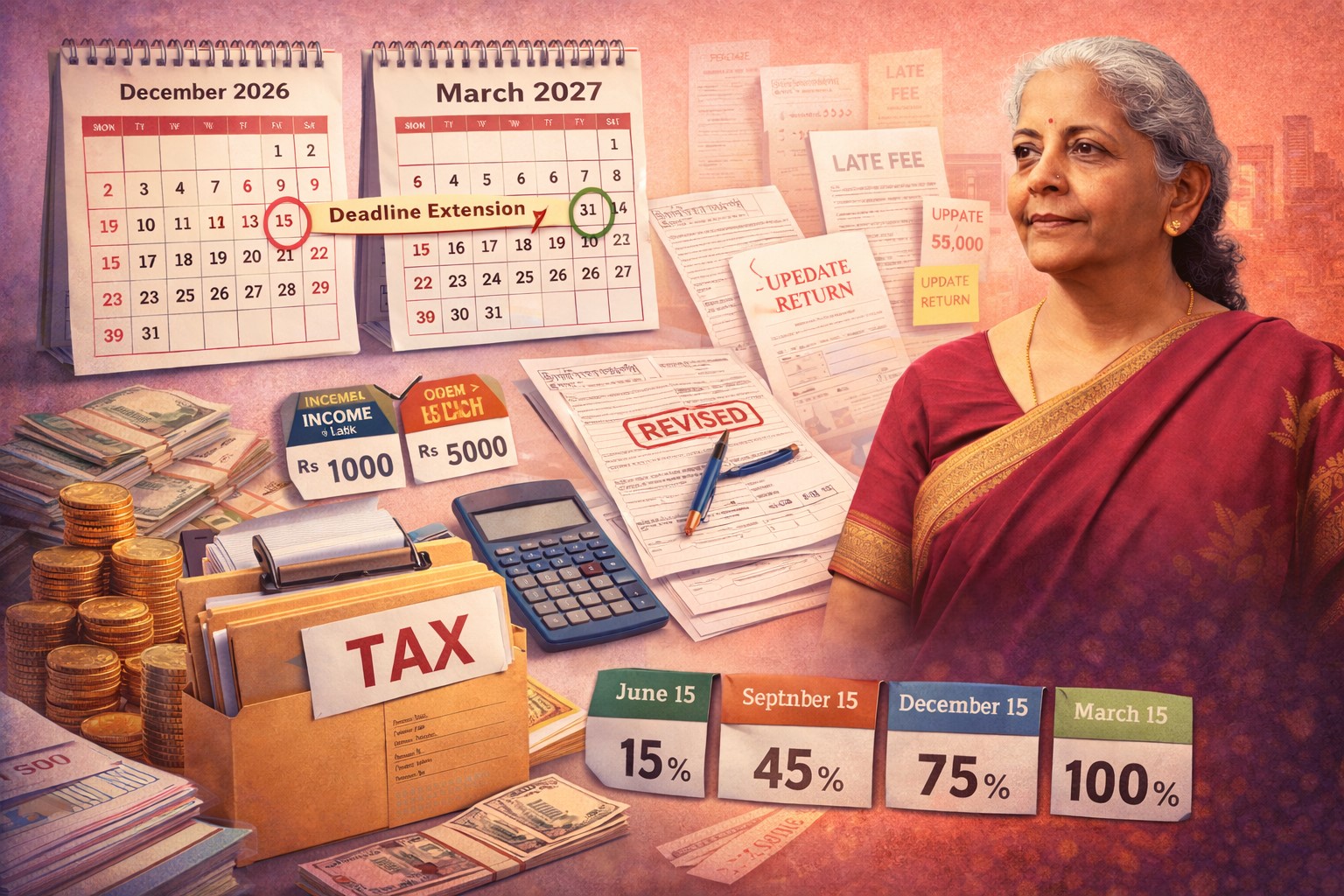
As tax season approaches, many individuals and businesses are focusing on their filing responsibilities. While some conclude their returns promptly, others may discover inaccuracies or might have missed deadlines. Understanding critical deadlines for correcting tax returns is essential for compliance. Currently, taxpayers have until December 31 of the following year to submit revised income tax returns, allowing for necessary corrections and missing information updates. The government has proposed extending this deadline to March 31 of the subsequent year, which could ease the process for taxpayers needing to amend their returns. Finance Minister Nirmala Sitharaman mentioned in her Budget 2026 speech that this extension would not only apply to original returns but also to belated submissions.

Details of the Proposal

Under the new proposal, a nominal fee will be applicable for revised returns filed after December 31. Taxpayers with an income of up to Rs 5 lakh may be subject to a fee of Rs 1,000, while those earning more will face a fee of Rs 5,000. Experts believe this change will make it easier for taxpayers to comply with tax regulations. Harsh Bhuta, Managing Partner at Bhuta Shah and Co, emphasized that this extension and the acceptance of updated returns during reassessment proceedings will facilitate compliance, albeit with an additional 10% fee for late submissions.

Understanding Advance Tax Requirements

In addition to submitting returns, it is crucial to consider advance tax deadlines. The advance tax system operates on the principle of “pay as you earn.” Taxpayers with estimated tax liabilities exceeding Rs 10,000, after considering Tax Deducted at Source (TDS), are required to make tax payments in instalments throughout the financial year. This approach applies to diverse groups, including salaried individuals, freelancers, and businesses, helping to alleviate payment burdens at the fiscal year’s end.

Advance Tax Payment Schedule

Advance tax is typically paid in four instalments across the financial year. The first instalment is due by June 15, necessitating payment of at least 15% of the estimated total tax liability. The second instalment, due on September 15, requires 45% of the total liability to be settled, considering previous payments. By December 15, the third instalment should increase the total paid to 75%. Finally, the complete estimated tax must be settled by March 15. Any tax paid by March 31 is recognized as advance tax for the financial year.

Consequences of Missing Deadlines

Failing to meet advance tax instalments can result in interest penalties under the Income Tax Act. Interest under Section 234B applies for defaults in advance tax payments, while Section 234C addresses deficiencies in instalments. Generally, the interest rate for such defaults is 1% per month or part thereof.

Importance of Adhering to Tax Deadlines

With the ongoing digitization of the tax system, the government aims to streamline compliance and afford taxpayers additional opportunities to rectify errors. The proposed extension for revised returns, combined with a structured timetable for advance tax payments, is intended to simplify the tax process, provided taxpayers remain vigilant about deadlines.

Long or Short, get news the way you like. No ads. No redirections. Download Newspin and Stay Alert, The CSR Journal Mobile app, for fast, crisp, clean updates!

App Store –  https://apps.apple.com/in/app/newspin/id6746449540 

Google Play Store – https://play.google.com/store/apps/details?id=com.inventifweb.newspin&pcampaignid=web_share

Latest News

Popular Videos
