


app-store-logo
play-store-logo
March 2, 2026

Understanding the Terminology of the Middle East
The CSR Journal Magazine

The phrase “Middle East” has become commonplace in various contexts, from news broadcasts to scholarly texts. However, its origins provoke questions about its meaning and geographical implications. The term is believed to have been first used in 1902 by Alfred Thayer Mahan, an American naval strategist. He referred to the regions lying between India and the Persian Gulf as the “Middle East,” drawing a mental map that primarily centered on Europe. In this framework, “middle” represented a location between the “Near East,” which encompassed the Balkans and parts of the Ottoman Empire, and the “Far East,” indicating regions like China and Japan. Thus, the term emanated from a Eurocentric vision of the world.

The Role of Imperial Language

As the British Empire expanded, it required a linguistic framework to categorize its numerous territories. Regions such as Egypt were classified as part of the “Middle East” since they were situated east of London but not as far as the eastern fringes of Asia. Conversely, British India, lying further away, was often described as part of the “Far East,” a designation emphasizing its greater distance from London. Such terminology served imperial agendas and reflected strategic considerations in navigation and governance.

The Evolution of the Term

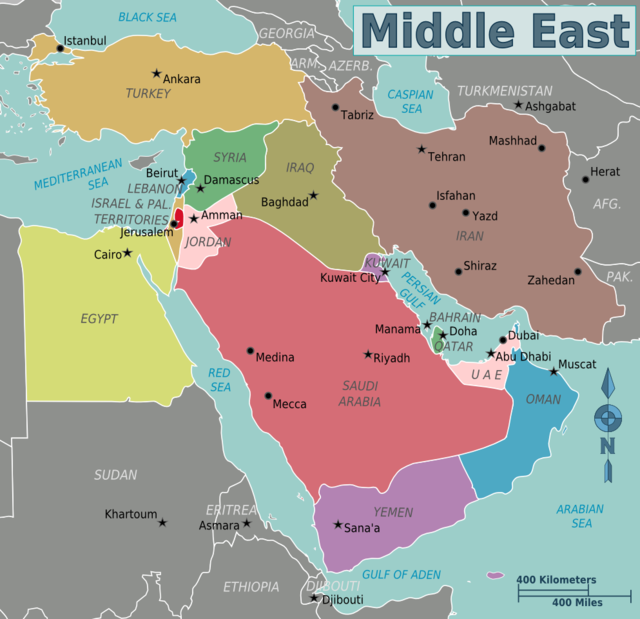
The usage of “Middle East” proliferated among British and American officials, becoming particularly advantageous in matters of diplomacy and military planning. Following the end of World War I and the disintegration of the Ottoman Empire, new nation-states emerged in the region, and the label “Middle East” gained traction, although its exact boundaries remained ambiguous. Questions remain regarding its inclusion of countries like Iran, Turkey, or states in North Africa, and definitions can vary significantly among individuals.

Complexities of the Geographic Label

Over time, the term has accumulated connotations, often associated with conflict, oil, and instability in global media discourse. The landscape referred to as the Middle East encompasses a wide range of historical contexts, from ancient Persian civilizations to contemporary Arab cultures, reflecting significant diversity in languages and religions. Critics argue that using this singular term oversimplifies the rich variety present within the region.

Alternative Terminologies

In academic and political discussion, some prefer alternative terms such as “West Asia” or “North Africa” rather than “Middle East.” These alternatives aim to categorize geography without situating Europe at the core of their narratives. Nevertheless, “Middle East” continues to dominate diplomatic discussions, journalism, and public discourse, indicating that any change would necessitate a reevaluation of who holds the power to name regions worldwide.

Implications of the Terminology

When the phrase “Middle East” appears in contemporary discourse, it serves as a historical reminder that the term is not a natural descriptor like north or south. Instead, it results from imperial legacies and strategic considerations. The notion of “middle” implies a perspective that favors Europe as the starting point, fundamentally altering the perceived geography of the world.

Long or Short, get news the way you like. No ads. No redirections. Download Newspin and Stay Alert, The CSR Journal Mobile app, for fast, crisp, clean updates!

App Store –  https://apps.apple.com/in/app/newspin/id6746449540 

Google Play Store – https://play.google.com/store/apps/details?id=com.inventifweb.newspin&pcampaignid=web_share

Latest News

Popular Videos
