


Understanding Domestic Violence: Beyond Physical Abuse
The CSR Journal Magazine

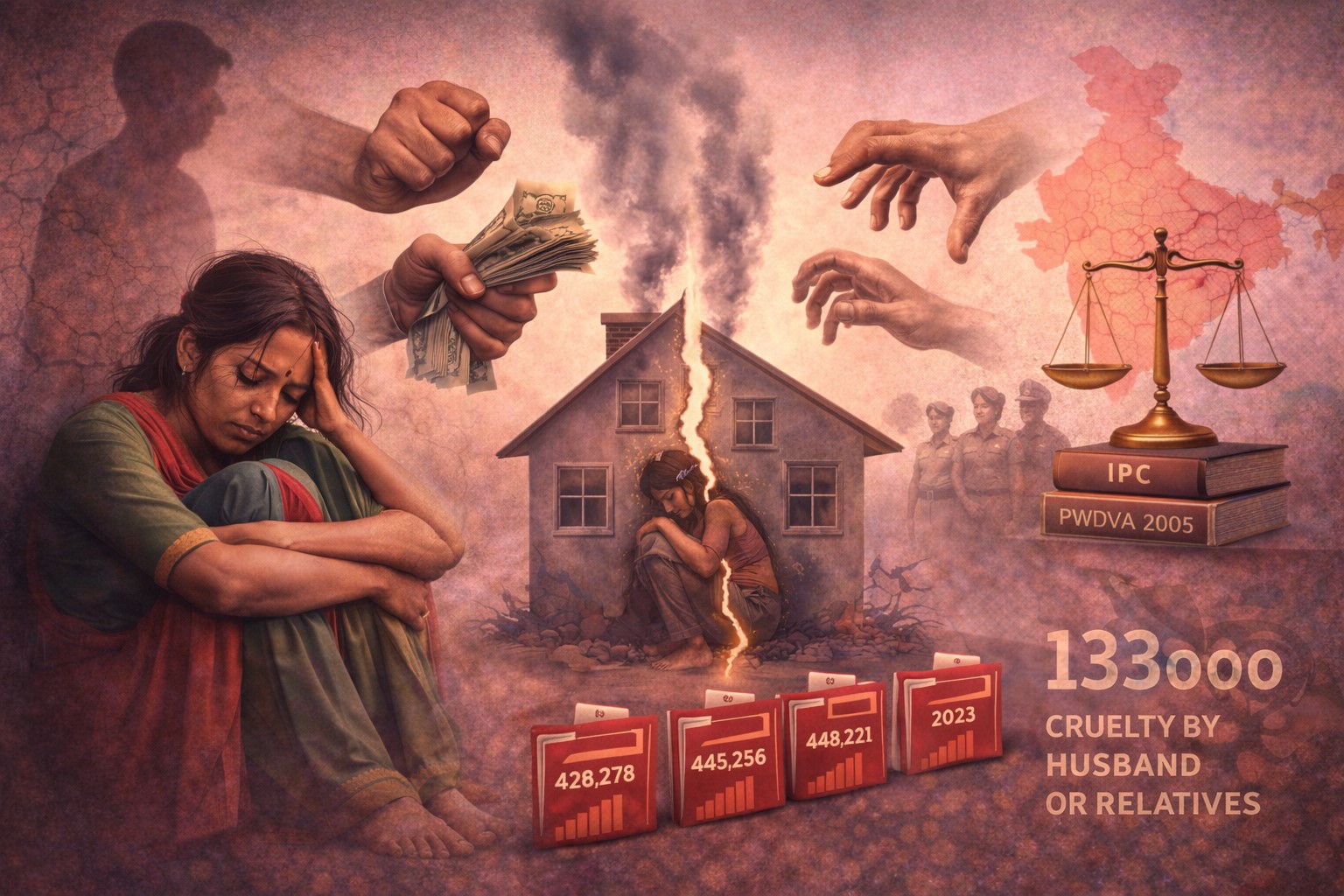
As International Women’s Day is observed on March 8 annually, discussions about women’s rights often emphasize workplace equality and representation. However, a significant and ongoing form of gender-based violence occurs within the domestic sphere. Indian legislation increasingly acknowledges that domestic violence is not restricted to physical assaults but encompasses emotional, verbal, and economic abuse that undermines a woman’s dignity and autonomy. The primary legal framework addressing such violence is the Protection of Women from Domestic Violence Act, 2005 (PWDVA), alongside Section 498A of the Indian Penal Code (IPC), which criminalizes cruelty exerted by a husband or his relatives. Over time, Indian judiciary has expanded its definition of “cruelty,” thus broadening the scope of protection available to women experiencing familial violence.

Statistical Overview of Domestic Violence

Official statistics indicate the magnitude of domestic violence in India. According to the National Crime Records Bureau (NCRB), there were 448,211 reported crimes against women in 2023, marking a slight increase from 445,256 cases in 2022 and 428,278 in 2021. A significant portion of these cases pertains to domestic abuse, with “cruelty by husband or relatives” accounting for approximately 133,000 instances in 2023, nearly 30% of all reported crimes against women. The data suggests that domestic violence is the most prevalent category of gender-based crime. However, societal stigma, familial pressure, and financial dependence often deter women from reporting such abuses, indicating that the actual figures may be much higher.

Legal Framework Defining Domestic Violence

The PWDVA has enhanced the legal perception of domestic abuse by identifying four distinct types: physical, sexual, emotional or verbal, and economic violence. This expanded understanding is reinforced by judicial interpretations, such as the 2018 Gujarat High Court ruling in Bhartiben Bipinbhai Tamboli vs State of Gujarat, where it was emphasized that domestic violence includes psychological humiliation and financial deprivation. Furthermore, the Supreme Court’s decision in Lalita Toppo vs State of Jharkhand recognized that the Domestic Violence Act offers more extensive relief than provisions under Section 125 of the Criminal Procedure Code, allowing estranged wives or live-in partners to claim not just maintenance but also the right to reside in shared households.

Challenges in Proving Physical Abuse

Although physical violence is the most overt type of domestic abuse, providing proof of such incidents can be problematic. Many acts of violence occur in private settings and often lack documentary evidence. Courts have clarified that the absence of medical reports does not negate claims of abuse. For example, the Bombay High Court in Kaushal Arvind Thakker vs Jyoti Kaushal Thakker established that allegations of physical violence cannot be dismissed solely due to the lack of proof, given the nature of domestic violence typically occurring within private spaces. This perspective was further echoed in the 2026 case of Humeshwari vs Uma, identifying verbal abuse and physical altercations as potential forms of physical abuse under the DV Act.

Recognition of Emotional and Economic Abuse

Judicial bodies are increasingly recognizing that emotional abuse is no less damaging than physical violence. In the 2017 Karnataka High Court case of Kasturi vs Subhas, it was determined that a husband cohabiting with another woman during marriage constituted emotional abuse, causing psychological harm even in the absence of physical violence. According to a legal expert, emotional abuse can lead to a gradual erosion of a person’s dignity. Likewise, the PWDVA explicitly includes economic abuse. The court in Mohar Singh vs Ram Devi ruled that denying a woman access to financial resources constitutes economic violence. Furthermore, in Rani Bibi vs SK Nurullah, it was held that ongoing joint residence is not essential for establishing claims of economic abuse.

Accountability in Domestic Violence Cases

A pivotal change in domestic violence legislation occurred with the Supreme Court’s ruling in Hiral P Harsora vs Kusum Narottamdas Harsora in 2016, which eliminated the restriction on naming only male relatives as respondents under the DV Act. This decision has broadened the scope for accountability in domestic environments by allowing female relatives, such as mothers-in-law and sisters-in-law, to be included as potential respondents. However, legal interpretations regarding domestic violence claims remain complex and are influenced by individual perspectives, with judges’ social backgrounds affecting their understanding of abuse.

The Evolving Landscape of Domestic Violence Legislation

Despite advancements in legal frameworks, challenges persist in addressing the nuances of domestic violence. Claims involving emotional or psychological harm often exist in grey areas requiring careful evaluation. Examples of emotional abuse include controlling a partner’s movements or isolating them from family. Economic abuse manifests through financial control, such as restricting access to funds or coercing participation in financial decisions. Additionally, definitions of physical abuse are broad, encompassing various forms of coercive behavior. As these complexities continue to shape legal discourse, the effective implementation of protective laws requires ongoing social awareness and dialogue.

Long or Short, get news the way you like. No ads. No redirections. Download Newspin and Stay Alert, The CSR Journal Mobile app, for fast, crisp, clean updates!

App Store –  https://apps.apple.com/in/app/newspin/id6746449540 

Google Play Store – https://play.google.com/store/apps/details?id=com.inventifweb.newspin&pcampaignid=web_share

Latest News

Popular Videos
