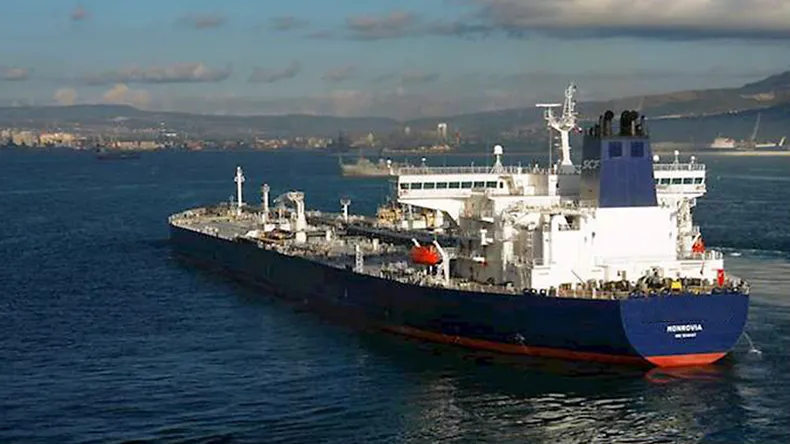
The United Kingdom is contemplating the seizure of tankers linked to a Russian shadow fleet, as part of escalating measures against Moscow during a period of dwindling oil revenues. British defense sources have indicated that military options for capturing the rogue vessels have been discussed among NATO allies. This consideration comes a month after a U.S.-led seizure of a Russian tanker in the Atlantic.
According to Lloyd’s List Intelligence, 23 vessels from the shadow fleet, which operate under false or fraudulent flags, were identified in the English Channel and the Baltic Sea in January. These tankers are predominantly associated with the export of Russian oil, particularly to countries like China, India, and Turkey.
A joint statement issued by the UK, Germany, France, and other NATO nations last month mandated that all vessels operating in these waters must adhere to international law. However, despite these stipulations, no actions to seize any vessels have been reported. Richard Meade, editor-in-chief of Lloyd’s List, noted that the Royal Navy could challenge such ships under maritime law since many are technically stateless, but hesitated due to potential risks of escalation.
Recently, the Royal Marines briefed British Members of Parliament on the Russian threat, with indications that there is a strong desire among the Marines to receive orders for vessel seizures. This follows a U.S. operation last month, which involved tracking down the Marinera tanker from the Caribbean to the North Atlantic, culminating in its capture with British assistance. Although the ship initially bore false registration, it reportedly changed to a Russian flag during the pursuit in an attempt to evade capture.
Although Russian officials issued mild complaints post-capture, the prospect of a UK or European-led operation raises more complex risks, as Moscow might respond more aggressively if its vessels are targeted directly. Meade suggested that a seizure occurring outside Baltic or Arctic waters could mitigate some risks.
On January 22, before the multilateral statement was issued, the French authorities detained the Grinch oil tanker off the Spanish coast. The vessel had departed Murmansk, Russia, under a Comoros flag, but was released a week later due to legal constraints in France. UK Defense Secretary John Healey stated last month that Britain would convene Baltic and Nordic nations to explore potential military strategies, suggesting that any oil seized could be sold to support Ukraine against Russian aggression.
Data suggests that Russia produces approximately 10 million barrels of oil daily, with around 7 million barrels exported, primarily transported by sea to markets in China and India. Following Russia’s full-scale invasion of Ukraine, Western nations have progressively implemented economic sanctions, targeting the Kremlin’s war efforts.
As a countermeasure, Russia has reportedly invested about $15 billion in acquiring 400 older tankers to form a shadow fleet in response to sanctions. According to analysts, this fleet consists of aging, inadequately maintained vessels, often registered under flags from nations with lax regulations. This strategy has seen Moscow take cues from Iran and Venezuela, both of which also operate under sanctions.
Despite the apparent advantages presented by the shadow fleet, its vulnerabilities are evident, particularly due to the usage of falsified flags. A ship’s flag represents its legal jurisdiction; hence, vessels that utilize false flags may be considered stateless and vulnerable for seizure, though legal frameworks regarding such actions may vary across European nations.
It remains unclear how capturing one or a few of these shadow fleet vessels would affect the Russian economy significantly. Recent data indicates that while the volume of Russian oil exports has dipped, the figures remain above 5 million barrels daily. Additionally, the Kremlin has reportedly responded to Western threats by re-registering shadow fleet vessels under the Russian flag to avoid potential seizures.
As more than 200 vessels related to the Russian shadow fleet remain operational, the domestic, state-flagged fleet has also grown in size and now accounts for over 51% of oil transport volumes, despite being subject to price caps that may be easy to circumvent.
Current tensions coincide with a downturn in the Russian economy, primarily influenced by decreasing oil prices influenced in part by increased supply from Venezuela. Insufficient revenues from oil and gas sales have prompted calls for the European Union to consider a comprehensive ban on maritime services, which could deeply impact Moscow’s booming war-related economy.