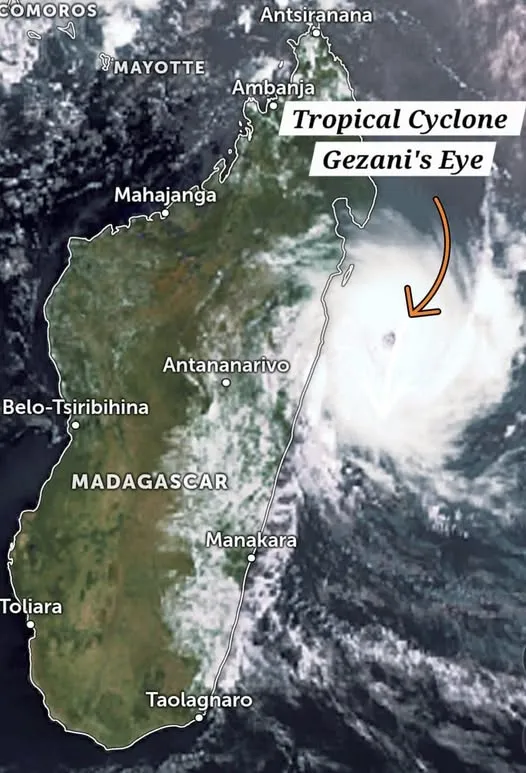
Tropical Cyclone Gezani has devastated Madagascar, resulting in the deaths of at least 31 individuals and leaving four others unaccounted for, according to the nation’s disaster management office. The majority of fatalities occurred in Toamasina, the country’s second-largest city, where 29 deaths were reported, alongside two additional fatalities in a nearby district as detailed in an updated report from the National Bureau for Risk and Disaster Management (BNGRC). Eyewitness accounts from residents revealed harrowing experiences as the cyclone made landfall late on Tuesday, with some describing never having encountered such violent winds.
Injuries and Displacement Amidst Chaos
In addition to the fatalities, at least 36 individuals sustained serious injuries during the storm. Precautionary measures led to the evacuation of over 2,740 residents from coastal communities before the cyclone progressed inland. Following the storm’s impact, approximately 6,870 people were displaced, and overall, around 250,406 individuals have been categorized as disaster victims according to the BNGRC. This cyclone marks the second to strike Madagascar within a short span, following Tropical Cyclone Fytia ten days prior, which caused 14 deaths and displaced upwards of 31,000 people, based on information from the UN’s humanitarian office.
Intense Winds and Emergency Preparations
During its peak, Cyclone Gezani generated sustained winds reaching around 185 kilometers per hour (115 miles per hour), with gusts approaching nearly 270 kilometers per hour, capable of tearing away metal roofing and uprooting substantial trees. In anticipation of storm conditions, officials implemented emergency actions, closing schools and setting up emergency shelters. The BNGRC had previously alerted that rising sea levels in Toamasina had already begun to inundate local streets prior to the cyclone’s arrival.
Extent of Damage to Infrastructure
The infrastructure in Toamasina faced severe damage, with homes collapsing, roofs being torn off, and walls crumbling under the cyclone’s force. Numerous neighborhoods were left in total darkness due to the severing of power lines. By Wednesday morning, Madagascar’s meteorological service reported a weakening of Gezani, which had transformed into a moderate tropical storm. The cyclone moved westward inland, approximately 100 kilometers north of the capital city, Antananarivo. The meteorological agency indicated that Gezani would traverse the central highlands from east to west during the day and would likely exit into the Mozambique Channel later in the evening or night.