


app-store-logo
play-store-logo
January 5, 2026

The Onion Truth: Don’t Panic Over the Spots
The CSR Journal Magazine

You’re in the middle of cooking, the oil is hot, spices are ready—and then you notice it. Black spots on the onion you’re about to slice. Do you sigh, panic, or wonder if you can just cut around it and hope for the best? You’re not alone. Almost everyone who cooks regularly has faced this small but confusing kitchen moment.

The good news is: black spots on onions aren’t always a reason to throw everything away. The bad news is: sometimes, they absolutely are. Knowing the difference can save you from both food waste and a nasty case of food poisoning.

Why Do Onions Get Black Spots in the First Place?

Onions grow underground and are stored for long periods before reaching your kitchen. During this time, moisture, humidity, and poor airflow can trigger mold or fungal growth. This usually shows up as black or dark brown spots on the outer, dry skin.

In many cases, the damage is only skin-deep. The papery outer layers take the hit first, while the inner onion remains protected and perfectly usable.

When Are Black Spots Actually Harmless?

If the black spots are only on the dry outer peel, there’s usually no need to panic. Simply remove one or two outer layers until you reach fresh, firm flesh underneath. If the onion looks clean, feels solid, and smells normal, it’s generally safe to use.

Think of it like removing a bruised leaf from cabbage—you’re getting rid of the damaged part while saving the good portion inside.

Your nose and fingers can tell you more than you think. A fresh onion should be firm and have a sharp but clean smell. If it feels soft, watery, or mushy, something has gone wrong. A sour, rotten, or unusually sweet smell is another clear warning sign.

Slimy layers inside the onion are a definite deal-breaker. These signs mean bacteria or fungi have already taken over, and no amount of trimming can make the onion safe again.

Black Spots Inside? That’s Your Cue to Toss It

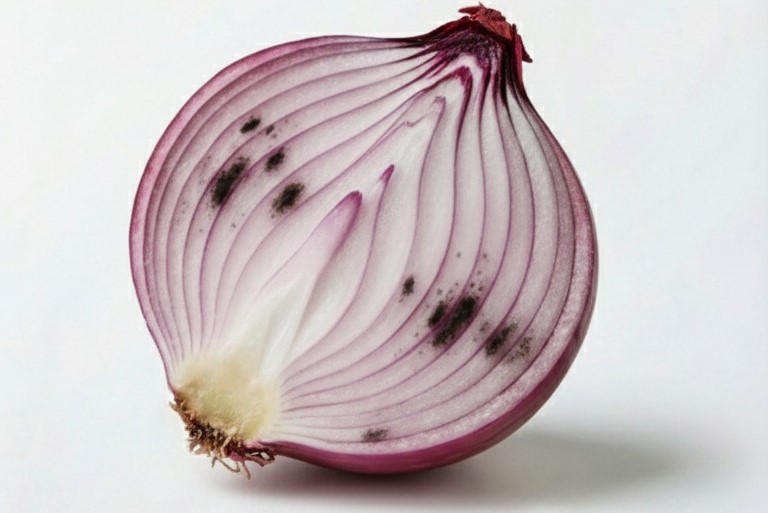
Cutting into an onion and finding black spots inside the flesh is a clear sign of spoilage. This means the fungus has moved beyond the surface and into the edible part.

At this stage, peeling won’t help. Using such an onion can increase the risk of stomach infections, nausea, and food poisoning—especially for children, elderly family members, and anyone with a weaker immune system.

Many people believe, “I’ll just cook it well and it’ll be fine.” Unfortunately, that’s not always true. While heat can kill some bacteria, it doesn’t reliably destroy toxins produced by certain molds.

These toxins can survive boiling, frying, and slow cooking. So adding a spoiled onion to a curry doesn’t guarantee safety—it just hides the problem under spices.

Onions are affordable and easy to replace. A day of food poisoning isn’t. If an onion looks questionable, smells odd, or makes you hesitate even for a second, it’s best to throw it away.

There’s no medal for “saving” a doubtful onion, but there is a price to pay for ignoring warning signs.

Simple Storage Tips to Avoid This Situation

To keep onions fresh for longer, store them in a cool, dry, well-ventilated place. Avoid plastic bags, which trap moisture and encourage mold. Keep onions away from potatoes, as potatoes release moisture and gases that speed up spoilage.

Black spots on onions don’t always mean danger, but they do deserve attention. Surface spots can often be handled safely, while internal spots, bad smells, or slimy textures mean it’s time to let go. A little awareness in the kitchen goes a long way—keeping your meals safe, your stomach happy, and your cooking stress-free.

Long or Short, get news the way you like. No ads. No redirections. Download Newspin and Stay Alert, The CSR Journal Mobile app, for fast, crisp, clean updates!

App Store – https://apps.apple.com/in/app/newspin/id6746449540

Google Play Store – https://play.google.com/store/apps/details?id=com.inventifweb.newspin&pcampaignid=web_share

Latest News

Popular Videos
