


Taiwan Opposition Leader Visits China for Peace Talks Amid Rising Tensions
The CSR Journal Magazine

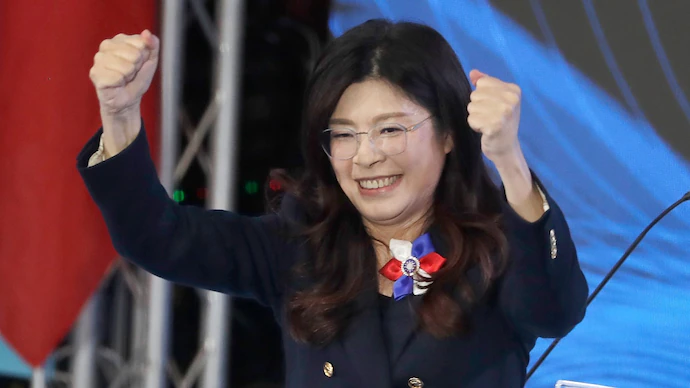
Taiwan’s opposition leader Cheng Li-wun has officially arrived in China at the invitation of President Xi Jinping. This visit, which she describes as a “journey for peace,” marks the first time in a decade that a Taiwanese opposition leader has made such a trip. Cheng’s visit comes prior to a scheduled meeting in May between Xi and US President Donald Trump, adding significance to her discussions in China.

Before departing Taipei, Cheng expressed the necessity for Taiwan to actively seek opportunities for peace and to prevent conflict. Her visit coincides with increasing military pressure from Beijing, which has been sending warplanes and naval vessels near Taiwan almost daily, a situation that has heightened tensions in the region.

Cheng’s airport send-off saw around a few dozen supporters and detractors expressing their views. The opposition leader highlighted the intent behind her visit, stating that it aims to demonstrate that the desire for peace exists beyond just Taiwan.

Increased Military Tensions and US Involvement

As Cheng engages with Chinese officials, the military situation around Taiwan remains precarious. The Chinese government continues to assert its claim over Taiwan and has not ruled out using force to reinforce this claim. Recently, the US State Department publicly condemned China’s military activities in the region as exacerbating tensions and urged for an end to such provocations.

Beijing’s relationship with Taiwan is framed as an internal matter, according to a spokesperson from the Chinese Foreign Ministry, who reiterated the country’s consistent opposition to military ties between the US and Taiwan. This disapproval comes amid significant arms sales negotiations between the US and Taiwan, including a recent deal valued at over $11 billion, which Beijing has strongly opposed.

The upcoming meeting between Xi and Trump is expected to address these contentious arms sales. In a prior conversation, Xi warned that Taiwan separation from China would not be tolerated and urged the US to approach arms sales with caution. The complex dynamic of US-Taiwan relations further complicates the situation.

Political Divisions Within Taiwan Regarding Engagement with China

Cheng’s diplomatic visit raises questions about the opposition Kuomintang (KMT) party’s approach toward Beijing compared to the ruling Democratic Progressive Party (DPP). The KMT does not hold the authority to forge agreements that impact Taiwan on a national level but may seek to establish dialogue with local Chinese entities or the Communist Party, thus enhancing municipal ties.

The KMT’s strategy includes advocating for a reduced defence budget in contrast to the larger proposal from the DPP, which they characterise as an excessive allocation for military purchases. This political divide accentuates the differing perspectives on how Taiwan should interact with China.

Furthermore, Cheng’s visit is juxtaposed against Beijing’s stance towards Taiwan’s President Lai Ching-te, whom they regard as a “separatist,” suggesting a tougher approach to relations with the island’s leadership that diverges from the KMT’s more conciliatory efforts.

Taiwan has operated independently from China since 1949 when the Communist Party took control in Beijing. Following a civil war, the defeated KMT retreated to Taiwan, establishing its own government. This historical backdrop continues to shape Taiwan’s current political landscape, influencing both domestic and international relations.

Long or Short, get news the way you like. No ads. No redirections. Download Newspin and Stay Alert, The CSR Journal Mobile app, for fast, crisp, clean updates!

App Store –  https://apps.apple.com/in/app/newspin/id6746449540 

Google Play Store – https://play.google.com/store/apps/details?id=com.inventifweb.newspin&pcampaignid=web_share

Latest News

Popular Videos
