


Taiwan Reports Increased Chinese Military Activity in Its Surroundings
The CSR Journal Magazine

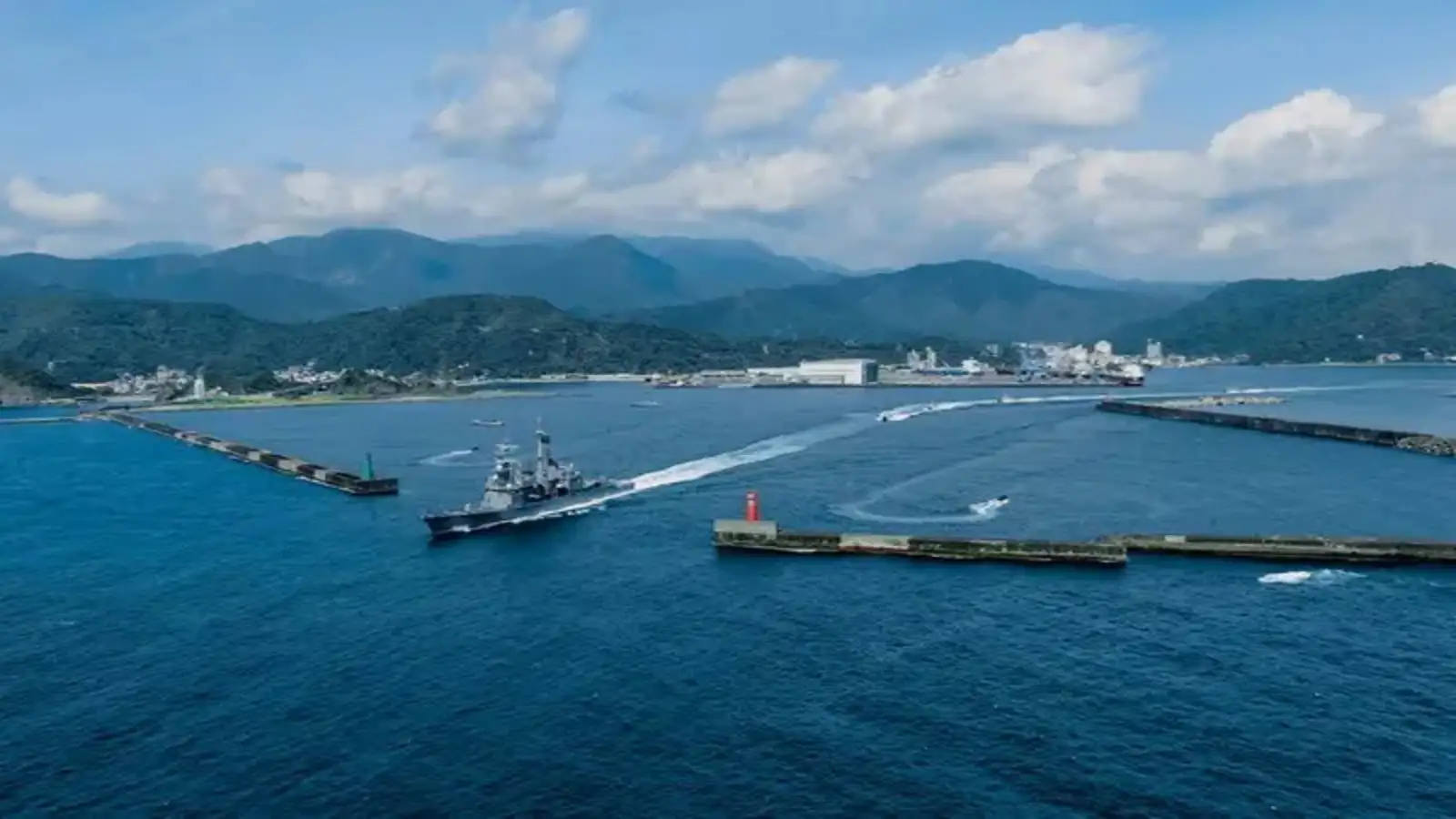
Taiwan’s Ministry of National Defense has reported the detection of 16 sorties of Chinese military aircraft, alongside 10 naval vessels and two official ships in the vicinity of its territorial waters. The surveillance was conducted as of 6 AM local time on Wednesday. Among the aircraft, 13 sorties crossed the median line, entering the southwestern and eastern sections of Taiwan’s Air Defense Identification Zone (ADIZ). In a statement released on the social media platform X, the ministry confirmed the presence of the aircraft and vessels and indicated that the Republic of China Armed Forces were closely monitoring the situation and ready to respond.

Previous Day’s Military Movements

On the preceding day, the Ministry of National Defense recorded three sorties of Chinese military aircraft, alongside nine vessels and one official ship operating in the area around Taiwan. This detection was also noted by the ministry at 6 AM local time. The three aircraft sorties reported on Tuesday crossed the median line into Taiwan’s southwestern ADIZ, prompting a monitoring response from Taiwan’s armed forces. The consistent detection of military activity has underscored the ongoing tensions in the region.

Historical Context of Cross-Strait Relations

The situation regarding Taiwan is deeply rooted in a complex historical and political context. China asserts that Taiwan is an integral part of its territory, a stance that has been reinforced through national policy, domestic laws, and various international statements. Conversely, Taiwan operates with a distinct identity, maintaining its own government, military, and economic systems, thereby asserting a level of de facto independence. This interplay raises significant questions regarding sovereignty, self-determination, and the principle of non-interference under international law.

Historical Claims to Taiwan

The origins of China’s claim to Taiwan can be traced back to the annexation of the island by the Qing Dynasty in 1683 following the defeat of the Ming loyalist Koxinga. Initially, Taiwan was subject to limited Qing control. A pivotal moment occurred in 1895 when the Qing Dynasty ceded Taiwan to Japan as a consequence of the First Sino-Japanese War, leading to a 50-year period of Japanese colonial rule. Following Japan’s defeat in World War II, Taiwan was returned to Chinese control, yet the sovereignty transition remained formalized.

Post-Civil War Developments

In 1949, the Chinese Civil War culminated in the establishment of the People’s Republic of China (PRC) on the mainland, while the Republic of China (ROC) retreated to Taiwan. Both entities claimed sovereignty over China, resulting in a complex dual sovereignty scenario. While Taiwan functions as a de facto independent state, it has deliberately avoided making a formal declaration of independence to mitigate the risk of military confrontation with the PRC, a situation outlined by various analyses from international relations entities.

Long or Short, get news the way you like. No ads. No redirections. Download Newspin and Stay Alert, The CSR Journal Mobile app, for fast, crisp, clean updates!

App Store –  https://apps.apple.com/in/app/newspin/id6746449540 

Google Play Store – https://play.google.com/store/apps/details?id=com.inventifweb.newspin&pcampaignid=web_share

Latest News

Popular Videos
