Astrobase, an emerging Indian space startup, is striving for an ambitious goal: to increase the nation’s launch capacity to 1,000 tonnes annually. This significant target was articulated by the company’s founder, Nereraj Khandelwal, during a recent interview. Khandelwal noted that the amount of payload a country is capable of sending into orbit is closely associated with the scale of its space economy.
He highlighted the disparity between global leaders in space launches, citing the United States’ 2,700 tonnes, China’s 370 tonnes, and India’s mere 9.5 tonnes in 2025. Khandelwal emphasised that the tonnage a nation can deliver to space plays a crucial role not only in economic terms but also for national security and infrastructural development. He asserts that improved launch capacity will bolster India’s standing in the realm of space exploration and technology.
Rocket Development Initiatives
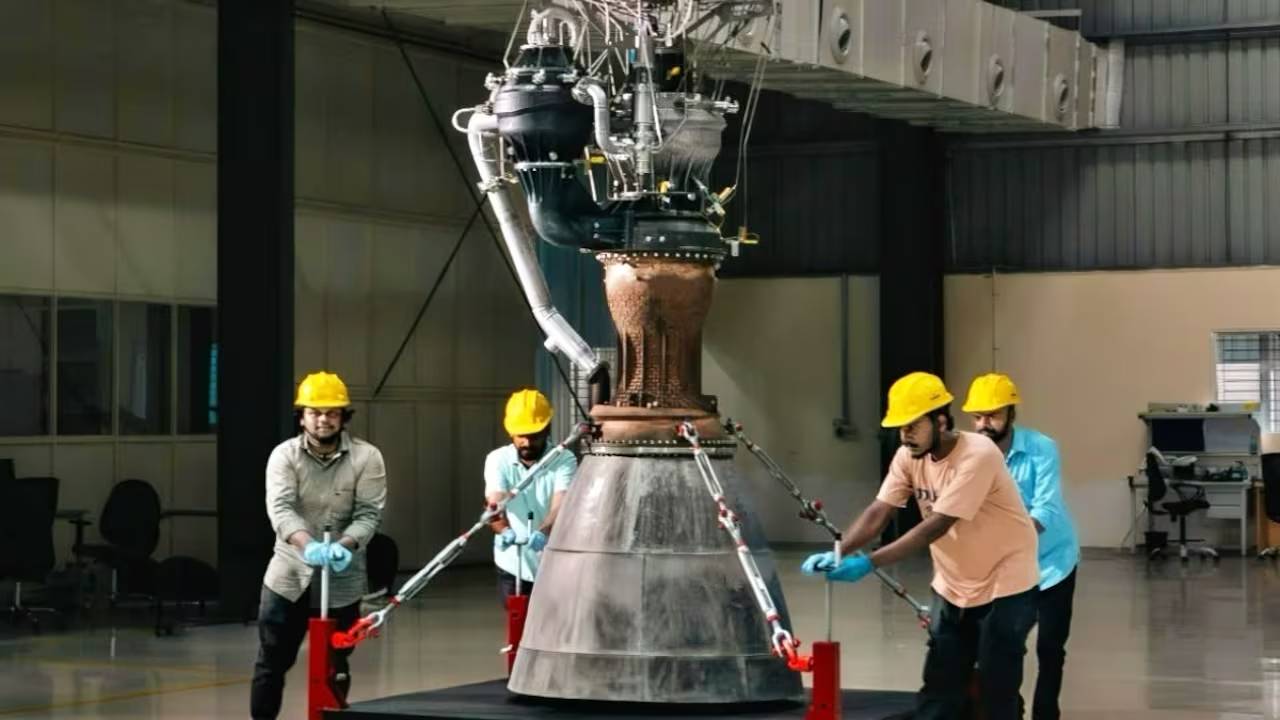
Astrobase is currently focused on engineering its launch vehicle with the 1,000-tonne target in mind. Central to this endeavour is the company’s latest innovation, the Everest rocket engine. This methane-powered engine was recently introduced and has reached full integration, now progressing to physical testing. Khandelwal pointed out that the establishment of their own methane engine testing facility will enable Astrobase to enhance its production line, allowing for rapid manufacturing, testing, and modifications of its engine designs.
The facility is fully operational, allowing Astrobase to ensure that each engine undergoes comprehensive testing before being integrated into the rocket. The goal is to produce approximately 50 engines annually, necessitating tests on roughly one engine each week. This structured approach aims to streamline the production process and improve overall efficiency.
Astrobase’s Everest engine features a two-stage launch vehicle design, employing a single engine architecture for both stages, thereby optimising performance even in a vacuum during the second stage. This strategy is aimed at building expertise around a single design instead of juggling multiple propulsion systems. The use of methane, rather than conventional kerosene, presents specific technical challenges due to the cryogenic nature of the fuel, which must be maintained at around minus 160 degrees Celsius.
Future Launch Plans and Testing
The advancement of reusability is a fundamental aspect of both the Everest engine and the launch vehicle from the outset. However, achieving reliable booster landings will involve extensive flight testing, with Khandelwal estimating that approximately five to ten flights will be necessary before the first stage can be successfully landed. Astrobase has decided against developing a smaller suborbital rocket prior to executing its full-scale vehicle, although preliminary hop tests are planned ahead of the orbital flight.
Khandelwal remarked that the first hot-fire test of the Everest engine is on the near horizon, although specific timelines remain undisclosed as component and subsystem testing continues. The emphasis on thorough testing underscores the company’s commitment to safety and reliability as they move forward into the challenging domain of space exploration.
By focusing on a robust engineering process and maintaining a clear vision for the future, Astrobase aims to contribute significantly to India’s space ambitions and increase its payload capacity on the global stage. The firm’s systematic approach reflects a methodical progression towards realising its goal of launching 1,000 tonnes into space each year.
Long or Short, get news the way you like. No ads. No redirections. Download Newspin and Stay Alert, The CSR Journal Mobile app, for fast, crisp, clean updates!
Mission ShakthiSAT, an innovative initiative led by Space Kidz India, has united girls from 108 nations to construct a satellite, poised for launch from...