


app-store-logo
play-store-logo
February 17, 2026

Solar Eclipse 2026: Annular Eclipse to Create ‘Ring of Fire’
The CSR Journal Magazine

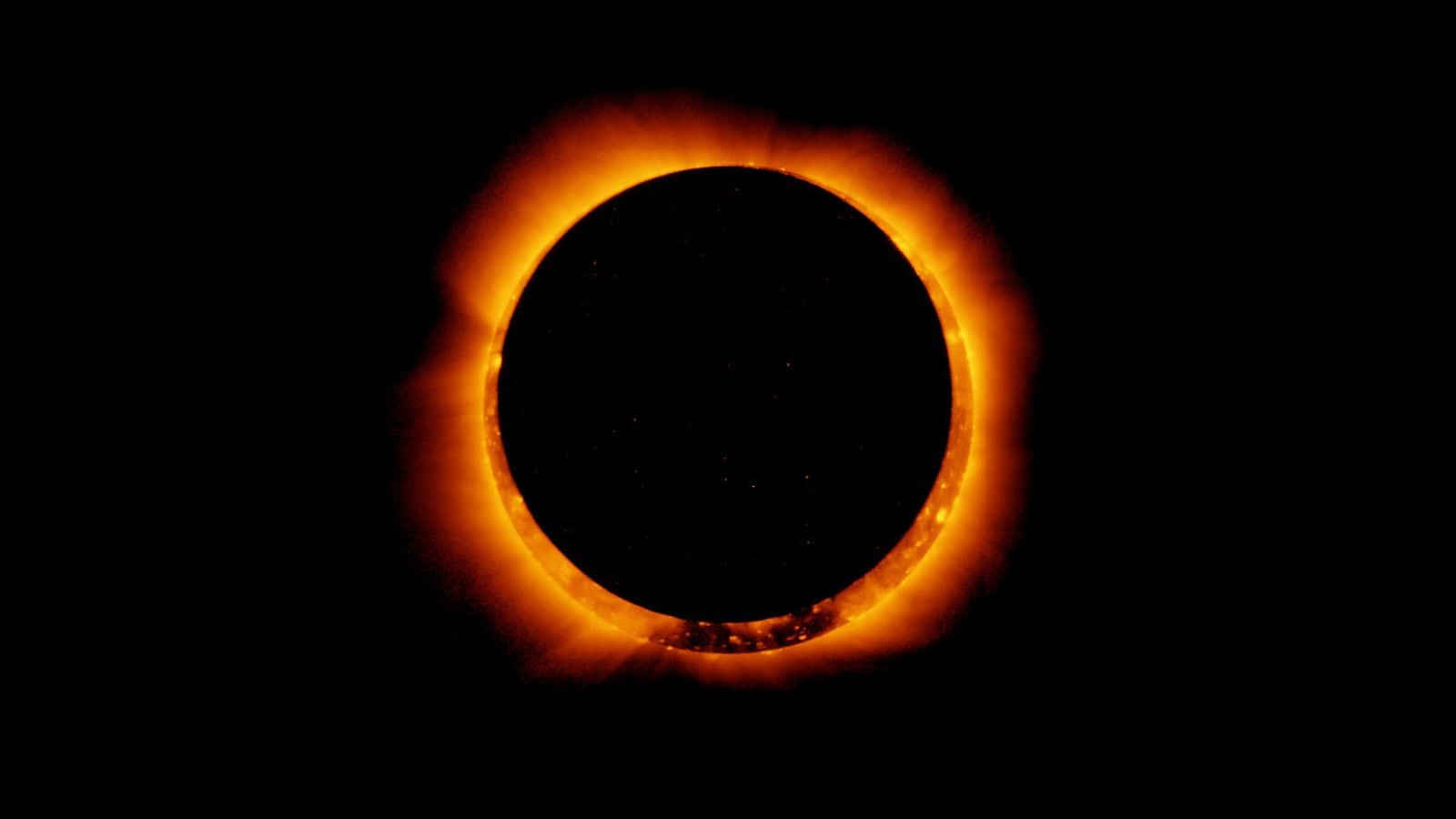
On February 17, 2026, an annular solar eclipse will occur, marking the first significant eclipse of the year. This event, often referred to as a ‘ring of fire,’ will take place when the Moon aligns between the Earth and the Sun but does not entirely cover the Sun’s disk. The phenomenon will commence at approximately 09:56 UTC and will last for several hours, with the peak of the annular phase occurring around 12:11 UTC.

Understanding the Annular Solar Eclipse

An annular solar eclipse differs from a total eclipse due to the Moon’s position in its orbit. On this occasion, the Moon will be positioned farther from Earth, making its apparent size smaller than that of the Sun. Consequently, only the outer edges of the Sun will be visible, creating the striking effect known as the ‘ring of fire.’ During the maximum phase of the eclipse, around 96 percent of the Sun’s surface will be obscured by the Moon, although there will be no complete darkness. Hence, special eye protection is crucial throughout the duration of this event.

Viewing Locations for the Eclipse

The complete annular eclipse will primarily be observable from Antarctica and the surrounding southern ocean regions. Due to the relative positioning of the Earth, Moon, and Sun, this area is largely uninhabited, meaning that only a limited number of researchers and eclipse enthusiasts are likely to witness the full ring in person. In contrast, areas in southern Africa and parts of South America will experience a partial solar eclipse, where only sections of the Sun will be covered by the Moon, making it safe for viewers to observe using eclipse glasses. Unfortunately, regions such as India and most of Asia and North America will not have visibility of this solar event, necessitating that local skywatchers rely on online broadcasts from scientific organizations for real-time views and commentary.

Safety Precautions for Observers

It is vital to emphasize the importance of eye safety during this celestial event. Viewing the Sun without appropriate eye protection, even during an eclipse, can result in severe eye damage. Observers should ensure they use certified solar eclipse glasses for adequate protection. For those unable to travel to witness this occurrence or who cannot view even parts of it, numerous scientific organizations will offer live streams of the event, including expert commentary and high-quality visuals, thereby providing access to this rare astronomical phenomenon from afar.

Long or Short, get news the way you like. No ads. No redirections. Download Newspin and Stay Alert, The CSR Journal Mobile app, for fast, crisp, clean updates!

Latest News

Popular Videos
