


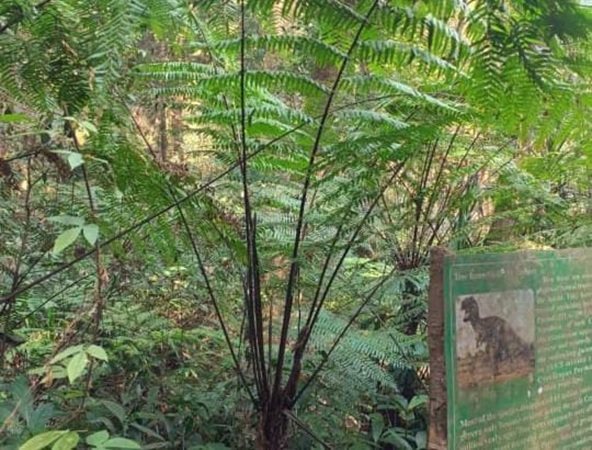

Shillong Member of Parliament Ricky A J Syngkon has sought urgent intervention from the Union Ministry of Environment, Forest and Climate Change to prevent the acquisition of land belonging to the Experimental Botanical Garden at Barapani for the proposed Greenfield high-speed corridor of National Highway-6.
In a letter addressed to Union Environment Minister Bhupender Yadav, the MP raised serious concerns over the proposed alignment of the highway, warning that it could adversely affect the Experimental Botanical Garden managed by the Botanical Survey of India’s Eastern Regional Centre in Shillong.
Syngkon said the proposed routing of the high-speed corridor threatens to fragment or alienate parts of the botanical garden, which has been developed over more than five decades. He described the garden as one of the country’s richest and best-maintained plant conservatories.
According to the MP, the Barapani garden houses over 1,200 plant species, including several endemic, endangered and threatened taxa from the Indo-Burma Biodiversity Hotspot, making it a site of immense national and global ecological importance.
A unique “gene sanctuary”
Referring to his personal visits to the site, Syngkon termed the garden a unique “gene sanctuary” that has transformed from invasive grassland into a major centre for ex-situ conservation through sustained scientific efforts.
He noted that many of the plant species conserved at the garden are protected under the Wildlife (Protection) Amendment Act, 2022. The site also supports a wide range of faunal species, including birds, reptiles, insects and small mammals that are listed under various schedules of the Wildlife (Protection) Act.
Scientific and educational significance
Highlighting its academic value, the MP said the garden functions as a living classroom for students and a field laboratory for researchers from across India and abroad. He added that the garden has played a vital role in biodiversity conservation through the propagation and distribution of native plant species.
As an example of its wider ecological relevance, Syngkon cited the Botanical Survey of India’s supply of more than 2,000 seedlings and technical guidance for a community-based ecological restoration initiative in Ri-Bhoi district.
Call for alternative alignment
While acknowledging the importance of infrastructure development and improved connectivity, Syngkon cautioned that the ecological, scientific and educational loss resulting from damage to such a nationally significant conservation site would be irreversible and disproportionate to the benefits of routing the highway through the area.
He urged the Environment Ministry to examine the proposed land acquisition in consultation with expert bodies and advise the Ministry of Road Transport and Highways and implementing agencies to explore an alternative alignment that bypasses the garden.
The MP also appealed for the Barapani Experimental Botanical Garden to be recognised as a critical biodiversity conservation area of national importance. Calling it a matter of pride for Meghalaya and the country, Syngkon said protecting the garden would demonstrate India’s commitment to balancing development with long-term ecological security.
Long or Short, get news the way you like. No ads. No redirections. Download Newspin and Stay Alert, The CSR Journal Mobile app, for fast, crisp, clean updates!
App Store – https://apps.apple.com/in/app/newspin/id6746449540
Google Play Store – https://play.google.com/store/apps/details?id=com.inventifweb.newspin&pcampaignid=web_share