



Across India, an unseen re-wiring of daily life is quietly shrinking the social worlds of older adults. Numerous national surveys now show that loneliness and social isolation are not peripheral geriatric concerns but structural outcomes of demographic and economic change. One major study found that four in ten older Indians experience significant loneliness and the figure strongly correlated with poorer physical and mental health.
This piece explores what is being lost: the small, everyday “micro-communities” that once supported ageing. And why they are eroding, and how corporate, civic and policy actors can rebuild these social ecosystems for India’s 55+ population.
The Micro-Communities That Quietly Mattered
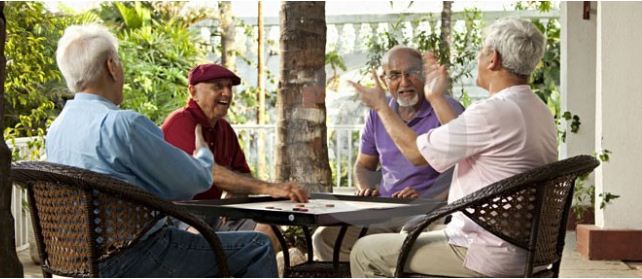
Micro-communities are the informal, everyday social structures that make life meaningful: the 7 a.m. chai corner, acquaintances from the neighborhood park who check in unasked, cultural groups coordinating festivals, and familiar locations where people knew each other’s rhythms. These were not formal institutions but webs of familiarity, reciprocity and proximity (FRP). This FRP is what I believe has started to disappear.
Research from India consistently shows that active social participation (membership in local groups, regular social interaction, and civic engagement) has a direct protective effect on wellbeing among older adults. Social capital is, quite literally, health capital.
Why These Micro-Communities Are Fraying
1. Migration and the absence of adult children
Migration remains central to India’s economic mobility, but it also removes the everyday intergenerational support older adults once relied on. Research shows that when adult children migrate (especially sons, in search of greener pastures) the social status, safety and daily care of left-behind parents can decline, even in financially stable households.
2. Urbanisation and the decline of public commons
India’s urban growth has not always produced elder-friendly public spaces. Traffic, pollution, security concerns and the disappearance of walkable neighbourhoods reduce spontaneous social contact. Many older adults find that parks, footpaths and even seating are not designed for them, reducing their participation in everyday community life.
3. Rise of nuclear families
With shrinking households and staggered routines, intergenerational overlap has reduced. Celebrations that once happened collectively and often are now smaller, private and more fragmented.
4. Digital substitution and the new isolation
While technology connects many, it also displaces in-person interaction. For older adults with limited digital literacy, conversations that move to apps and screens are effectively lost. Even for digitally savvy seniors, virtual communities cannot fully replace embodied belonging. More so, most apps and websites are not built with elder population in mind.
5. Ageing bodies, energy and limited mobility
Declining mobility and chronic disease make participation more difficult. Emerging research highlights that older adults often face nutrient absorption challenges, leading to lower energy levels – a physiological barrier to social engagement. This factor doesn’t replace social interventions, but it contributes meaningfully to withdrawal.
The Human Cost and Why CSR Should Care
The erosion of micro-communities is not merely emotional; it is a socio-economic and public-health issue. International and Indian research shows that social isolation increases the risk of depression, functional decline and cardiovascular disease. It raises the need for institutional care and increases healthcare expenditure.
India’s demographic path of a rapidly growing population of older adults makes this a crucial CSR imperative and policy challenge today. National reports, including the India Ageing Report and the Longitudinal Ageing Study in India (LASI), highlight that ageing intersects health, mobility, income security and community design.
For CSR leaders, the implications are direct: investments that strengthen social connectedness deliver measurable improvements in wellbeing, resilience and community safety.
Solutions: What Corporate, Civic and Policy Actors Can Do
1. Invest in neighbourhood commons, not one-off events
CSR funds can support age-friendly public spaces – shaded seating, accessible pathways, community gardens and safe walking loops. The goal should be consistent daily use, not sporadic programming.
2. Support low-friction local organising
Small grants for religious groups, cultural associations or informal community volunteers can revive routine social gatherings. Local organisers often need modest operational help – not large projects.
3. Integrate “social health” into outreach programs
Many CSR initiatives already support health camps and screenings. Adding simple social-isolation assessments and linking seniors to local groups (walking clubs, cultural circles, festival committees) can multiply impact.
4. Create specific learning opportunities to keep them engaged
Seniors must be encouraged to participate in emerging digital platforms specifically for people above 50. These platforms conduct expert-led learning series on topics like writing their biographies, nutrition, financial literacy, finding your life purpose. Further, for each of these learning series, these platforms create digital and offline communities of participants that encourage
5. Address mobility and nutritional barriers
Community transport, mobility aids, and basic nutrition education – especially around age-related absorption decline and the need of nutraceuticals – help older adults remain socially active. These are enablers of belonging.
Conclusion: Small Interventions, Large Returns
In villages, towns and metros alike, I’ve seen how repairing a bench, supporting a festival or enabling a morning walking group can restore the rhythms that give older adults purpose and connection. Rebuilding micro-communities is not about nostalgia; it is about strengthening India’s social infrastructure.
For CSR teams and corporate foundations, the opportunity is clear: shift from episodic charity to ecosystem building. Invest in the places where social life naturally occurs, measure outcomes, and partner with civic institutions for scale.
The returns of healthier, safer, more connected seniors are precisely the kind of social impact India’s ageing future demands.
Disclaimer: Views of the author are personal and do not necessarily represent the website’s views.

Author of the above article Mihir Karkare is a seasoned entrepreneur with close to 20 years of experience in building and scaling creative and tech-driven enterprises. He is currently the Co-founder & CEO of Meru Life, an age-tech ecosystem designed to empower individuals aged 55–70—referred to by Meru Life as ‘Active Seniors’—to lead active, connected, and purposeful lives.