


Scientists Connect Three Mini-Brains, Discover Astonishing Results
The CSR Journal Magazine

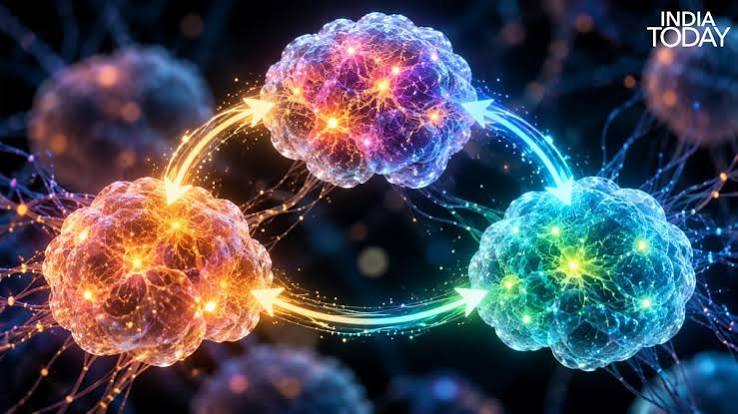
Researchers have made significant strides in understanding brain plasticity by connecting three human brain organoids. This study aimed to explore the effects of repeated information on the functioning of these mini-brains. The researchers found that over two weeks, the connected organoids demonstrated improved ability to distinguish among various signals.

Details of the Study

The study, published in Communications Biology, involved the creation of three lab-grown clusters of brain tissues called organoids, generated from stem cells. These organoids are simplified models of human brain tissue. They consist of various brain cell types and have the capability to form neural connections, although they lack the complete complexity of a fully developed human brain.

The research team sought to determine whether connecting these organoids into an organised network would enhance their information processing capabilities. They conducted a series of experiments comparing networks formed from one, two, and three organoids. These networks underwent repeated stimulation while their activities were closely monitored over time.

Remarkably, the three-organoid networks showed a stark improvement in identifying the source of signals after consistent exposure. Conversely, networks containing only one or two organoids did not exhibit similar advancements in signal discrimination.

Findings and Observations

The study revealed several noteworthy changes in the activity of the three-organoid network. As the stimulation continued, the three individual organoids began to respond distinctly based on the incoming signals. Additionally, the electrical activity within the network began to move in more organised patterns, indicating enhanced connectivity and communication among the organoids.

Another significant observation was that even though the organoids were developed under identical conditions, their experiences of repeated stimulation led to the emergence of different functional roles within the network. This phenomenon illustrates how the connection between brain cells, combined with their experiences, can influence their eventual functionalities.

This characteristic of brain responsiveness, known as brain plasticity, demonstrates the capacity of neural networks to adapt their connections and behaviours in response to experience. The findings from the study do not imply that the researchers created three separate human brains capable of thought or consciousness. Instead, they offer valuable insights into how structured connections and ongoing stimulation can drive laboratory-grown brain tissues to develop specialised functions.

Future Implications of the Research

The research team, which includes scientists from the University of Tokyo, describes their findings as significant for understanding how similarly built organoids can evolve into distinct functional units through repeated inputs. The study raises essential questions about the extent of this capacity for reorganisation and whether more complex networks of brain organoids could aid scientists in further comprehending the learning and adaptive functions of real human brains.

As scientists continue to investigate the potential of brain organoids in replicating aspects of human brain activity, the implications for understanding neurological disorders and brain function broaden significantly. This study sets a foundation for exploring how neural networks can be harnessed for future advancements in neuroscience.

Researchers are now poised to delve deeper into the functionalities of these networks, examining how increased complexity could unveil more about the intricate workings of the human brain. The pursuit of knowledge in this field may eventually lead to breakthroughs in treatments for various neurological conditions.

Long or Short, get news the way you like. No ads. No redirections. Download Newspin and Stay Alert, The CSR Journal Mobile app, for fast, crisp, clean updates!

App Store –  https://apps.apple.com/in/app/newspin/id6746449540 

Google Play Store – https://play.google.com/store/apps/details?id=com.inventifweb.newspin&pcampaignid=web_share

Latest News

Popular Videos
