


app-store-logo
play-store-logo
March 12, 2026

Scientists Capture Images of Trees Glowing with Electricity in Thunderstorms
The CSR Journal Magazine

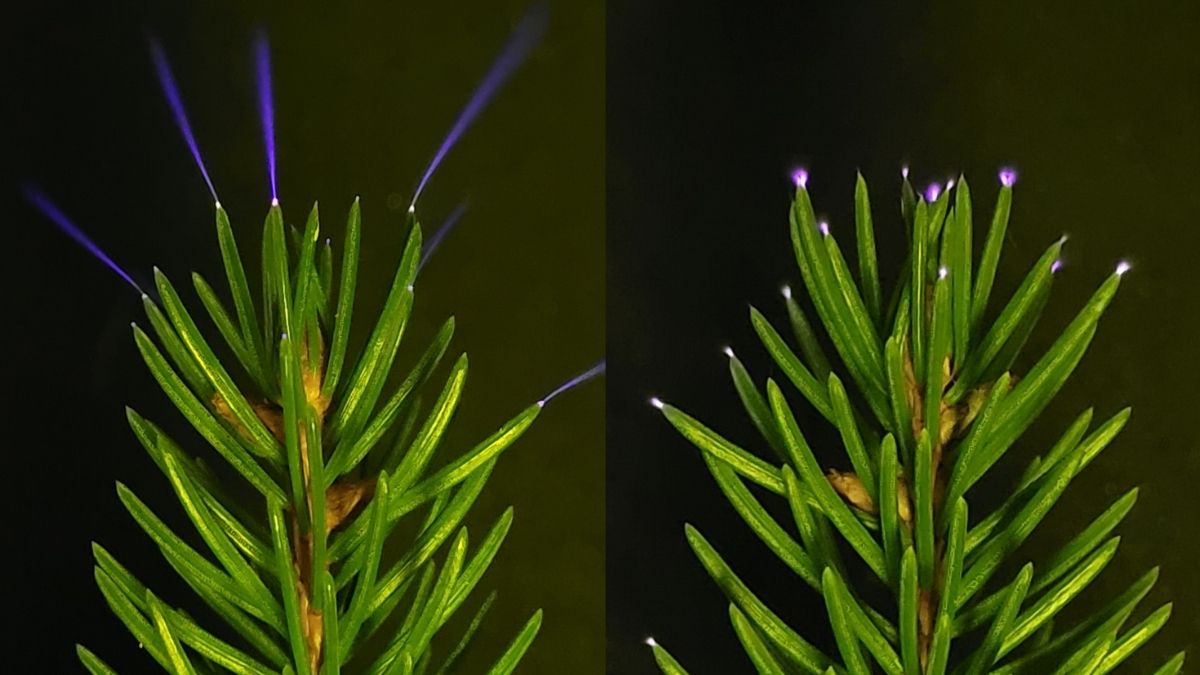
For the first time, researchers have successfully filmed a remarkable phenomenon where trees emit an electrical glow during thunderstorms. This study, published in Geophysical Research Letters, details how the branches of trees produce a faint blue light, referred to as corona discharge. This phenomenon was observed using sensors and cameras strategically deployed in the Blue Ridge Mountains.

The corona effect occurs when the intense electric field generated by a storm ionizes the air around the sharp edges of tree leaves. Historically, sailors have noted similar glowing effects on ship masts during storms. The significance of this discovery lies in its implications for understanding the impact of forested areas on Earth’s electrical balance and greenhouse gas levels, which may be more substantial than previously recognized.

Understanding the Mechanics of Electrical Glow

The blue light visible at the tops of trees results from corona discharge, a different occurrence from either lightning strikes or wildfires. The overwhelming electric field during a thunderstorm can detach electrons from surrounding air molecules, producing electricity released into the air in a plasma state.

Unlike the intense heat associated with lightning, corona discharge involves what is often termed ‘cool’ electricity. Research indicates that this discharge, being less powerful and localized, accumulates at the sharpest parts of trees, such as pine needles and leaf tips. Crucially, this electrical phenomenon does not cause burning or damage to the trees.

Environmental Implications of Electric Trees

In addition to their visually intriguing blue glow, the corona discharges from tree tips significantly influence air quality. Research from Penn State University highlights that these electrical discharges contribute to the generation of free hydroxyl radicals, which act as vital agents for atmospheric cleansing.

Hydroxyl radicals are particularly reactive and play a crucial role in breaking down various pollutants and greenhouse gases, including methane, which is a significant contributor to climate change.

Variation in Luminescence Among Tree Species

Following thunderstorms, different tree species exhibit varying levels of brightness. This variability has been confirmed by recent research published in Geophysical Research Letters. It has been established that the relative size of a tree’s canopy directly influences the amount of emitted ‘ghostly’ light. Evergreen trees, in particular, engage most actively in this electrical phenomenon. The needle-like structure of coniferous trees effectively facilitates the concentration of electric fields at their pointed tips, thereby enhancing the overall electrical discharge and the resultant glow.

Long or Short, get news the way you like. No ads. No redirections. Download Newspin and Stay Alert, The CSR Journal Mobile app, for fast, crisp, clean updates!

App Store –  https://apps.apple.com/in/app/newspin/id6746449540 

Google Play Store – https://play.google.com/store/apps/details?id=com.inventifweb.newspin&pcampaignid=web_share

Latest News

Popular Videos
