


app-store-logo
play-store-logo
March 2, 2026

Satellite Imagery Highlights Significant Tanker Congestion in Strait of Hormuz
The CSR Journal Magazine

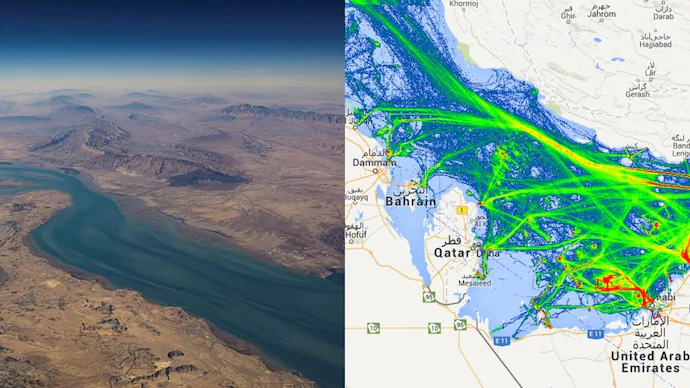
The Strait of Hormuz, a crucial maritime corridor situated between Iran and Oman, is currently experiencing substantial disruptions due to advanced GPS jamming techniques, resulting in a chaotic situation for tankers in this critical area for global oil transportation. Following military operations, including joint actions by the US and Israel against Iranian targets on February 28, the region has become a battleground for electronic warfare. Generally, this waterway is responsible for approximately 20 percent of the world’s oil supply, but recent navigation challenges have led to a significant reduction in ship traffic as vessels encounter severe issues with misdirected signals. Captains have reported navigational systems displaying incorrect information, with tankers appearing to be navigating over land or mistakenly anchored at international airports.

How Navigation Systems Are Being Disrupted

To comprehend the ongoing turmoil, it is essential to understand the reliance of ships on satellite signals for navigation. Vessels typically use the Global Positioning System (GPS) to ascertain their location and the Automatic Identification System (AIS) to communicate their position to others. In the Strait of Hormuz, these vital signals are being compromised through two primary tactics. The first method involves jamming, where high-powered radio noise emanates from ground stations, effectively drowning out the weaker satellite signals. This phenomenon can be likened to a loud siren obscuring a quiet whisper. Satellite observations of the Strait of Hormuz indicate a marked increase in erratic behavioral patterns of ship tracking data beginning on February 28, replacing the usual straight trajectories with chaotic paths as navigation systems succumbed to synthetic signals.

Iran’s Electronic Warfare Capabilities

Iranian forces are implementing advanced indigenous electronic warfare technologies to establish a protective electronic barrier over the Persian Gulf. According to various regional analyses, the Iranian military has introduced systems like the Cobra V8 and Sayyad-4 near Bandar Abbas. The Cobra V8 is positioned on trucks and orchestrates the interception and jamming of airborne radar and satellite communications within a range of 250 kilometers. On the other hand, while the Sayyad-4 is primarily designated as a missile system, its radar components are now functioning in a non-lethal capacity to obstruct foreign navigation signals. Maritime security analysts note that these technologies are specifically aimed at disrupting sophisticated guidance systems utilized by foreign military operations, particularly during the recent military campaign.

Implications for Maritime Safety

The ongoing digital disruption poses severe risks to maritime safety, particularly within the congested waters of the Strait of Hormuz. In environments where satellite navigation systems fail, the likelihood of maritime collisions escalates significantly. Large tankers, which transport substantial quantities of crude oil, have limitations in maneuverability, making quick stops or turns nearly impossible. In the absence of reliable navigational data, crews are compelled to revert to manual radar and visual navigation efforts, resulting in slower transit times for global energy supplies. The current situation has tangible repercussions for seafarers and operations within the region. For example, the tanker Skylight encountered an incident near Oman on March 1, prompting the evacuation of its crew, which included numerous Indian nationals. This ongoing crisis underscores the vulnerability of modern shipping to electronic disruptions and highlights the impact of jamming tactics on international trade.

Long or Short, get news the way you like. No ads. No redirections. Download Newspin and Stay Alert, The CSR Journal Mobile app, for fast, crisp, clean updates!

App Store –  https://apps.apple.com/in/app/newspin/id6746449540 

Google Play Store – https://play.google.com/store/apps/details?id=com.inventifweb.newspin&pcampaignid=web_share

Latest News

Popular Videos
