


Rs 18,00,000 per bag: The Soaring Cost of Rare Coffee
The CSR Journal Magazine

In India, coffee culture varies significantly between the northern and southern regions, where residents often start their day with either a strong filter coffee or a milky brew. At the forefront of this beverage revolution is Coffea Eugenioides, a unique and expensive coffee species that is reshaping perceptions of coffee. Alongside Coffea canephora, better known as Robusta, Eugenioides is one of the two parental species that contributed to the development of the Arabica coffee we commonly enjoy today. This coffee can be likened to the grandparent of the everyday cup of coffee, being older and more elusive.

Natively found in the highlands of East Africa, particularly in countries like Kenya, Rwanda, Uganda, and the Democratic Republic of Congo, the Eugenioides plant thrives at altitudes ranging from 1,500 to 2,000 meters. As coffee grows, its unique profile creates a marked difference in taste compared to standard coffee varieties.

The Distinctive Flavor Profile of Eugenioides

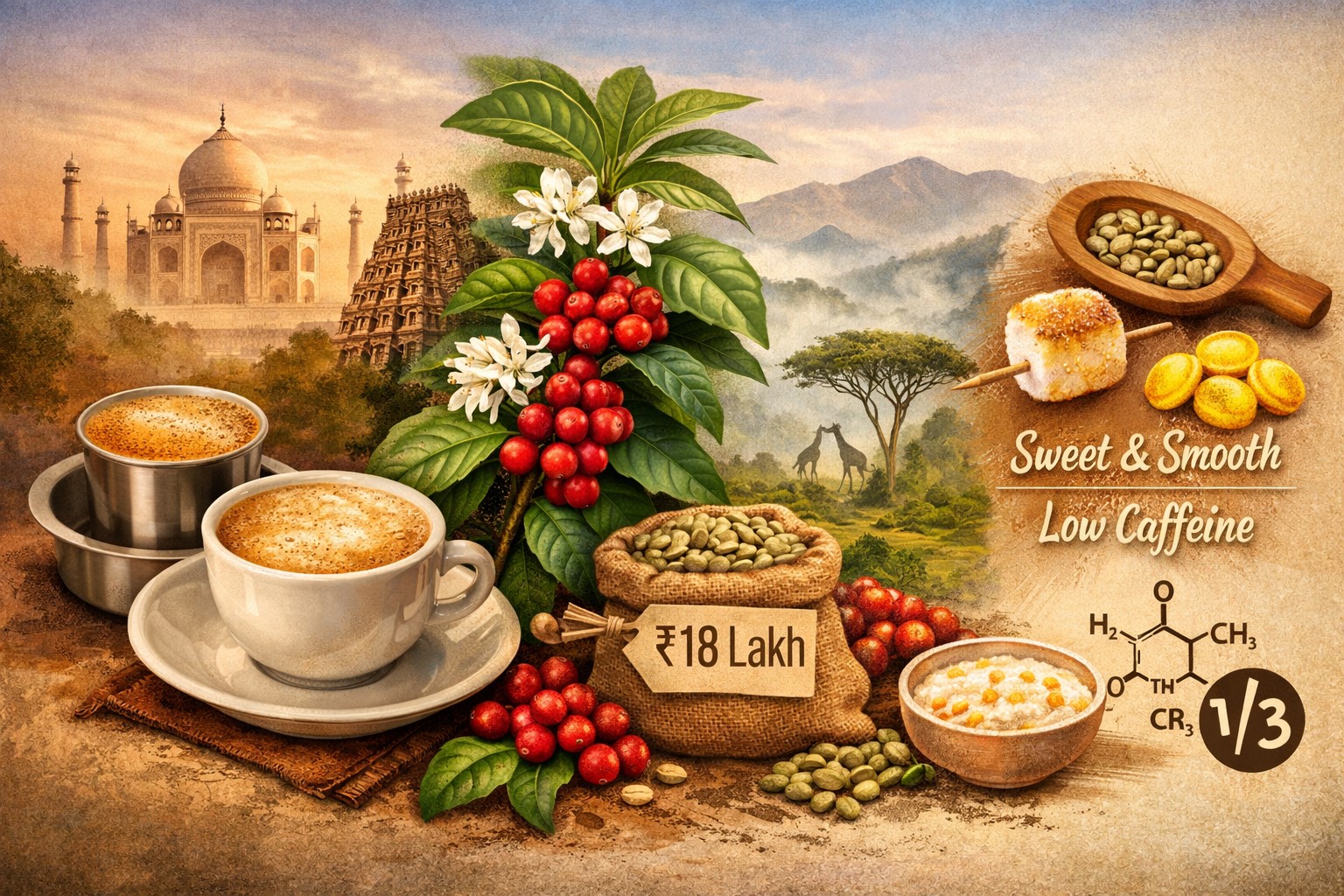
The flavor profile of Coffea Eugenioides is what truly sets it apart from its more commonly consumed counterparts. It is characterized by inherent sweetness and is often described using unusual tasting notes such as toasted marshmallows, lemon drops, and cereal milk. Unlike the bitter coffees that many Indians may be accustomed to, Eugenioides features high sweetness with low acidity and bitterness, culminating in a smooth, silky finish. This variety contains approximately one-third the caffeine of Arabica, cultivated naturally without any chemical decaffeination processes.

The Price Tag of Eugenioides

The rising demand for Eugenioides has led to significantly increased prices. A Brazilian farmer recently attempted to sell bags of this rare coffee for almost 50 times the price of regular Arabica beans, with individual bags priced around $20,000, equivalent to approximately Rs 18,00,000. This steep price is primarily due to its scarcity. Each Eugenioides tree produces no more than 150 grams of green coffee, which is considerably less than the average output from Arabica plants.

The harvesting of Eugenioides is meticulous and labor-intensive. The cherries are particularly fragile and susceptible to damage from even minor disturbances, such as light rain, wind, or brushing against the branches. Consequently, Eugenioides farming requires ample space, resulting in small-scale farms and slow harvest cycles. As a result, the market demand for this coffee has far outstripped supply. Notably, the few roasters that have managed to acquire Eugenioides have reported that their stocks quickly sold out.

The New Coffee Sensation

For coffee enthusiasts in India, who typically pay between Rs 500 to Rs 800 for premium Arabica bags, the emergence of Coffea Eugenioides presents a dramatic shift in the coffee landscape. With its unique flavor and rarity, Eugenioides is quickly becoming the focal point of interest in the global coffee community, offering a taste experience that is markedly different from the coffees most people currently enjoy.

Long or Short, get news the way you like. No ads. No redirections. Download Newspin and Stay Alert, The CSR Journal Mobile app, for fast, crisp, clean updates!

App Store –  https://apps.apple.com/in/app/newspin/id6746449540 

Google Play Store – https://play.google.com/store/apps/details?id=com.inventifweb.newspin&pcampaignid=web_share

Latest News

Popular Videos
