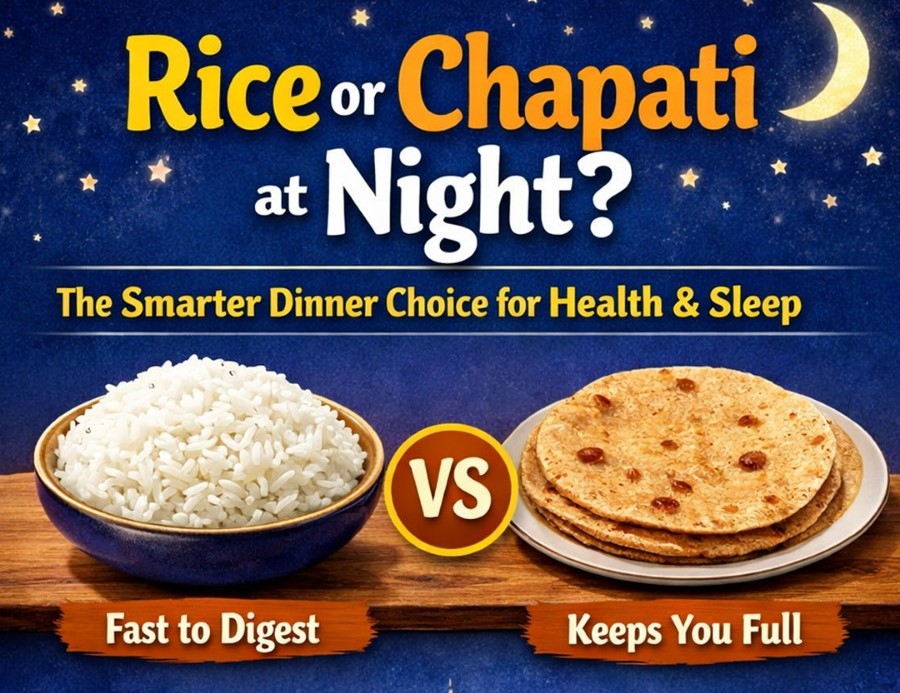
It’s 9 p.m. The day has been long. You’re tired, slightly hungry, and staring at your plate wondering—rice or chapati?
Somewhere along the way, dinner became a battlefield of food rules. Rice is “too heavy.” Chapati is “always healthier.” But the truth is simpler, kinder, and far more personal.
Dinner isn’t about discipline. It’s about helping your body rest.
By night, your body is done running marathons. It wants calm, not calories stacked sky-high. A good dinner should feel light, digest easily, and quietly prepare you for sleep.
When we eat heavy, late meals, digestion keeps working when the body wants to shut down. The result? Bloating, acidity, broken sleep, and mornings that start with fatigue instead of freshness.
So the real question isn’t rice or chapati?
It’s what helps you sleep better?
Why Rice Feels Like Comfort Food at Night
There’s a reason rice feels gentle after a long day. It digests faster and doesn’t demand much from your gut. For many people, a modest portion of rice feels soothing rather than overwhelming.
Rice also plays a small but interesting role in sleep chemistry. It triggers a mild insulin response that helps the body release calming hormones linked to relaxation and rest. This is why a simple rice-based dinner often feels grounding, especially after physical work or mental exhaustion.
If you’ve had a long, active day or tend to eat dinner a little late, rice can be a surprisingly smart choice.
Chapati: Satisfying, Steady, but Not for Everyone at Night
Chapati has its strengths. Whole wheat is rich in fibre, keeps you full longer, and releases energy slowly. This makes it a great option for blood sugar control and for people who dislike late-night hunger.
But slower digestion isn’t always ideal at bedtime. For some, chapatis feel heavy at night, especially when paired with oily sabzis or eaten in excess. That heaviness can sit in the stomach and disturb sleep.
Chapatis work best if you eat early, stay physically active, or prefer meals that keep you full till morning.
If Blood Sugar Is a Concern
For people with diabetes or insulin resistance, chapati often makes more sense than rice because it causes a slower rise in blood sugar. But that doesn’t mean rice is completely off-limits.
A small portion of rice, balanced with vegetables and protein, can still fit into a healthy dinner. Extremes do more harm than moderation ever will.
Here’s the part most debates ignore: overeating ruins sleep—no matter what’s on the plate.
Too much rice or too many chapatis both overload digestion. The body struggles, sleep breaks, and mornings feel heavy. Eating just enough, stopping before fullness turns into discomfort, is what truly matters.
Your Lifestyle Decides the Winner
Do you walk a lot? Work on your feet? Eat early? Chapati might suit you.
Do you eat late, feel bloated easily, or crave lighter meals at night? Rice may feel better.
There is no universal rule—only what your body responds to with ease.
Stop asking what’s “allowed.” Start noticing what lets you sleep peacefully and wake up light.
Nutrition isn’t about fear. It’s about awareness.
When dinner feels calm, sleep follows—and that’s the healthiest choice of all.
If you want, I can also make this more poetic, more science-backed, or Instagram-carousel friendly next.
Long or Short, get news the way you like. No ads. No redirections. Download Newspin and Stay Alert, The CSR Journal Mobile app, for fast, crisp, clean updates!