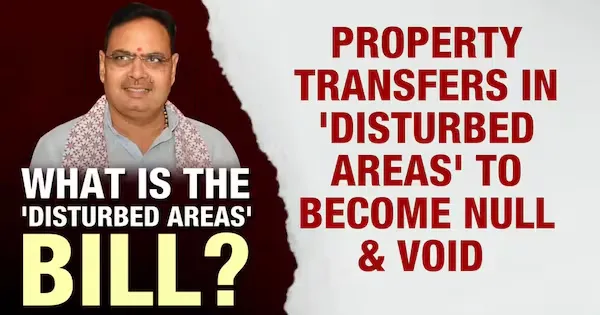
Owing to the increase in ‘improper clustering’ in Rajasthan, the state government tabled the Disturbed Areas Bill, this bill aims at ‘safeguarding the demographic equilibrium and social harmony of Rajasthan” and also keep a check on ‘improper clustering’.
During the legislation’s introduction, the BJP-ruled state government said this proposed law; The Rajasthan Prohibition of Transfer of Immovable Property and Provision for Protection of Tenants from Eviction from Premises in Disturbed Areas Act—was purposely designed to control “improper clustering.”
What is improper clustering?
The state government described improper clustering as a situation when community members of a particular community start living in increased numbers in one particular area, reason can be due to distress sales, coercion or any situation that isn’t healthy. Such settlement has disturbed the original mixed community nature and has resulted in communal tensions.
Under the Bill, even more strict clause has been added where some areas of Rajasthan would be notified as ‘disturbed areas’ and such areas would be declared null and void. In such areas, prior approval would be required from designated competent authority in order to transfer immovable property. The main reason behind this is to ensure that immovable property is sold voluntarily at fair market price and not under any pressure., free from pressure or exploitation.
Why is the Bill of improper clustering important?
In a statement last month, Rajasthan’s Minister of Law, Jogaram Patel said the state has many places witnessing ‘widespread impact’ due to the rise in population of a particular community, causing the demographic imbalance, and resulting in a lack of public harmony. While speaking to the media, Patel said that some areas in the capital, Jaipur, have experienced communal distress due to these trends.
As per the Bill, ‘improper clustering of persons of one community’ is defined as the concentration of people belonging to a particular community, staying in one place due to coercive, distress-driven, or otherwise unhealthy circumstances. The Bill also notes that such clusters disturb the area’s demography, cause communal tension, and make it difficult for the police to maintain public law and order.
The Bill further describes that anyone who violates the Act will face severe penalties, including imprisonment ranging from 3–5 years and a fine of Rs 1 lakh or 10 per cent of the property’s fair market value.