


app-store-logo
play-store-logo
February 15, 2026

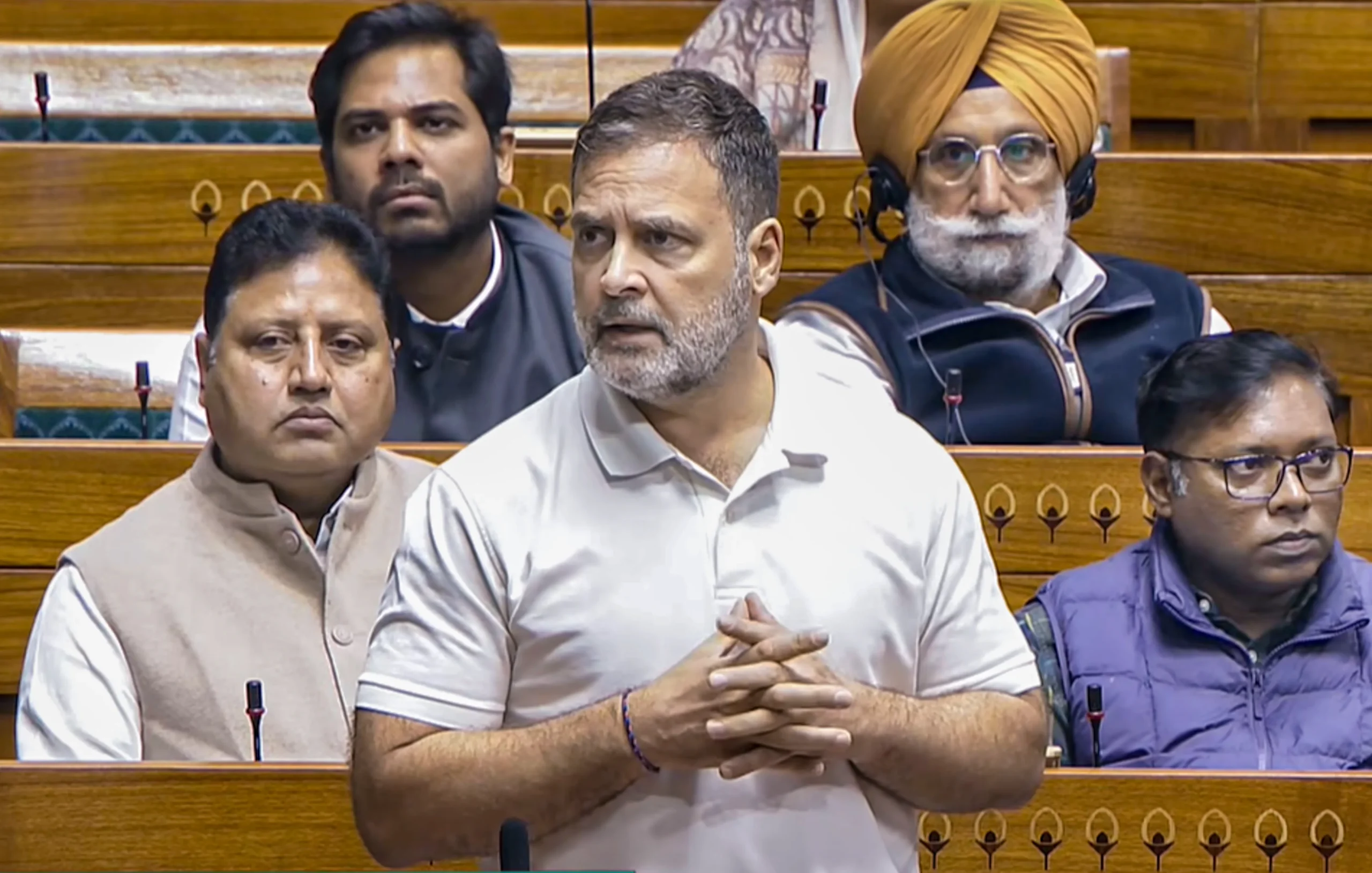
Rahul Gandhi Slams India-US Trade Deal, Says It Hurts Cotton Farmers and Exporters
The CSR Journal Magazine

A significant political dispute has emerged in India regarding the interim trade agreement with the United States, centering on its implications for the textile sector and cotton farming. Congress leader Rahul Gandhi has criticized Prime Minister Narendra Modi and his administration, accusing them of misleading the public about the agreement’s tariff structures.

He claimed that the deal would detrimentally affect India’s millions of cotton farmers and exporters in the textile industry. In a video shared on social media, Gandhi pointed out that while Indian garments are subjected to an 18 percent tariff in the US, garments from Bangladesh are afforded a zero percent tariff, conditional upon the importation of American cotton.

Dubey Defends Government’s Position

In response to Gandhi’s criticisms, BJP MP Nishikant Dubey has challenged his assertions, labeling them as erroneous. Dubey called for an open debate on any platform regarding the matter. He defended the government’s actions over the past eight years, emphasizing the introduction of an 11 percent import duty aimed at protecting cotton farmers. He claimed that the current agreement would allow small-scale exporters to enjoy a zero percent tariff, thereby promoting competitiveness with countries like Vietnam.

Gandhi Accuses Government of Neglecting Farmers

Gandhi articulated his concerns in a post, asserting that the trade agreement could lead to adverse consequences for domestic farmers. He described the textile industry as crucial for the livelihoods of millions, emphasizing that a poor trade deal would result in significant economic hardship for families dependent on these sectors. He characterized Modi’s leadership as one that has surrendered national interests, urging the government to safeguard farmers while also ensuring the prosperity of textile exporters.

Dubey’s Counterattacks

Dubey intensified his critique of Gandhi by dubbing him a “mahamurkh” or great fool, and accused him of instigating public disorder. His statements included a comparison of Gandhi’s intellect to blank pages of an unpublished book by a former military chief. In his comments to the media, Dubey also referenced historical instances where Gandhi’s party had allegedly compromised national integrity, citing events from 1962 related to defense minister V.K. Krishna Menon.

Background on the India-US Interim Agreement

The interim trade agreement, announced recently, aims to establish a less restrictive trade relationship between India and the United States. It intends to eliminate or reduce tariffs on various goods, including agricultural products like tree nuts and soybean oil, while imposing an 18 percent tariff on selected Indian goods such as textiles and machinery. This framework is designed to create mutual benefits and foster economic ties between the two nations.

Recent Parliamentary Developments

The political discourse intensified further when Dubey tabled a motion calling for Gandhi’s expulsion from Parliament. He suggested that Gandhi’s actions were detrimental to the nation and questioned his allegiance to Indian institutions. Gandhi, undeterred by the motion, remarked that he would not retreat, even in the face of procedural challenges against him, continuing to advocate for the rights of farmers and calling attention to what he perceives as governmental overreach.

Long or Short, get news the way you like. No ads. No redirections. Download Newspin and Stay Alert, The CSR Journal Mobile app, for fast, crisp, clean updates!

App Store –  https://apps.apple.com/in/app/newspin/id6746449540 

Google Play Store – https://play.google.com/store/apps/details?id=com.inventifweb.newspin&pcampaignid=web_share

Latest News

Popular Videos
