


Raghav Chadha Flags ‘Sarpanch Pati’ Practice in Parliament Over Women’s Role
The CSR Journal Magazine

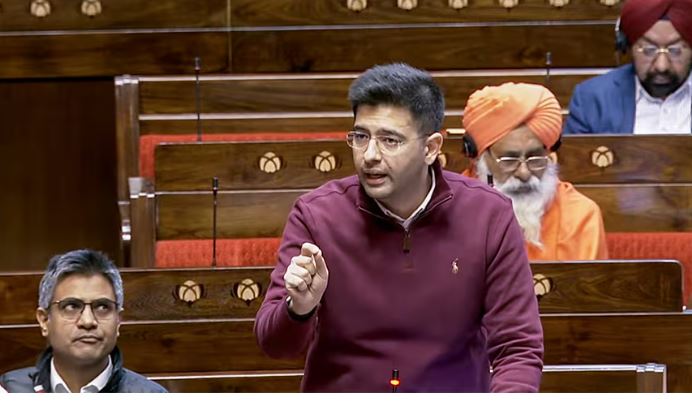
Raghav Chadha, a Rajya Sabha MP from the Aam Aadmi Party (AAP), articulated his concerns on March 19 regarding the pervasive practice known as “sarpanch pati,” where women elected to reserved Panchayat positions often occupy nominal roles while their male relatives wield actual authority. During discussions, Chadha emphasized the need for the government to guarantee that female representatives in local governance can legitimately exercise the powers accorded to them through the 73rd Constitutional Amendment.

Details of the Issue

Chadha highlighted a common occurrence where seats designated for women in Panchayats are contested primarily by the wives, daughters, sisters, or daughters-in-law of male politicians, thus undermining the intended purpose of women’s reservation. He underlined the importance of legislative reforms aimed at empowering women in governance. According to him, despite approximately one-third of the roughly 31 lakh elected representatives at the Panchayat level being women, many simply act as figureheads.

Parliamentary Inquiry

The AAP leader posed questions in Parliament, seeking acknowledgment from the government about the existence of this proxy governance and the steps being taken to remedy the situation. He underscored that allowing male relatives to retain control while women serve only as symbolic leaders represents a deviation from the constitutional vision of equitable governance.

Additional Advocacy

On a different note, a day before addressing the Panchayat issue, Chadha raised another significant concern regarding banking practices, specifically the penalties imposed for failing to maintain a minimum account balance. He criticized banks for collecting an extraordinary sum of Rs 19,000 crore over the past three years from customers, particularly affecting those with low incomes.

Critique of Banking Practices

In a debate surrounding the Appropriation Bill, Chadha referred to these charges as “legalised pickpocketing.” He argued that the penalties disproportionately impact the economically weaker sections, including farmers, pensioners, and daily wage workers, who often cannot maintain a minimum balance due to their financial constraints. He suggested that instead of penalizing small account holders, financial inclusion should prioritize protecting their savings.

Long or Short, get news the way you like. No ads. No redirections. Download Newspin and Stay Alert, The CSR Journal Mobile app, for fast, crisp, clean updates!

App Store –  https://apps.apple.com/in/app/newspin/id6746449540 

Google Play Store – https://play.google.com/store/apps/details?id=com.inventifweb.newspin&pcampaignid=web_share

Latest News

Popular Videos
