


app-store-logo
play-store-logo
February 16, 2026

Rafale Acquisition: A Strategic Move for India’s Air Force
The CSR Journal Magazine

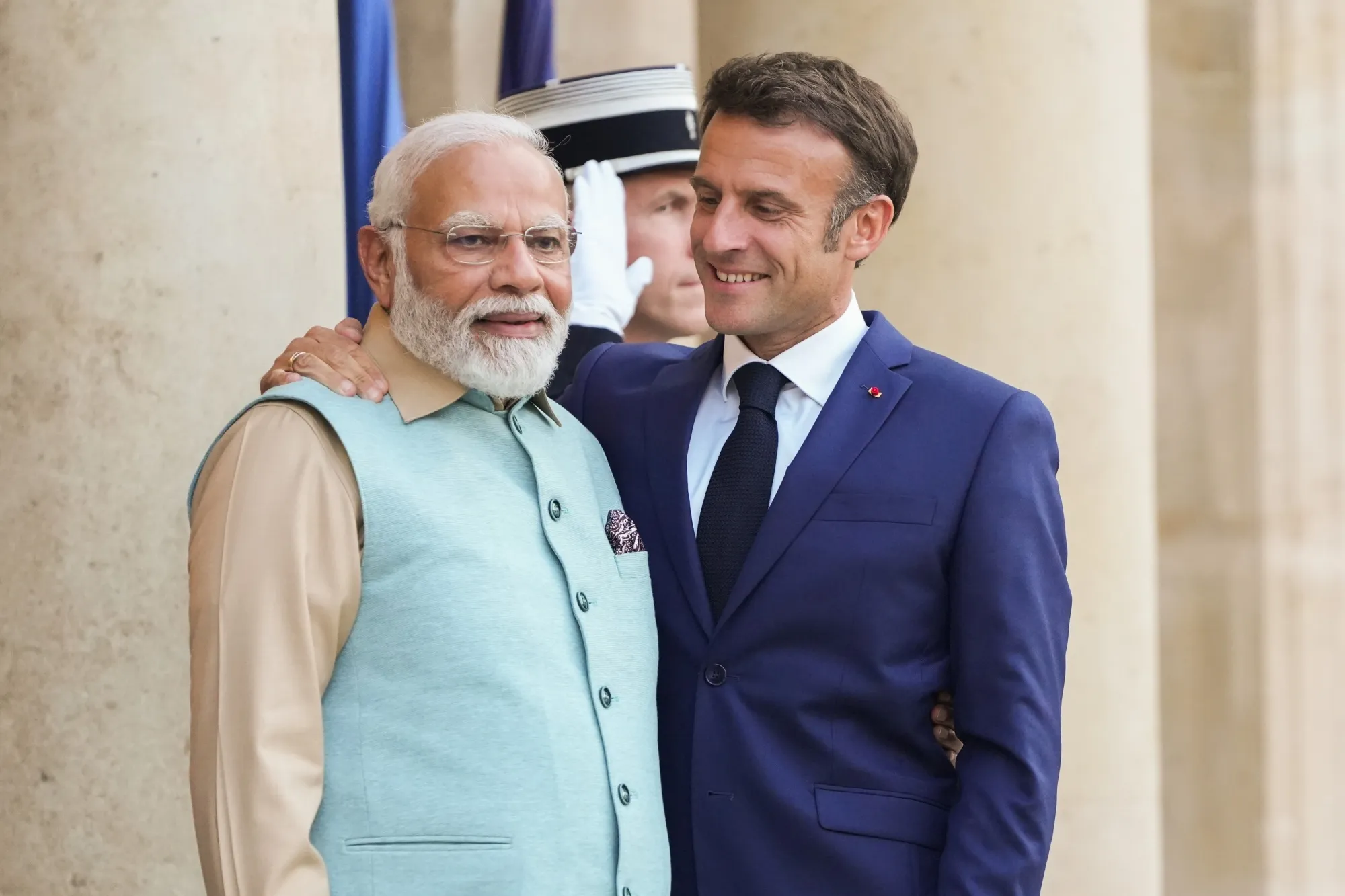
French President Emmanuel Macron is set to begin a crucial three-day state visit to New Delhi on February 17. During this visit, he is scheduled to meet with Prime Minister Narendra Modi to discuss enhancing bilateral ties under the India-France Strategic Partnership. A major focus of these discussions will be a substantial $40 billion (approximately Rs 3.5 lakh crore) government-to-government agreement for India to procure 114 Rafale fighter jets, expected to be finalized in the coming months.

Need for Modernization in Indian Air Force

The Indian Air Force (IAF) requires these 114 jets to address its dwindling fleet size, currently consisting of just 29 fighter squadrons against an authorized strength of 42. This situation has become more pressing as neighboring nations Pakistan and China continue to strengthen their air forces. Pakistan operates 25 fighter squadrons, while China’s number exceeds 60, with plans to add nearly 200 new fourth and fifth-generation jets annually. Delays in the delivery of domestically produced LCA Tejas jets by Hindustan Aeronautics Limited (HAL) have further emphasized the necessity of this significant import. The IAF currently operates 36 Rafales acquired in 2016, and the Indian Navy acquired 26 naval versions for its aircraft carrier, INS Vikrant, the previous year.

Capabilities of the Rafale Fighter Jet

The Rafale boasts an unrefueled operational range of 1,800 km and can carry approximately 9 tons of ordnance across 14 hard points, comparable to the weight of two MiG-21 aircraft. This versatile jet serves multiple roles, including air superiority, deep strike missions, reconnaissance, and even nuclear delivery. Made by Dassault, the Rafale can seamlessly transition between these various operations.

Significance of the Rafale Deal

The Rafale agreement marks the biggest defense contract in India’s independent history, carrying geopolitical ramifications. One of its critical aspects is the establishment of a second fighter aircraft production line in India. Traditionally, HAL has been the sole military aircraft manufacturer, but recent policy shifts aim to involve private entities in production.

Private Sector Involvement in Defense Manufacturing

Tata Advanced Systems Ltd (TASL) is now assembling C295 military transport aircraft and helicopters, with the Ministry of Defence identifying TASL, Bharat Forge, and L&T to create prototypes for the Advanced Medium Combat Aircraft (AMCA). A portion of the 114 Rafales will be assembled at Dassault Reliance Aerospace Limited (DRAL) in Nagpur, utilizing components sourced from TASL.

Choosing France as a Trusted Partner

France stands out as one of the two nations from which India has procured fighter jets since becoming a nuclear power in 1998, the other being Russia. This relationship eliminates concerns related to end-use monitoring that exist with the United States. France has become the preferred partner for India in establishing new military aircraft production lines. By the 2030s, India is expected to emerge as the second-largest operator of Rafales globally.

Streamlining IAF’s Aircraft Diversity

The IAF currently operates a varied fleet of six fighter jet types. The induction of 114 Rafales will enable greater standardization, reducing operational complexity and enhancing logistics. Eighteen aircraft will be delivered in a ready-to-fly state, while the remaining will be locally assembled. As the IAF phases out older aircraft types by the 2030s, it is positioning itself for a more streamlined operational setup.

Focus on Indigenous Manufacturing

While the core design and technical specifications of the Rafale will remain French, negotiations are underway to ensure that close to 50 percent of the components are sourced locally. This move highlights the emphasis on domestic manufacturing and technology transfer, aiming to bolster India’s aerospace capabilities over time.

Financial Implications and Future Prospects

The Rafale deal constitutes the most significant single arms purchase in India’s history, with costs exceeding those of all indigenous aircraft and engine development combined. Critics warn that funding this acquisition could divert resources from future indigenous projects, although it also provides a crucial stopgap to address the IAF’s immediate needs. The integration of both indigenous and imported elements will be vital for achieving self-reliance in India’s defense aspirations.

Long or Short, get news the way you like. No ads. No redirections. Download Newspin and Stay Alert, The CSR Journal Mobile app, for fast, crisp, clean updates!

Latest News

Popular Videos
