


Pakistan Attempts to Position Itself as Mediator in US-Iran Conflict
The CSR Journal Magazine

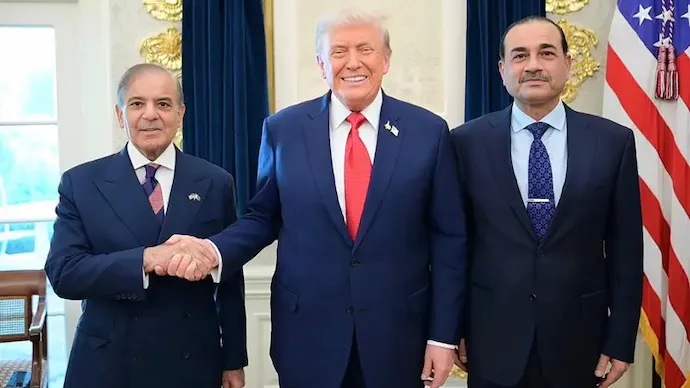
As discussions between the United States and Iran commence to halt weeks of escalating conflict, Pakistan has stepped forward, aiming to play a pivotal role as a mediator. Despite its ongoing struggles with the Taliban, Pakistan has expressed eagerness to facilitate peace efforts and has proposed Islamabad as a potential venue for dialogue. This push appears driven by critical strategic interests and a desire to maintain relevance on the global stage. Notably, Army Chief Asim Munir is leading these efforts, garnering attention for recent conversations with key figures, including former President Donald Trump. At the same time, Pakistani Prime Minister Shehbaz Sharif has engaged in multiple discussions with Iranian leadership, coinciding with Trump’s announcement of a brief pause in military actions against Iran.

Pakistan’s Diplomatic Relations with the US and Iran

Pakistan’s historical and geographical ties to both the United States and Iran position it uniquely in this geopolitical dynamic. With a nearly 1,000 km border shared with Iran, the two nations have a long-term partnership in diplomatic and security matters; Iran was one of the first countries to recognize Pakistan’s independence in 1947. Furthermore, Pakistan is home to the second-largest Shia population globally, following Iran, which might facilitate communication between the two nations. Interestingly, Pakistan is acknowledged for representing Iran’s interests in the United States, as the latter has been without an embassy in Washington since 1979. A consulate operating within the Pakistani embassy in the US capital allows Iran to engage diplomatically through Pakistani channels.

Consequences of the Ongoing Conflict for Pakistan

The increasing violence in the region poses significant threats to Pakistan, which is already grappling with security and economic challenges. A prolonged conflict risks spilling over into Pakistan, potentially destabilizing its economy and affecting security along its borders. Like India, Pakistan is reliant on energy imports from the Gulf region, making the closure of critical maritime routes, such as the Strait of Hormuz, particularly concerning. Energy dependence has led Pakistan to adopt stringent austerity measures, reminiscent of those seen during the Covid-19 pandemic, including increased fuel costs and operational changes like remote work in offices.

Efforts to Strengthen Ties with Gulf States

Another motivation for Pakistan’s eagerness to mediate in the Iran conflict lies in its desire to enhance ties with Gulf nations and maintain a prominent position in regional discussions. The diplomatic relationship between Pakistan and the Organisation of Islamic Cooperation (OIC) has encountered challenges, particularly when Pakistan sought a stronger condemnation of India’s actions in Kashmir. Nonetheless, Pakistan has worked to improve relations and now enjoys a supportive partnership with Saudi Arabia, which has shown interest in Pakistan’s defense capabilities through a mutual defense agreement.

Concerns Over Escalation and Regional Stability

Saudi Arabia’s ongoing conflict with Iran adds layers of complication for Pakistan should Riyadh choose to engage more actively in the conflict. If Saudi Arabia escalates its military involvement, Pakistan may find itself bound by its defense pact with Riyadh, risking further instability in the region. Pakistan’s geographical position makes it acutely aware of the potential fallout from any escalation, which could exacerbate tensions within its own borders and fuel sectarian unrest.

Pakistan’s Strategic Shift Amid Regional Tensions

In light of these complex dynamics, Pakistan has modified its stance and military operations, particularly regarding its engagement with Afghanistan. Following increased military actions in Afghanistan, including significant airstrikes, Pakistan has faced international criticism. This context underscores Pakistan’s interest in establishing itself as a mediator, allowing for a potential image restoration. As diplomatic tensions continue to mount in the Middle East, Pakistan’s efforts to position itself as a facilitator of peace could be seen as a strategic move to navigate its challenges amidst a rapidly changing geopolitical landscape.

Long or Short, get news the way you like. No ads. No redirections. Download Newspin and Stay Alert, The CSR Journal Mobile app, for fast, crisp, clean updates!

App Store –  https://apps.apple.com/in/app/newspin/id6746449540 

Google Play Store – https://play.google.com/store/apps/details?id=com.inventifweb.newspin&pcampaignid=web_share

Latest News

Popular Videos
