


Next War Will Be Led From Space, Former Vice Chief of IAF States
The CSR Journal Magazine

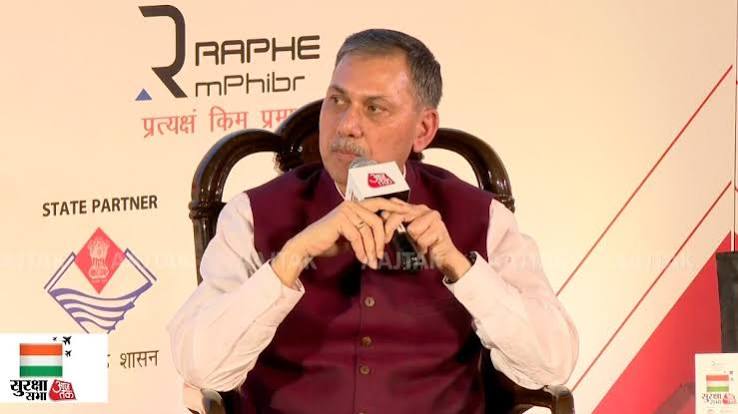
Former Air Marshal Narmadeshwar Tiwari (Retd) outlined that space is set to play a central role in future warfare. He stated that the traditional view of space as merely a supporting element is rapidly changing. The ongoing conflict between Russia and Ukraine has served as a pertinent example of how satellites, drones, and artificial intelligence are transforming modern battlefields.

According to Tiwari, satellite communications have proven decisive in the Russo-Ukrainian conflict. He noted that the availability of satellite services, particularly those provided by networks such as Starlink, has been vital for operational success. Starlink, which began in 2019, has deployed thousands of satellites to facilitate communications that are crucial during war.

Tiwari claimed that the ability of Ukrainian forces to continue their operations can be heavily attributed to Starlink’s satellite connectivity, especially following extensive damage to conventional communication infrastructures. This reliance on space-based communication underscores a significant shift in military strategies, he argued.

Technological Advancements in Warfare Highlighted

The retired vice chief elaborated on how technology has not only enhanced but also complicated strategic considerations. He cited incidents of Russian forces using smuggled satellite communication equipment to conduct operations, including deploying drones in Ukraine. Tiwari remarked that such actions have prompted measures like whitelisting satellite communication terminals to prevent unauthorised usage.

This dynamic has led many nations to prioritise the establishment of their own satellite constellations, particularly in Low Earth Orbit (LEO). He emphasised that future conflicts will witness a more pronounced emphasis on the role of space, shifting it from a supportive position to a dominant one in military strategy.

Additionally, Tiwari noted that advancements in computing capabilities, miniaturisation of technology, and advancements in optics have transformed how military systems operate. The evolution of satellite communication equipment now means that what once required large tracking dishes can now be encapsulated in smaller and more portable devices.

Interconnected Military Systems Represent Future Warfare

The miniaturisation of satellite systems is on the verge of enabling sophisticated networks of autonomous military devices. Tiwari exemplified this by discussing how a compact satellite terminal could be mounted on an unmanned vessel operating distant from land, ensuring uninterrupted communication via satellites.

In this envisioned future, unmanned aerial vehicles (UAVs) and unmanned aquatic systems would work in conjunction, communicating seamlessly to create a cohesive network. Tiwari described this progression as the emergence of a ‘mesh’ of interconnected military resources designed to enhance operational efficiency.

He concluded by stating that this comprehensive integration of satellites, drones, and autonomous technologies, paired with robust encryption for secure communications, will redefine the landscape of warfare. Control over information and connectivity in space will lay the groundwork for dominance not only on land and sea but in the skies as well, marking a significant evolution in military strategy.

Long or Short, get news the way you like. No ads. No redirections. Download Newspin and Stay Alert, The CSR Journal Mobile app, for fast, crisp, clean updates!

App Store –  https://apps.apple.com/in/app/newspin/id6746449540 

Google Play Store – https://play.google.com/store/apps/details?id=com.inventifweb.newspin&pcampaignid=web_share

Latest News

Popular Videos
