


app-store-logo
play-store-logo
February 18, 2026

New Findings Suggest Tattoos May Compromise Immune System
The CSR Journal Magazine

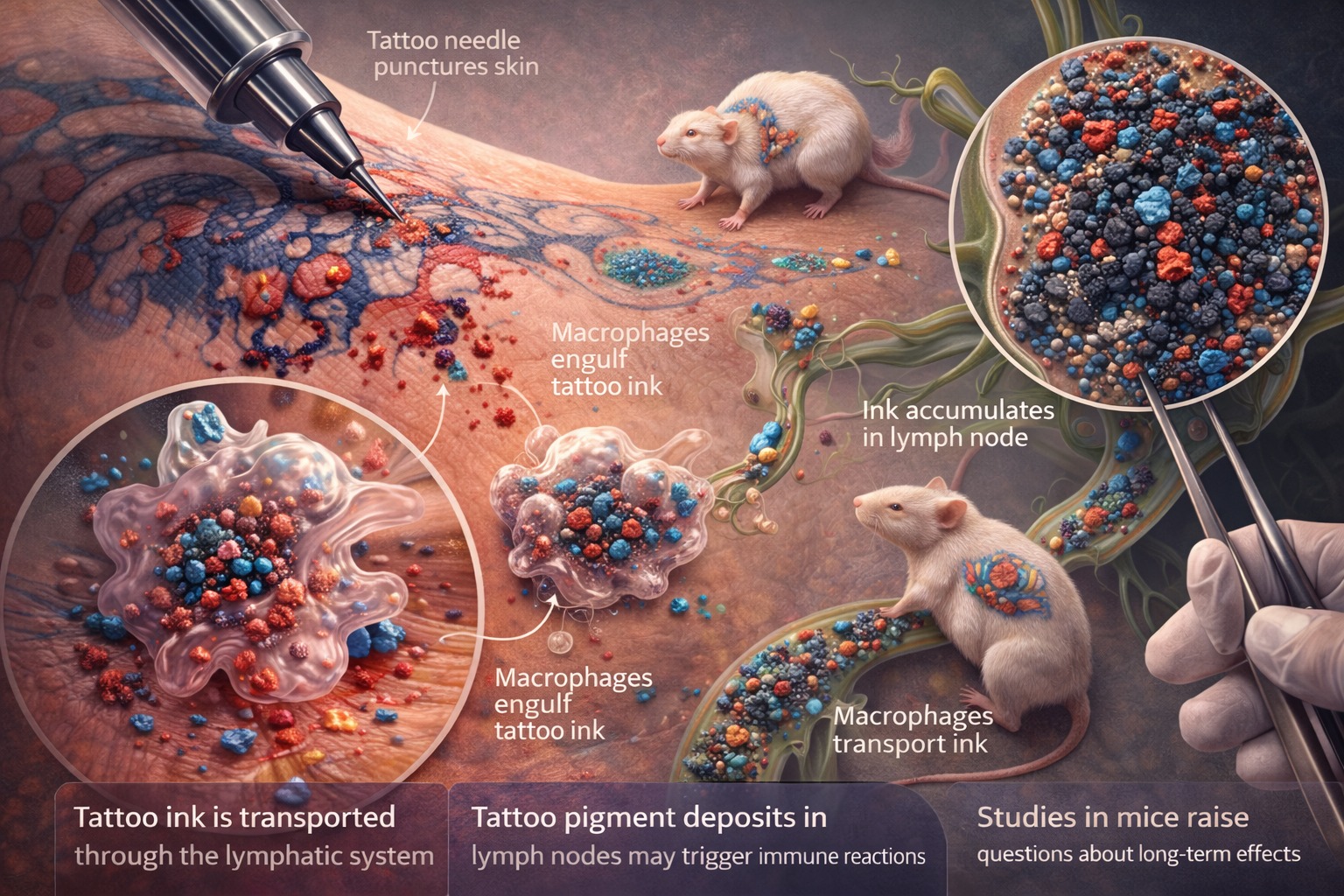
Tattoos are often perceived as a permanent expression of an individual’s identity; however, recent research has indicated that tattoo ink does not remain static beneath the skin. A study published in the Proceedings of the National Academy of Sciences reveals that tattoo ink behaves like a collection of foreign substances that the body attempts to expel. Conducted on mice, the research demonstrates that the pigment does not merely serve as surface decoration but actively interacts with the body’s immune system over time.

The Journey of Ink Particles

When a tattoo needle punctures the skin, it injects pigment into the dermis, the skin’s middle layer. The immune system perceives these particles as intruders and dispatches white blood cells known as macrophages to engulf them. While some macrophages retain the ink in the dermis, others transport smaller ink particles through the lymphatic system. According to the research, these micro and nano-sized particles accumulate in the lymph nodes, which function as filters for the immune system. This accumulation can be so pronounced that it becomes evident in surgical procedures, where lymph nodes may exhibit discoloration matching the tattoo color.

Impact on Immune Response

The presence of tattoo ink within the lymphatic system extends beyond mere interest; it can alter how the body coordinates immune responses. The study indicates that the deposits of these pigments might trigger chronic enlargement of the lymph nodes. Given that ink contains a variety of metals and chemical compounds, prolonged exposure may lead to a sustained immune reaction. Although many individuals with tattoos do not experience immediate health issues, the long-term implications of housing these pigments within vital organs raises scientific questions. Approximately 10 percent of people with tattoos might encounter chronic inflammatory conditions related to this permanent presence of ink.

Possible Effects on Vaccine Efficacy

As both tattoos and vaccines interact with the immune cells in the skin and lymph nodes, researchers are exploring whether tattoo ink could affect vaccine effectiveness. Preliminary findings suggest that the presence of pigment may result in localized damage and fatigue in the immune system. If a vaccine is administered in an area heavily adorned with tattoos, the existing inflammation could potentially impede the immune cells responsible for responding to the vaccine. Early observations indicate that this altered immune environment in tattooed skin might reduce the generation of essential antibodies. To maximize immune responsiveness, health experts currently advise against vaccinating directly in tattooed areas.

Long or Short, get news the way you like. No ads. No redirections. Download Newspin and Stay Alert, The CSR Journal Mobile app, for fast, crisp, clean updates!

Latest News

Popular Videos
