


Nepal Endures Catastrophic Flash Floods With Over 600 Fatalities
The CSR Journal Magazine

Nepal is grappling with the aftermath of destructive flash floods that struck on Wednesday, resulting in more than 600 confirmed fatalities and over 2,400 individuals reported missing as of Saturday. The situation remains critical as nearly 2,500 people, including 163 foreign nationals, have been evacuated from various affected areas. Rescue teams are actively engaged in operations, contending with difficult weather conditions from intermittent rainfall.

The floods wreaked havoc on communities, inundating homes, vehicles, and critical infrastructure, while also inflicting damage on hydropower installations. In numerous locations across the nation, families are desperately searching hospitals, relief camps, and lists of the deceased in hopes of locating their missing relatives. Rescuers are working tirelessly, conducting simultaneous efforts to locate survivors amidst the chaos.

Outside medical facilities, relatives are seen poring over lists of the injured, meticulously reviewing names and photographs with the hope of finding someone familiar. In instances where relatives are not among the survivors, they turn their focus to lists of the deceased, confronted with the grim reality of loss.

Extent of Destruction and Human Impact

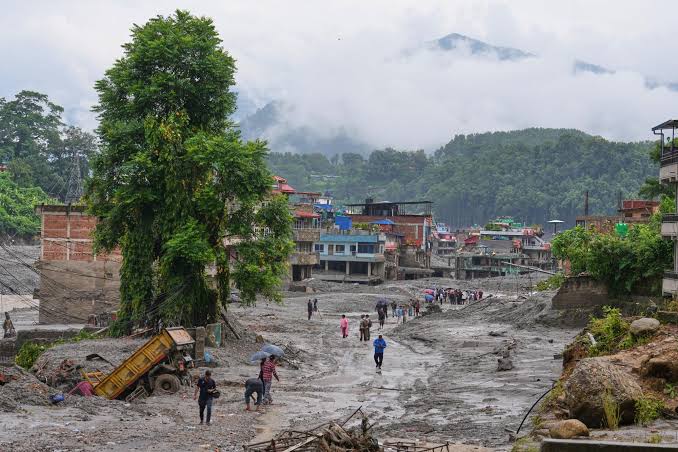
The scale of the devastation is evident in central Nepal’s villages, where buildings are buried under mounds of mud and debris, and vehicles remain partially submerged. In the Nuwakot district’s Devighat village, community members wade through thick sludge, searching for personal belongings amidst the wreckage. Damaged structures punctuate the landscape, alongside uprooted electricity poles, presenting a stark portrayal of the destruction.

Heartbreaking scenes captured in the affected regions depict the human toll of this disaster. One woman was seen next to scattered corn, while another, carrying a child, navigated through the rubble past devastated buildings. A man was spotted salvaging a gas cylinder, his only possession retrieved from the ruins. Aerial imagery reveals extensive damage along a swollen river, visually highlighting the flood’s reach and impact.

In Trishuli, a relief camp established by the Nepali Army has emerged as a crucial support hub for those affected by the calamity. Army personnel are lending assistance to elderly residents and children, while makeshift medical facilities are treating the injured. The camp also serves as a key point for gathering information regarding the missing, deceased, and rescued individuals.

Challenges Ahead for Rescue Efforts

Over 11,000 security personnel, including more than 5,000 from the Nepal Army, have been deployed for ongoing search and rescue missions. The country’s meteorology department has forecasted the potential for moderate rainfall, further complicating and potentially hindering rescue operations. With the immediate focus being on locating the missing individuals and providing support to survivors, the authorities are preparing for a prolonged recovery phase.

As communities come to terms with their losses, the effort to begin rebuilding will be significant. Local populations and authorities alike are working collaboratively to manage the urgent needs of survivors while laying groundwork for future recovery and resilience. The government’s prioritisation of rescue operations is undeniably crucial in this ongoing crisis.

Time will tell how effectively Nepal can rebound from this natural disaster, but the focus remains steadfast on finding those who are still unaccounted for and aiding those who have suffered considerable loss.

Long or Short, get news the way you like. No ads. No redirections. Download Newspin and Stay Alert, The CSR Journal Mobile app, for fast, crisp, clean updates!

App Store –  https://apps.apple.com/in/app/newspin/id6746449540 

Google Play Store – https://play.google.com/store/apps/details?id=com.inventifweb.newspin&pcampaignid=web_share

Latest News

Popular Videos
