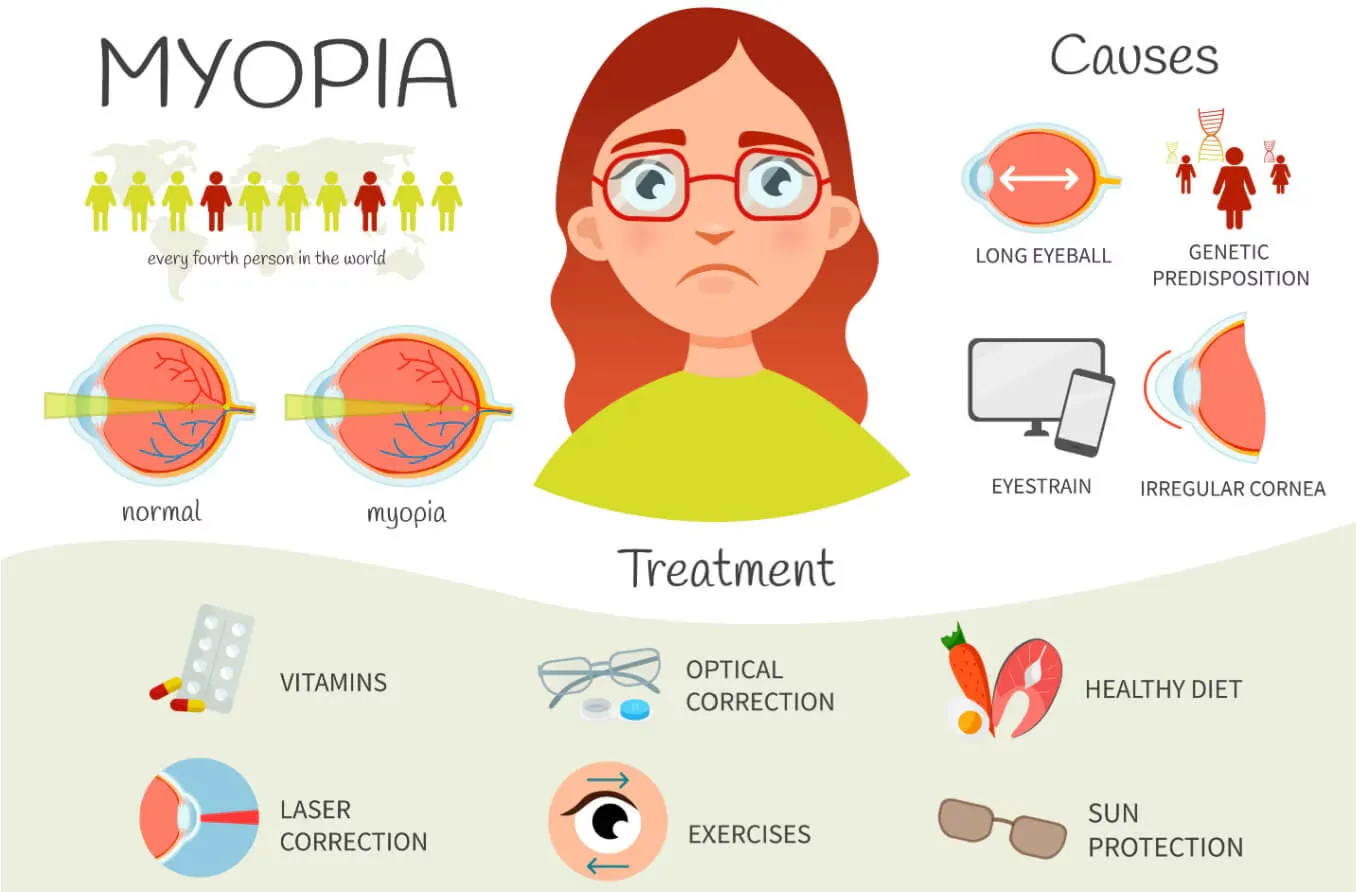
Myopia, commonly referred to as nearsightedness, is rapidly becoming a worldwide health epidemic. Statistics indicate that approximately 50 percent of young adults in the United States and Europe are now affected, while in certain regions of East Asia, this figure approaches 90 percent. The primary issue associated with myopia is blurred vision at a distance. Although genetics contribute to its development, the alarming upsurge in cases suggests a significant influence from lifestyle factors. Traditionally, excessive screen usage has been blamed for this increase; however, recent findings from the State University of New York (SUNY) College of Optometry reveal that factors beyond screens are at play, particularly the way individuals engage their eyesight indoors.
The Eye’s Reaction During Close-Up Activities
When individuals read, browse on mobile devices, or study on tablets in poorly lit indoor environments, their eyes are required to focus on nearby objects. This process triggers a mechanism known as “accommodation,” wherein the lens of the eye adjusts its shape to provide a clearer image. Concurrently, the pupil constricts, not due to bright lighting, but to enhance focus. In low-light conditions, this dual function significantly reduces the amount of light that reaches the retina. A study led by Dr. Jose-Manuel Alonso, alongside doctoral candidate Urusha Maharjan, observes that the decrease in retinal illumination weakens specific visual signals within the eye. If this low-light exposure continues over extended periods, it may contribute to the onset of myopia.
The Role of Outdoor Time in Myopia Prevention
Naturally bright light outside creates a different dynamic for the eyes. While the pupil still constricts to safeguard eye health, an ample amount of light continues to stimulate the retina, thus maintaining robust visual pathways and avoiding the complications linked to low-light conditions observed indoors. This hypothesis sheds light on why increased outdoor activity is associated with a slowdown in the progression of myopia. Additionally, treatments such as atropine eye drops, which enable pupil muscles to relax, multifocal lenses, and periodic long-distance focusing can mitigate excessive pupil constriction during near tasks.
Prospects for Myopia Prevention
The recent study presents promising insights but is not definitive. It offers a comprehensive explanation for how prolonged near work in dim surroundings may promote myopia, while exposure to bright light and reduced close-up focus helps in protection against it. Experts advocate for minimizing long durations of close-up activities in low light as a preventative measure. Implementing simple changes like enhancing room lighting, taking regular breaks to look at distant objects, and encouraging outdoor play could yield significant benefits. Dr. Alonso emphasizes that this theory is based on measurable physiological responses of the eye, and while further research is essential, it opens avenues for innovative preventive strategies against myopia.