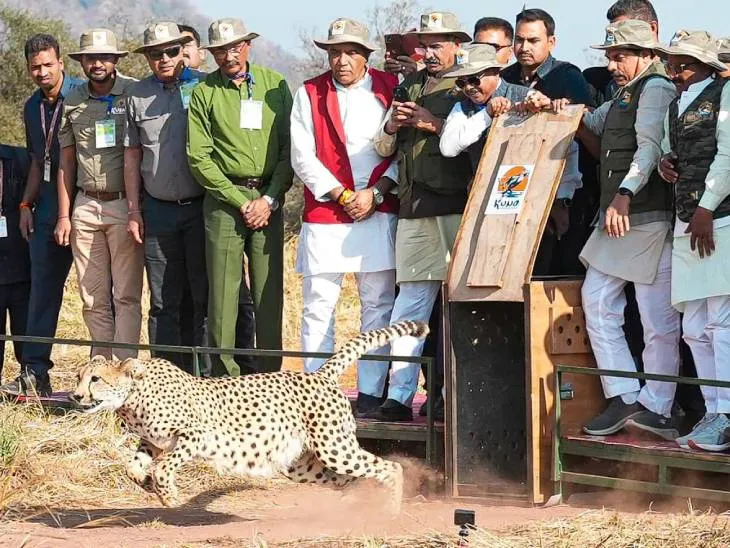
Madhya Pradesh has expanded its cheetah conservation programme with the introduction of two cheetahs, Vyom and Neera, into the Veerangana Durgavati Tiger Reserve in Sagar district. The move establishes the state’s third cheetah habitat, following Kuno National Park and Gandhi Sagar Wildlife Sanctuary.
The initiative is aimed at expanding suitable habitats for the species while strengthening India’s broader efforts to restore cheetahs to the country’s wildlife landscape.
New Habitat Strengthens Cheetah Conservation
The Veerangana Durgavati Tiger Reserve has been prepared to provide a secure environment for the newly introduced cheetahs. Around 439 hectares have been equipped with modern enclosures, or bomas, where the animals can gradually acclimatise to their new surroundings.
The Forest Department has also put in place arrangements for regular monitoring, veterinary care and protection. Officials will closely track the cheetahs’ health, behaviour and adaptation as they settle into the reserve.
The development is expected to support the long-term expansion of India’s cheetah population by creating additional habitats and reducing dependence on a single landscape.
About Veerangana Durgavati Tiger Reserve
Previously known as the Nauradehi Tiger Reserve, Veerangana Durgavati Tiger Reserve spans approximately 2,339 square kilometres across Sagar, Damoh and Narsinghpur districts.
The reserve has a diverse ecosystem that supports species including tigers, leopards, chital, sambar, nilgai and bears. It is also significant for the conservation of Indian vultures and other wildlife.
The presence of varied prey and extensive forest areas makes the reserve an important landscape for wildlife conservation. Authorities have undertaken habitat-management measures to maintain ecological balance and provide suitable conditions for the newly introduced cheetahs.
Third Cheetah Habitat in Madhya Pradesh
The introduction of Vyom and Neera marks an important expansion of Madhya Pradesh’s role in the national cheetah reintroduction programme. Kuno National Park remains the primary cheetah habitat in the state, while Gandhi Sagar Wildlife Sanctuary has also been developed as a separate landscape for the species.
By establishing a third habitat, authorities aim to create a broader network of protected areas for cheetahs. The approach is intended to support population growth, improve habitat availability and strengthen the resilience of the conservation programme.
Boost to Biodiversity and Wildlife Tourism
The cheetah introduction is expected to have ecological as well as economic benefits. Authorities believe that the presence of cheetahs could enhance wildlife tourism in the Sagar region and the wider Bundelkhand area.
An increase in visitors could generate opportunities for local hotels, homestays, transport operators, guides and other tourism-related businesses. At the same time, the development of the reserve is expected to create greater awareness about wildlife conservation among visitors and local communities.
The initiative also forms part of wider efforts to restore native and endangered species and strengthen protected landscapes in Madhya Pradesh.
Monitoring and Ecosystem Management
The Forest Department has emphasised careful monitoring of the cheetahs and the wider ecosystem following their release. Health checks, behavioural observation and habitat management will be important during the initial acclimatisation period.
The reserve already supports large carnivores such as tigers, making scientific monitoring particularly important to ensure that different species can coexist within the landscape. Officials will continue to assess prey availability, habitat conditions and interactions among wildlife.
The introduction of Vyom and Neera therefore represents more than the creation of another cheetah enclosure. It is part of a broader strategy to expand wildlife habitats, promote ecological restoration and strengthen India’s long-term cheetah conservation programme.