


app-store-logo
play-store-logo
March 4, 2026

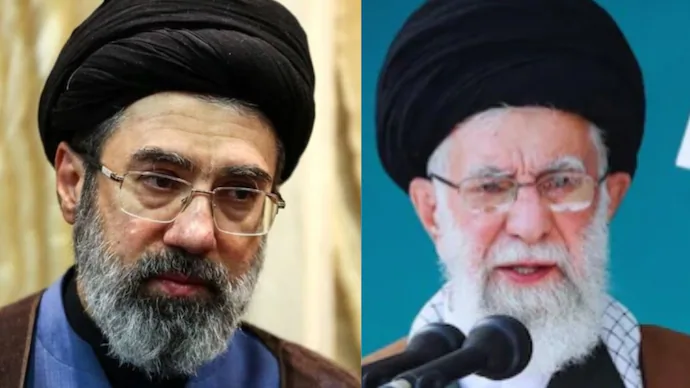
Mojtaba Khamenei Appointed as Iran’s New Supreme Leader
The CSR Journal Magazine

Multiple opposition-linked outlets, including Iran International, have reported that Mojtaba Khamenei, the son of Iran’s long-time Supreme Leader Ayatollah Ali Khamenei, has been elected as Iran’s new Supreme Leader by the Assembly of Experts, the clerical body constitutionally responsible for choosing the country’s top authority.

These reports say the decision came after Ali Khamenei’s reported death during recent U.S.-Israeli military strikes. However, there has been no official confirmation from Iranian state media or formal announcement from Iran’s government about Mojtaba’s appointment.

The Context: Power Vacuum and Conflict

The backdrop of these reports is a deepening crisis in Iran. Recent military operations by the United States and Israel have targeted senior Iranian figures and key government buildings, including where the Assembly of Experts meets, as part of an intense confrontation that has destabilized Tehran’s leadership. Reports indicate that Ali Khamenei, who had led Iran since 1989, is believed to have been killed in earlier strikes. Iranian authorities later confirmed his death, but details about the broader fate of the top leadership remain murky.

After Khamenei’s death, an interim leadership council was reportedly put in place to manage the state’s affairs while the selection process for a successor unfolds. According to Iran’s constitution, the Assembly of Experts must choose a new Supreme Leader — the religious and political head of state.

Who Is Mojtaba Khamenei?

Mojtaba Khamenei, often described as a hardline cleric with close ties to the Islamic Revolutionary Guard Corps (IRGC), has long been viewed by Western observers as a potential influential figure behind the scenes, though he has historically held no formal top government or senior clerical post traditionally associated with the Supreme Leader’s position. Reports suggest that the IRGC played a significant role in pushing for his selection, a move that could signal the powerful paramilitary force’s growing influence in Iranian politics.

This possible succession marks a departure from previous norms; Iran’s leadership has not followed a hereditary model since the 1979 revolution that overthrew the monarchy and firmly rejected dynastic rule. Critics argue that father-to-son succession contradicts the principles Iran has long promoted domestically and internationally.

Domestic and International Reactions

If confirmed, Mojtaba’s leadership could deepen existing factions and tensions within Iran’s political system. Some insiders and analysts warn that such a transition might inflame internal opposition already critical of the regime’s structure. Internationally, governments and analysts are watching closely, weighing how this reported change could shape Iran’s geopolitical stance amid ongoing regional conflicts.

At this stage, Mojtaba Khamenei’s reported election as Supreme Leader remains based on unverified reports from opposition-linked sources. There is no formal confirmation from official Iranian state institutions. As events continue to unfold, observers will be looking for Iranian government statements and further credible evidence on the succession process and its implications, both inside Iran and across the broader Middle East.

Long or Short, get news the way you like. No ads. No redirections. Download Newspin and Stay Alert, The CSR Journal Mobile app, for fast, crisp, clean updates!

App Store –  https://apps.apple.com/in/app/newspin/id6746449540 

Google Play Store – https://play.google.com/store/apps/details?id=com.inventifweb.newspin&pcampaignid=web_share

Latest News

Popular Videos
