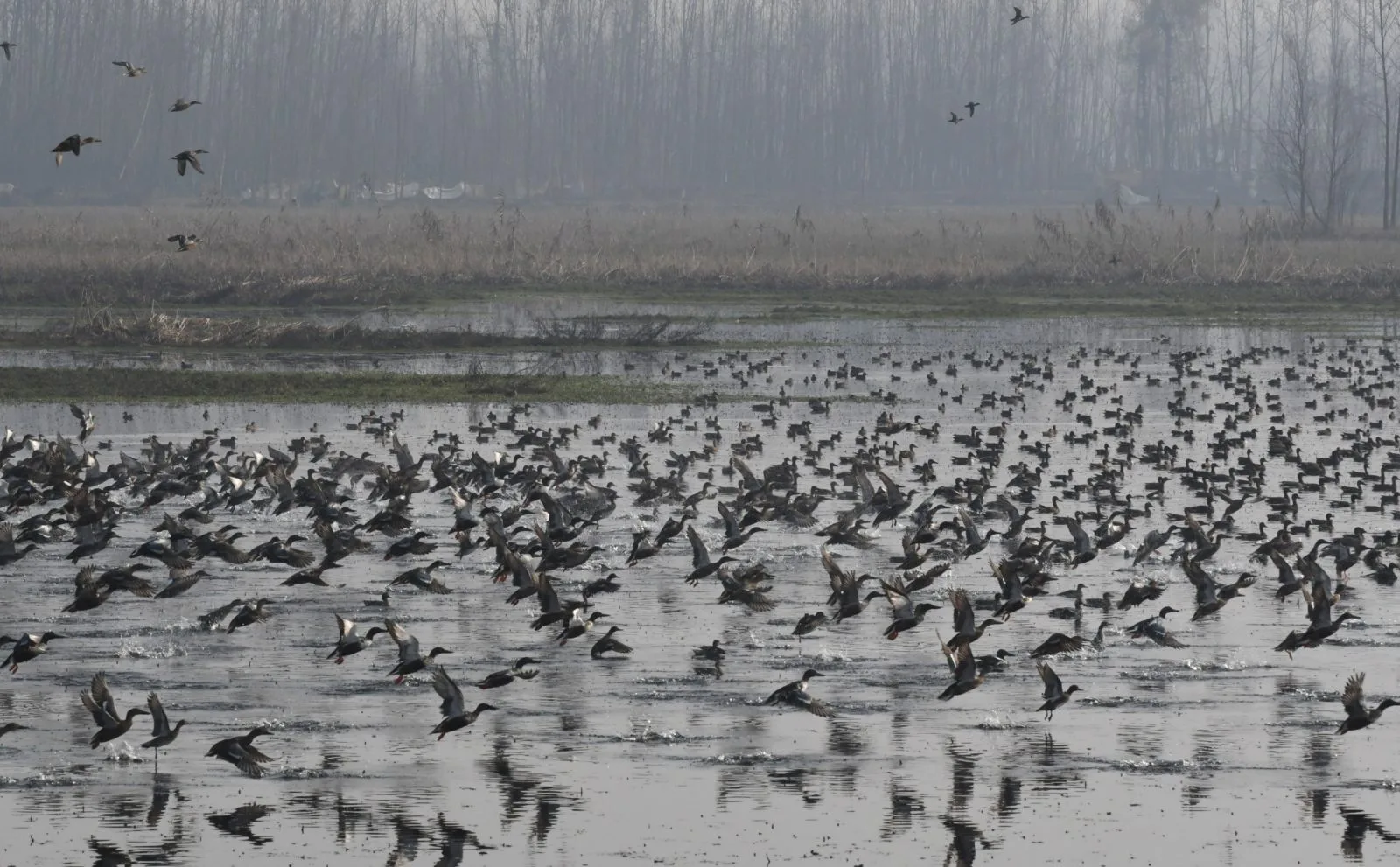
The Jammu and Kashmir administration has ramped up initiatives to promote ecological tourism alongside environmental conservation throughout the Union Territory. The administration’s focus is particularly on safeguarding wetlands and wildlife habitats. Efforts aimed at wetland restoration, better water management, curbing poaching, and promoting sustainable tourism have reinforced Kashmir’s standing as a prime destination for nature enthusiasts and bird watchers, especially during the winter season.
Winter Arrival of Migratory Birds
This winter, the valley has welcomed thousands of migratory birds, commonly referred to as “guest” birds. These birds flock to key wetlands including Hokersar, Hygam, Pampore, and Bandipora from November onwards. They make long journeys from regions like Siberia, Russia, China, Northern Europe, and Central Asia, arriving to spend nearly five to six months in the cold waters of Kashmir. Their presence adds vibrancy, life, and ecological balance to the region’s lakes. In addition to their natural diet of water nuts, herbs, and insects, authorities at Hokersar supplement their diet with food grains to create a hospitable environment for these seasonal visitors.
Challenges in Wetland Management
Wildlife officials note that the migratory bird season typically commences in December and lasts approximately three months, attracting around 200,000 birds. Authorities grapple with challenges such as maintaining optimal water levels in wetlands to create suitable habitats while also combatting illegal poaching. To mitigate these issues, special teams are deployed for regular patrolling, and ongoing monitoring ensures that environmental conditions are conducive for the birds.
Growth of Avian Activity from October to February
Kashmir’s wetlands start to transform into bustling hubs of bird activity as early as October, with bird numbers reaching their peak by February. Among the nine significant resting spots in the valley, Hokersar is identified as the primary site for migratory birds, serving as an essential stopover throughout their long journeys.
Community Engagement and Awareness Initiatives
Local residents and students express that these natural phenomena underscore an often-overlooked aspect of Kashmir’s charm. They posit that initiatives focusing on migratory birds help reshape perceptions of the valley beyond its well-known tourist destinations such as Gulmarg, Pahalgam, and Dal Lake. Awareness programs and educational field visits aim to foster an appreciation among younger generations for wetlands as vital components of the region’s natural heritage and ecological identity.
Monitoring and Protection Strategies
Officials from the Wildlife Department confirm that dedicated teams operate throughout the season to protect migratory birds and their ecosystems. In February, extensive bird counts are conducted, with previous records indicating a population of between seven and eight million birds spread across various wetlands. Key areas like Hokersar, Dal Lake, and Wular Lake undergo thorough monitoring, and habitat management practices are implemented to guarantee safe feeding, resting, and breeding environments for the birds.
Commitment to Avian Conservation
Ground staff emphasise that migratory birds typically inhabit Kashmir from October through March, during which they engage in essential activities in the wetlands. The presence of these birds significantly enhances the vibrancy and aesthetic appeal of lakes such as Hokersar, reinforcing the commitment to safeguarding these avian visitors as a point of duty and pride for the region.