


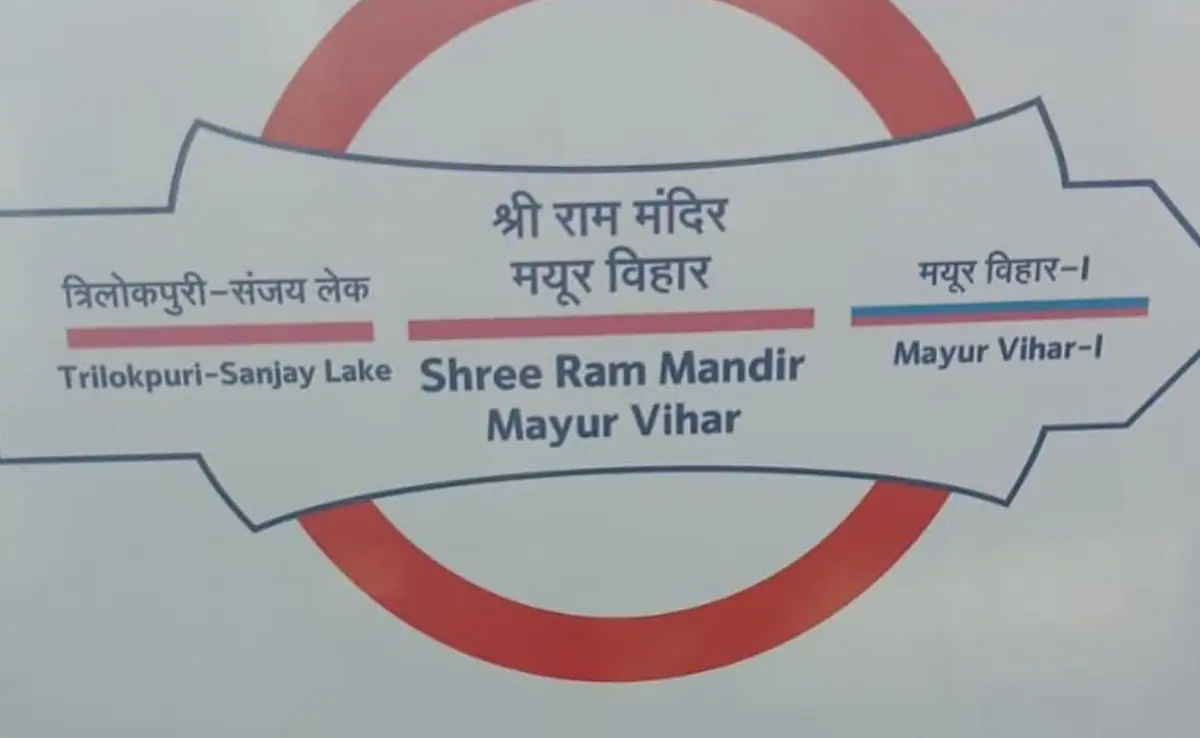

The Mayur Vihar Pocket 1 Metro Station in Delhi has officially been renamed as Shree Ram Mandir Mayur Vihar following request from local public representatives. Ravi Kant, a member of the Bharatiya Janata Party (BJP) from Trilokpuri, expressed his gratitude to the Chief Minister of Delhi, Rekha Gupta, for acceding to the longstanding demand of the residents to rename the station after the Ram Temple.
Local Sentiment and Historical Context
The decision to change the name of the Metro station comes in response to calls from the local community who have been advocating for this change for several years. The renaming reflects a broader trend in Delhi where various public spaces have been renamed to honor cultural and historical landmarks, which hold significance for many residents.
Implications of the Name Change
Renaming public landmarks has become a common practice in Indian cities, signifying shifts in political and cultural narratives. The newly adopted name for Mayur Vihar Pocket 1 is intended to resonate more with locals, creating a stronger sense of identity and connection within the community. By aligning the name with revered cultural symbols, the authorities aim to foster a sense of pride among the station’s users.
The Role of Local Leaders
Local leaders, like Ravi Kant, play a crucial role in voicing the needs and preferences of their constituents. Their involvement in such decisions highlights the importance of community-led initiatives in urban governance, where public requests can lead to tangible changes. Kant’s advocacy for this name change serves as an example of how elected representatives can influence local infrastructure based on community sentiment.
Community Response and Engagement
While the name change has been publicly welcomed by some, it is essential to monitor the community’s overall sentiment regarding the new identity. Engaging with residents and understanding varied perspectives can enhance community relations and ensure that future developments align with public interest. The station will now bear a name that is expected to foster communal ties and cultural recognition among commuters.