


app-store-logo
play-store-logo
February 26, 2026

March 3, 2026: The Moon to Exhibit Rare Navy Blue and Crimson Colors During Lunar Eclipse
The CSR Journal Magazine

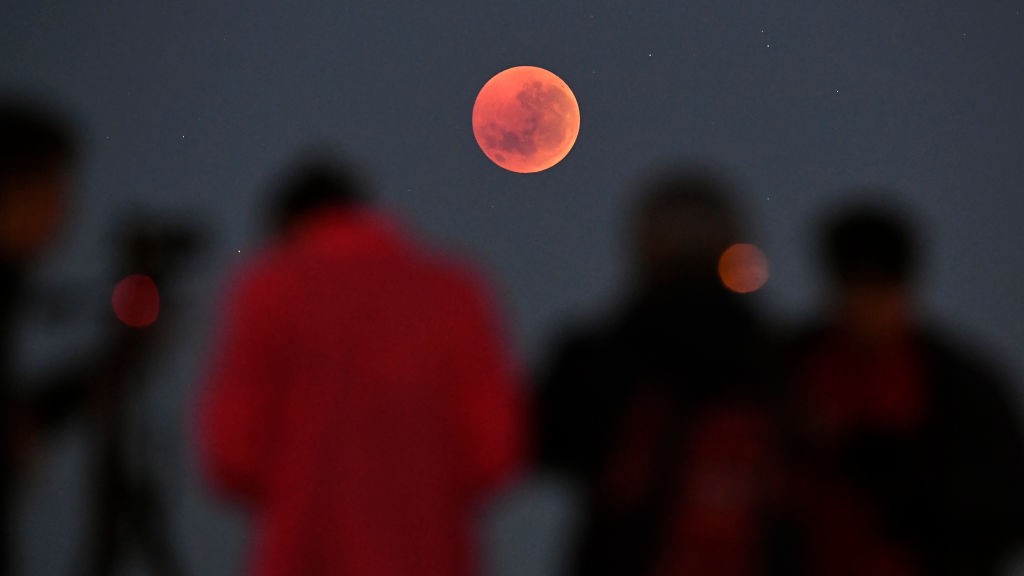
On the night of March 3, 2026, a total lunar eclipse will captivate skywatchers in India and worldwide with an unusual visual display. Unlike typical lunar eclipses that result in a dusty red hue, this event promises to transform the Moon into a striking navy blue and deep crimson color. The upcoming event marks the first lunar eclipse of the year, providing a rare sight for observers.

Mechanics Behind the Red Coloration During Eclipses

The red coloration of the Moon during an eclipse is a result of Earth positioning itself directly between the Sun and the Moon. As the planet obstructs direct sunlight, its atmosphere acts as a lens that refracts light. This phenomenon, known as Rayleigh scattering, explains why the sky appears blue during the day and can lead to red hues at sunrise and sunset. When the sunlight bends around Earth, only the longer wavelengths, primarily red, reach the Moon’s surface, causing the recognized “Blood Moon” effect.

Distinct Characteristics of the Upcoming Eclipse

While the Moon typically enters Earth’s dark central shadow, known as the umbra, during total lunar eclipses, the event in 2026 is noteworthy due to the Moon’s trajectory. It will traverse the upper edge of the umbra, allowing light to pass through the upper stratosphere rather than the lower, dust-laden layers of the atmosphere. This specific alignment ensures that the light reaching the Moon is composed of ozone-filtered wavelengths, leading to a unique combination of colors not usually observable.

The Role of Ozone in Color Formation

This year’s distinctive navy blue hue is attributed to the Chappuis absorption bands, named after the French chemist James Chappuis. These bands encompass certain wavelengths where ozone molecules absorb yellow, orange, and red light, resulting in a navy blue glow. The ozone layer effectively filters out red light, permitting only blue light to shine through and creating a visually striking turquoise or navy blue fringe at the boundary of Earth’s shadow during the eclipse.

Scientific Evidence for the Color Change

The occurrence of this color phenomenon is supported by scientific evidence. Researchers have utilized satellite data and ray-tracing models to analyze how ozone influences the appearance of the Moon during an eclipse. These studies indicate that in the absence of ozone, the Moon would predominantly reflect red light. By employing spectroscopy, scientists have validated that the blue light correlates with the signature of ozone molecules. This lunar event offers a 72-hour observational window that is valuable for assessing the health of our planet’s atmosphere and ozone levels.

Significance of the 72-Hour Observation Window

The 72-hour timeframe surrounding the eclipse serves as a unique opportunity for scientists to gather data on ozone density and atmospheric clarity. During this period, the Moon acts as a mirror, reflecting critical information about the Earth’s stratospheric conditions that are often challenging to measure from the ground. This celestial event allows a fleeting glimpse into the health of our atmosphere, demonstrating the intricate relationship between Earth’s environment and the visual phenomena we experience in the sky.

Long or Short, get news the way you like. No ads. No redirections. Download Newspin and Stay Alert, The CSR Journal Mobile app, for fast, crisp, clean updates!

App Store –  https://apps.apple.com/in/app/newspin/id6746449540 

Google Play Store – https://play.google.com/store/apps/details?id=com.inventifweb.newspin&pcampaignid=web_share

Latest News

Popular Videos
