


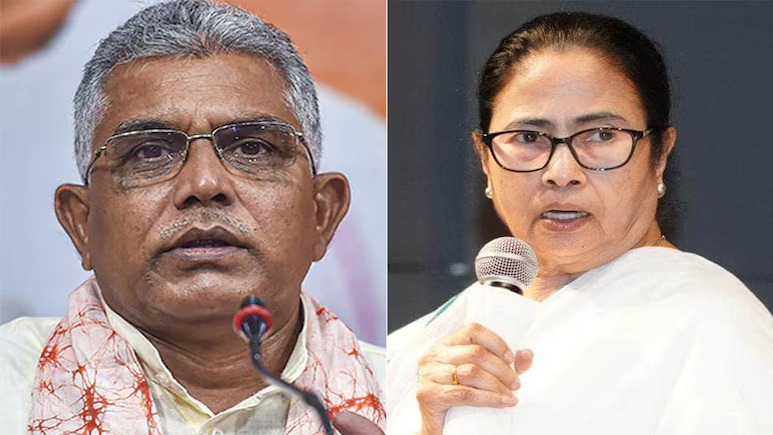

In light of ongoing disputes between West Bengal Chief Minister Mamata Banerjee and the Election Commission regarding the Special Intensive Revision (SIR), BJP leader Dilip Ghosh has stated that Banerjee seems “rattled” by the process.
Speaking to the media, Ghosh noted that the Chief Minister has previously contested the SIR by appealing to both the High Court and the Supreme Court. He remarked that she is now acknowledging the existence of approximately 1.20 crore duplicate names on the electoral rolls, which were added intentionally.
Mamata Banerjee’s Concerns Over Electoral Roll Integrity
Earlier this week, Banerjee raised alarms about the ongoing SIR, suggesting that around 1.20 crore names might be removed from the electoral rolls, which she considers a significant concern regarding democratic rights. The Chief Minister emphasized that this issue goes beyond mere party politics and encompasses various social identities within the state.
Judicial Support for Verification Process
A separate development occurred when the West Bengal government endorsed the Supreme Court’s recent ruling. This permitted the Chief Justice of the Calcutta High Court to assign additional experienced civil judges to aid in addressing the numerous objections generated in connection with the SIR.
The Supreme Court’s directives were provided by a bench led by Chief Justice Surya Kant, following concerns raised about a lack of personnel available to manage over 50 lakh objections categorized as ‘Logical Discrepancy’ within the stipulated timeframe.
Judicial Challenges in Addressing Objections
The Calcutta High Court had previously acknowledged that even with 250 judicial officers on hand, verification of these objections would take roughly 80 days to complete. This delay has added to the complexity of the ongoing SIR process in West Bengal, heightening tensions among political entities as the electoral landscape undergoes scrutiny.
Reactions from Political Leaders
Dilip Ghosh criticized Mamata Banerjee’s attempts to challenge the SIR, asserting that she has failed to make substantial progress in her legal battles. He reiterated that her apprehensions regarding the SIR signify a recognition of the scale of the discrepancies within the voter rolls. In his view, the current situation illustrates the challenges posed by the revision process, further complicating the state’s electoral dynamics.