


Loni Declared Most Polluted City Worldwide
The CSR Journal Magazine

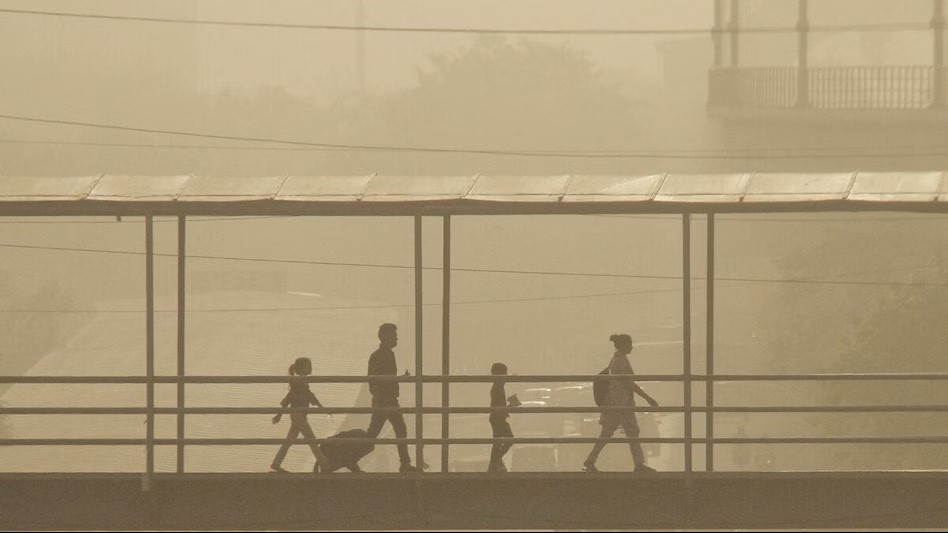
Despite its relative obscurity outside the Delhi-NCR region, Loni, an industrial town within Ghaziabad, Uttar Pradesh, has recently garnered global attention for its alarming pollution levels. According to IQAir’s 2025 World Air Quality Report, which examined data from over 9,400 cities across 143 nations, Loni ranks as the city with the worst air quality, recording an annual average PM2.5 concentration of 112.5 micrograms per cubic meter. This figure exceeds the World Health Organization’s recommended safe limit by more than 22 times.

Understanding Loni’s Environmental Challenges

The interplay of geographical factors and local emissions contributes to the severe air quality crisis facing Loni. Situated in the Indo-Gangetic Plain, Loni experiences meteorological conditions common in northern India, where cold winter temperatures trap pollutants close to the ground. Normally, warm air hovers over cooler layers, allowing pollutants to rise. However, during winter, this typical arrangement reverses, resulting in a layer of warm air that seals toxins near the surface.

In addition to these geographical constraints, Loni is burdened by a high volume of vehicular emissions from the countless vehicles traveling through the area daily. The presence of industries such as brick kilns, metal processing plants, and unauthorized industrial clusters, all reliant on inexpensive and polluting fuels, compounds the problem. Furthermore, Loni experiences heavy traffic from diesel trucks acting as a transit corridor between Delhi and western Uttar Pradesh, intensifying pollution levels.

Regular construction activities contribute significantly to air pollution by generating clouds of dust, while the practice of burning waste, including plastics, adds to the harmful emissions. As a result, Loni’s air is filled with a toxic mixture of gases that negatively impacts the health of its over 700,000 residents.

Air Quality Data Overview

The UP Pollution Control Board (UPPCB) has released alarming findings regarding air quality in Loni and surrounding areas like Bulandshahr and Sahibabad. Data indicates that air quality levels in these nearby industrial zones fluctuate significantly throughout the year. During the summer of 2025, the air quality index (AQI) at nearby monitoring stations remained within the “Moderate” to “Satisfactory” range, briefly dipping to 72 in July due to monsoon rains that help clear the air.

However, a stark increase in pollution levels was observed as winter set in. By November 2025, Sahibabad recorded an AQI of 321, placing it firmly in the “Very Poor” category, where even healthy individuals face potential respiratory risks due to extended exposure. December recorded similarly concerning levels with an AQI of 289. Although air quality improved slightly in January and February 2026, conditions remained in the “Moderate-to-Poor” range.

This deterioration is attributed to a combination of factors, including cold air trapping fine particulate matter (PM10 and PM2.5) close to the ground, along with ongoing issues such as crop stubble burning, dust from construction activities, and emissions from local industries. For Loni’s inhabitants, this daily confrontation with hazardous air quality has become a grim reality they have learned to accept, as they navigate the challenges posed by their environment.

Long or Short, get news the way you like. No ads. No redirections. Download Newspin and Stay Alert, The CSR Journal Mobile app, for fast, crisp, clean updates!

App Store –  https://apps.apple.com/in/app/newspin/id6746449540 

Google Play Store – https://play.google.com/store/apps/details?id=com.inventifweb.newspin&pcampaignid=web_share

Latest News

Popular Videos
