


app-store-logo
play-store-logo
March 17, 2026

King Mohammed VI Leads Spiritual Laylat ul Qadr Vigil at Rabat’s Royal Palace
The CSR Journal Magazine

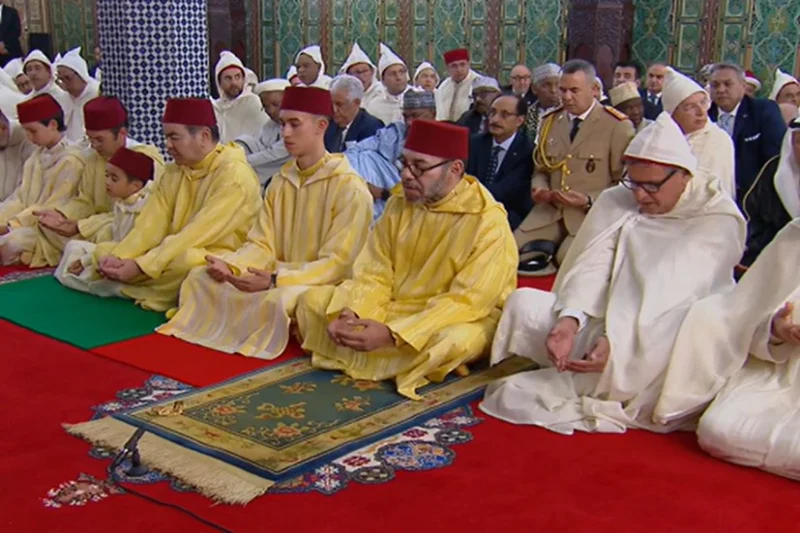
The sacred night of Laylat ul Qadr, considered the holiest in the Islamic calendar, was observed with profound spiritual fervor at Morocco’s Royal Palace in Rabat. King Mohammed VI presided over a solemn vigil that brought together members of the royal family, prominent religious leaders, government officials, and diplomats.

The event marked the Night of Power, celebrated during the closing days of Ramadan. This vigil reaffirms Morocco’s longstanding tradition of royal involvement in religious observances. As the “Commander of the Faithful,” a title historically held by Moroccan rulers, King Mohammed VI plays a pivotal role in fostering Islamic scholarship and leading national religious events.

Royal Family’s Presence and Ceremonial Highlights

During the vigil, King Mohammed VI was joined by key members of the royal lineage, including Moulay Hassan, Moulay Rachid, and Prince Moulay Ahmed, symbolizing the unity of the monarchy with the nation’s religious practices. The program commenced after the Isha and Taraweeh prayers and featured readings of sacred texts as well as religious discourses from esteemed Islamic scholars.

One focal point of the evening was the formal completion of the recitation of the Sahih al-Bukhari Hadith collection, a notable tradition during Moroccan religious ceremonies that signify the conclusion of Ramadan. Esteemed scholars conducted the recitations and led prayers seeking blessings for the Moroccan nation and its leaders.

Acknowledging Quran Scholars and Young Talents

A key feature of the Laylat ul Qadr vigil was the recognition of exceptional contributors to Quranic scholarship and educational initiatives. King Mohammed VI personally honored young Zaid El Bakkali, a 10-year-old Quran memoriser from Sale, acknowledging his outstanding commitment to memorizing the Holy Quran. This recognition underlines Morocco’s dedication to promoting Islamic education among the youth and preserving its rich educational traditions.

The ceremony also included the presentation of several prestigious awards, such as the Mohammed VI Prize for Quranic Schools and the Mohammed VI Prize for Ahl Al-Qur’an and Ahl Al-Hadith. Religious educators and scholars from various cities across the nation were acknowledged for their contributions to Islamic teaching, mosque leadership, and Quran recitation.

The Significance of Laylat ul Qadr

Laylat al-Qadr, often referred to as the “Night of Power” or “Night of Destiny,” is believed by Muslims to mark the night when the first verses of the Quran were revealed to the Prophet Muhammad in the Cave of Hira near Mecca. The Quran describes this night as “better than a thousand months,” signifying the immense spiritual rewards for acts of worship performed on this occasion.

Although the exact date remains ambiguous, Muslims strive to observe it during the odd nights of the last ten days of Ramadan. Globally, millions of worshippers engage in prayer and Quran recitation during this significant night in hopes of receiving divine mercy and blessings.

Cultural Observations in Morocco

In addition to spiritual observances, Laylat ul Qadr in Morocco is intertwined with cultural heritage. Families often celebrate children completing their first Ramadan fasts by dressing them in traditional garments and hosting festive meals. The festive spirit is evident as children wear jellabas and may receive henna designs.

Some families even conduct symbolic ceremonies dressing children in bridal or groom-like outfits. These customs highlight the community-oriented and celebratory aspects of Ramadan within Moroccan society. The royal vigil held in Rabat embodies not only religious but also national significance, reinforcing the monarchy’s commitment to preserving Islamic traditions.

Political and Religious Leadership in Morocco

The vigil attracted distinguished guests, including high-ranking officials, government ministers, parliamentary leaders, and representatives from various Islamic nations, highlighting Morocco’s diplomatic and cultural connections within the Muslim world. The event also included prayers for past Moroccan monarchs, acknowledging their significant contributions to the nation’s current state and religious institutions.

The monarchy’s unique religious status in Moroccan politics positions the king as a protector of Islam and a unifying figure. Initiatives fostering moderate Islamic teachings and education illustrate the Moroccan state’s dedication to combating extremism and enhancing religious knowledge.

A Sacred Observance of Faith

As the vigil concluded, participants gathered to pray for the nation’s prosperity and stability, seeking divine guidance. Laylat ul Qadr remains a deeply revered moment for Muslims globally. In Morocco, the royal-led vigil stands out as a significant national observance of this sacred night, reinforcing the bond between faith, culture, and leadership within Moroccan society.

Long or Short, get news the way you like. No ads. No redirections. Download Newspin and Stay Alert, The CSR Journal Mobile app, for fast, crisp, clean updates!

App Store –  https://apps.apple.com/in/app/newspin/id6746449540 

Google Play Store – https://play.google.com/store/apps/details?id=com.inventifweb.newspin&pcampaignid=web_share

Latest News

Popular Videos
