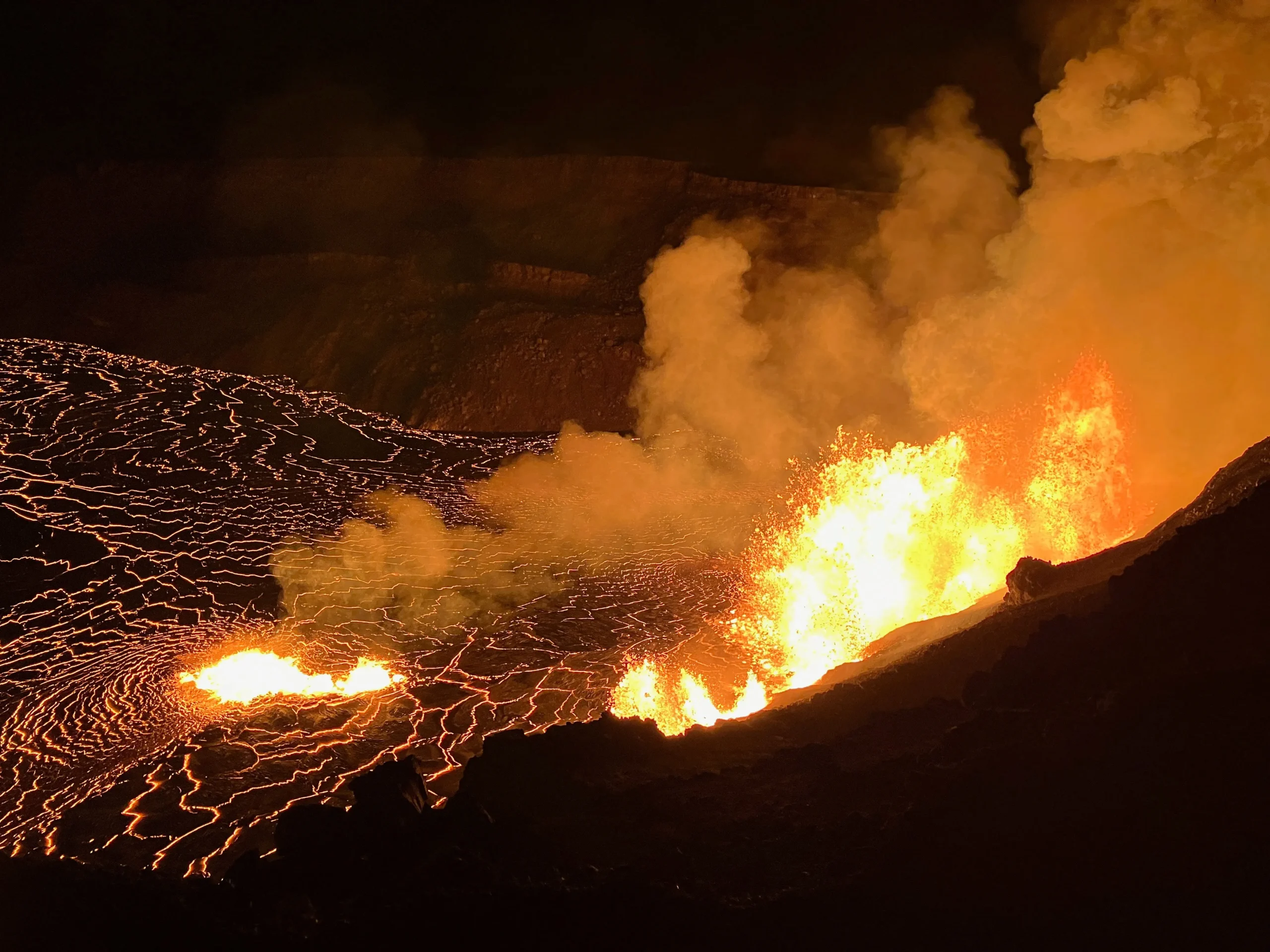
The Kilauea volcano in Hawaii, known for its frequent activity, has entered Episode 42 of its ongoing summit eruption, enchanting spectators worldwide via live webcam feeds. This phenomenon commenced at 5:20 a.m. IST on February 16, 2026, within the Halemaumau crater, as part of an eruption series that began on December 23, 2024.
Real-Time Streaming Available
Multiple pan-tilt-zoom webcams operated by the USGS Hawaiian Volcano Observatory offer real-time visuals of the eruption. Viewers can access feeds from various angles, including V1 (west rim), V2 (east rim), and V3 (south rim), all available on YouTube. These cameras adjust automatically, showcasing dual lava fountains that reach heights exceeding 1,000 feet (300 meters), accompanied by robust heat emissions, ash plumes soaring up to 35,000 feet, and a remarkable glow visible at night.
Daytime Observations
During daylight hours, streams reveal northeast winds transporting gas and tephra southwestward near ground level, while higher winds carry volcanic material eastward. So far, there have been no reports of ashfall in surrounding areas. Since late 2024, Kilauea has experienced a total of 42 episodic fountaining events, each lasting a day or less on average, with periods of recharge such as the recent 19-day break following Episode 41.
Magma Activity and Gas Emissions
Ongoing magma inflation is monitored through tiltmeters and seismometers, indicating an underground replenishment process. Sulfur dioxide emissions have surged to between 50,000 and 100,000 tonnes per day during peak activity, contributing to volcanic smog, commonly referred to as vog. All volcanic activity has been contained within the summit caldera, thus reducing the risk posed to nearby communities.
Health Precautions Advised
Authorities have issued warnings regarding potential hazards from smog and ash, which can affect respiratory health. Lightweight tephra, including ash and a variety of volcanic glass known as Pele’s hair, which consists of thin, golden-brown strands formed from cooling lava, can travel significant distances downwind. The volcano remains at an alert level of WATCH, signifying elevated unrest, with an ORANGE aviation code due to the substantial ash plume.
Continuous Monitoring and Updates
The Hawaiian Volcano Observatory is collaborating closely with park rangers and civil defense authorities to ensure public safety and provide timely updates through their website. Kilauea’s eruptive activity offers a fascinating glimpse into the region’s dynamic geology, attracting both scientists and enthusiasts who are keen to observe the live unfolding of Episode 42.