


app-store-logo
play-store-logo
February 13, 2026

Khausa: The Gujarati Adaptation of Burmese Khow Suey Emerges as a Culinary Icon
The CSR Journal Magazine

The evolution of food transcends geographical boundaries, often reflecting the cultural exchanges that accompany migration and trade. One noteworthy example is khausa, a Gujarati interpretation of the Burmese dish Khow Suey. In the early 20th century, Gujarati Memon merchants from regions like Sindh and Kutch actively engaged in trade with British Burma, transporting various goods across the Bay of Bengal. During this period, they encountered “ohn no khao swe,” a beloved coconut milk noodle soup that served as a comfort food for many Burmese families. The rich flavors of this dish would eventually be woven into the fabric of Gujarati cuisine.

From Burma to Gujarat

The political changes following India’s Partition in 1947 and Burma’s independence in 1948 led to significant displacements within the South Asian diaspora. Many Gujarati Memons returned to western India, bringing back with them not only memories and business connections but also culinary traditions, including the comforting coconut noodle soup they had enjoyed in Burma. Upon its introduction in Gujarat, the dish began its transformation, adapting to local tastes and ingredients.

A Unique Gujarati Twist

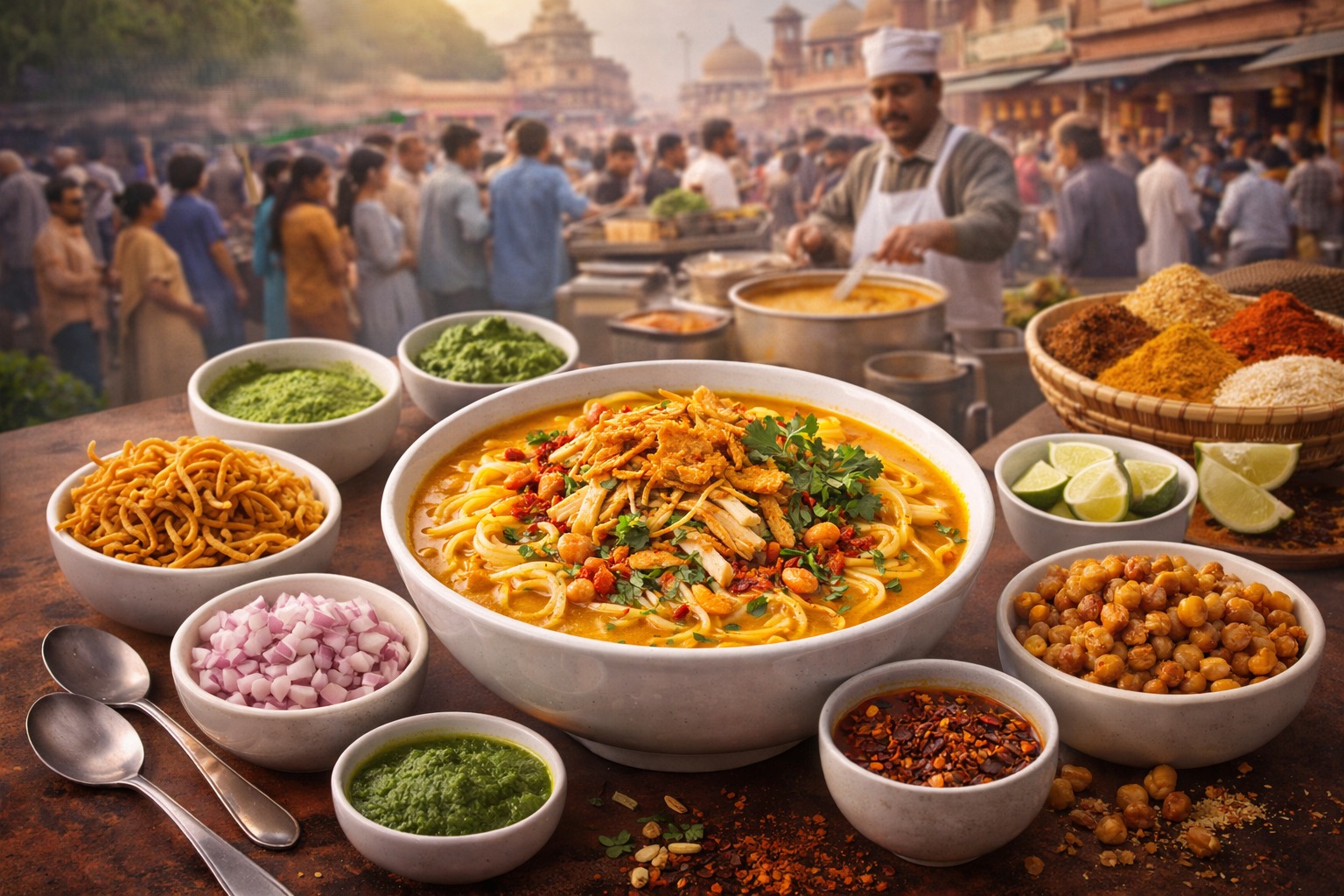
In its original format in Burma, Khow Suey primarily featured egg noodles in a coconut milk-based curry, typically enriched with chicken or meat and accompanied by garnishes such as fried onions, boiled eggs, lime, and fresh herbs. However, upon arriving in Gujarat, khausa took on a distinctive character tailored to local preferences. The coconut broth became denser, incorporating gram flour and yogurt, while crunchy elements like papdi were added. Additionally, crushed peanuts and spicy chutneys introduced layers of heat and tang to the dish. Over time, khausa established itself as a beloved breakfast staple and a popular snack option.

Khausa: A Popular Street Food

The transition from international dish to local street food took considerable time, but today, khausa is a beloved street food throughout Surat. Numerous modest shops dedicated to serving khausa can be found in almost every neighborhood, with prices starting as low as Rs 20. Each vendor offers a unique interpretation of the dish; some emphasize a flavorful tomato-forward gravy, others maintain a rich coconut base, while a few integrate yogurt for added creaminess. Although non-vegetarian varieties exist, the vegetarian version continues to dominate the streets of Surat.

Khausa at the Ambani Wedding

In high-profile social events, local favorites often make an appearance. At the recent pre-wedding celebrations for Anant Ambani and Radhika Merchant in Jamnagar, khausa was featured on the menu. Renowned Surati vendor Raj Khavsa delighted guests with servings of this iconic dish, showcasing its cultural significance even in lavish settings. For those visiting Gujarat, trying a bowl of khausa provides an opportunity to embrace the region’s rich culinary heritage.

Long or Short, get news the way you like. No ads. No redirections. Download Newspin and Stay Alert, The CSR Journal Mobile app, for fast, crisp, clean updates!

Latest News

Popular Videos
