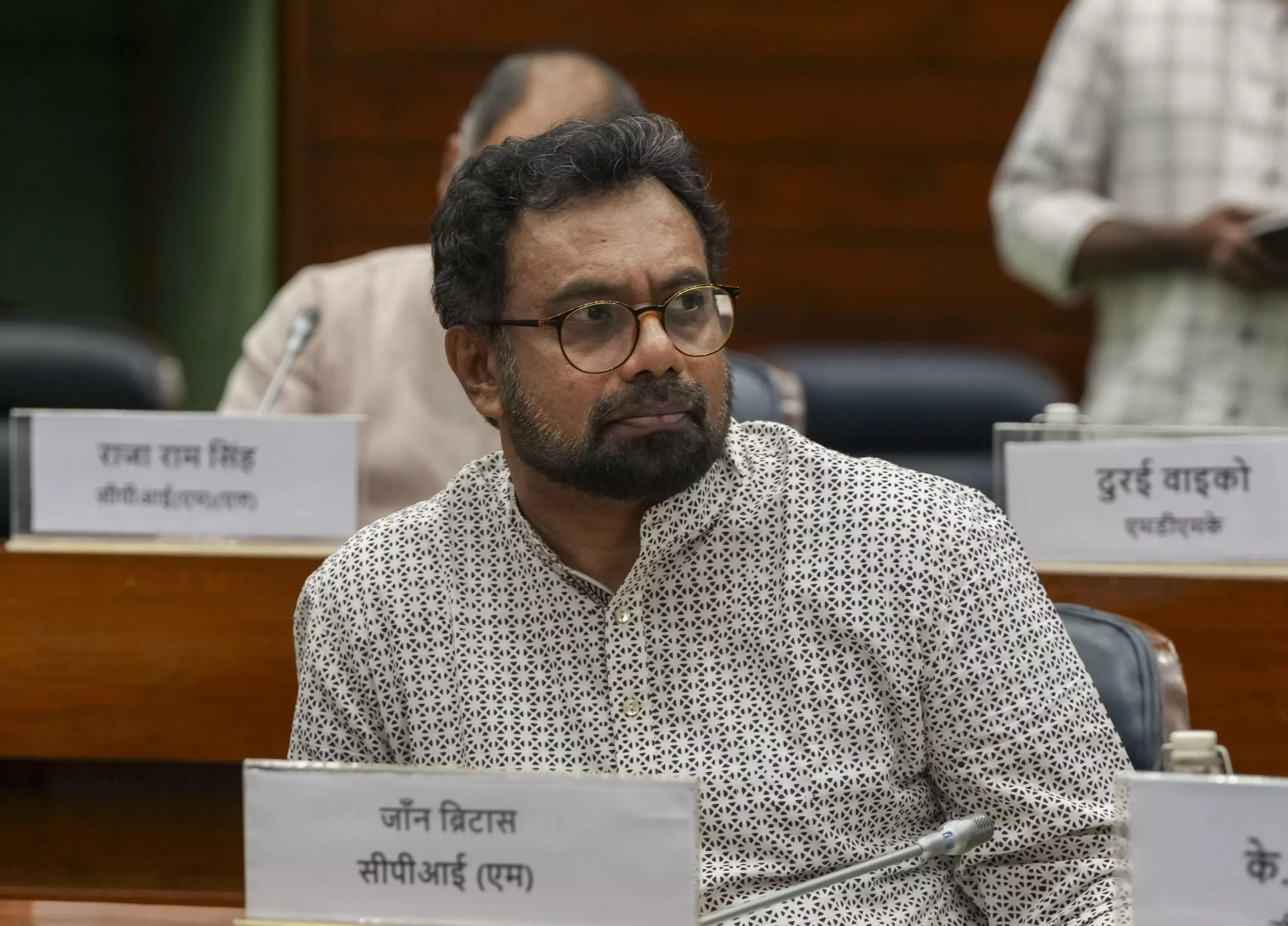
Communist Party of India-Marxist member of Parliament John Brittas has voiced concerns regarding the newly established Interim Trade Agreement between India and the United States, alleging that numerous Bharatiya Janata Party leaders are dissatisfied with the terms. In a discussion, Brittas accused the government of succumbing to US pressures and described the trade agreement as unfavorable for the nation.
Brittas remarked that frequent disruptions and delays in Parliament are a direct consequence of the ruling party’s agenda, asserting that the government is determined to dominate the legislative process. He stated, “Many BJP leaders are unhappy with the deal… see this great country, which we claim to be the mother of democracy, has gone by the dictates of the United States.” He expressed strong concerns about the discrepancy in tariff rates proposed in the agreement, questioning the logic behind developing countries having to eliminate trade barriers while developed nations impose additional tariffs.
Earlier this month, India and the United States announced a framework for the Interim Agreement focused on reciprocal trade benefits. The framework is intended to bolster the ongoing Bilateral Trade Agreement negotiations initiated by former President Donald Trump and Prime Minister Narendra Modi in February 2025. As part of this agreement, India is set to reduce or eliminate tariffs on various US industrial goods and agricultural products.
Additionally, the framework stipulates that the United States will implement an 18 percent tariff under Executive Order 14257 on goods originating from India. These goods include textiles, leather products, organic chemicals, and more. The agreement also mentions potential tariff removals on certain Indian goods, such as generic pharmaceuticals and aircraft parts, following the successful conclusion of the Interim Agreement.
In addressing other parliamentary matters, Brittas criticized the government’s refusal to allow discussions on former Army Chief NN Naravane’s unpublished book, suggesting that such discussions are essential for maintaining a healthy parliamentary discourse. He emphasized that the onus of ensuring smooth parliamentary operations lies with the government and lamented the limited engagement around significant issues.
Brittas expressed disappointment with the current state of parliamentary discussions, urging that opposition voices must also be heard. He questioned the government’s hesitance regarding various topics, stating, “What is the harm in discussing Manipur? What is the harm in discussing the Epstein files?” His remarks came amid repeated disruptions in the Lok Sabha linked to Congress leader Rahul Gandhi’s intention to introduce a reference from Naravane’s book, while the Rajya Sabha also faced tensions between government and opposition members.
The budget session of Parliament began concluding its first part on February 13, with the second part scheduled to commence on March 9. As the session progresses, the dynamics between the government and the opposition continue to shape the discourse surrounding key issues affecting the nation.