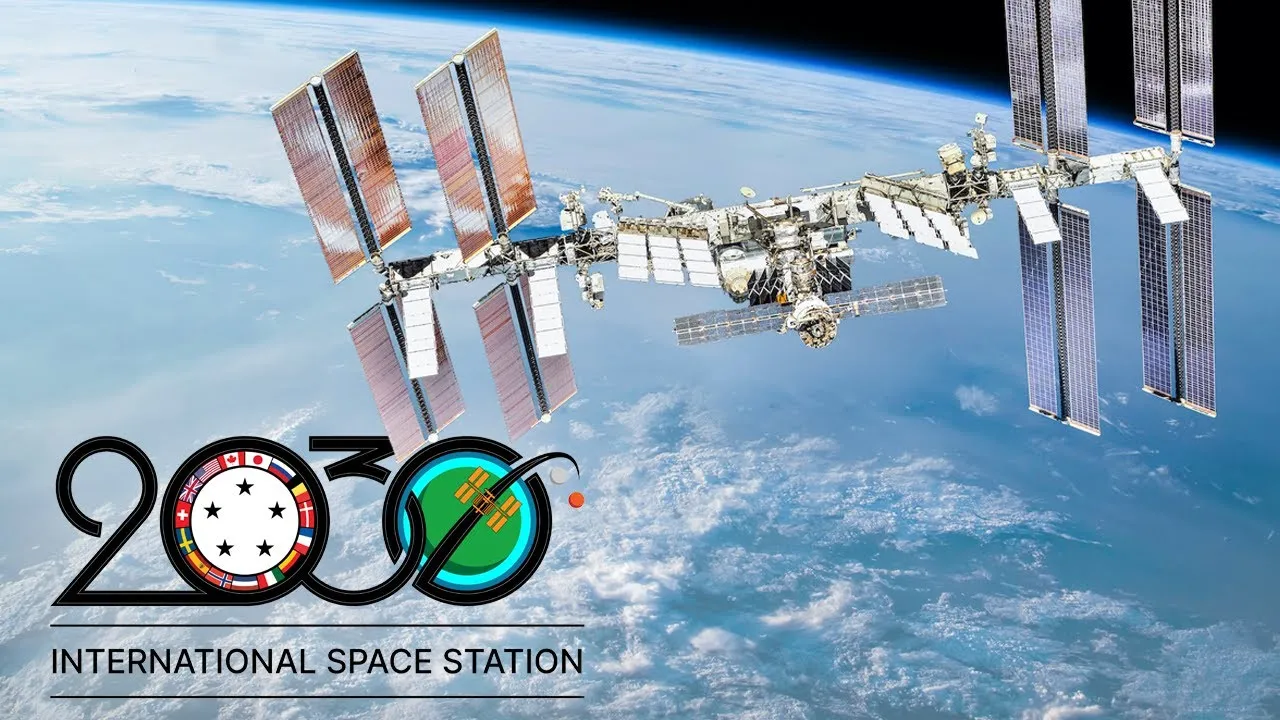
The International Space Station (ISS), a collaborative project that has symbolized international cooperation and scientific advancement in space, is approaching the conclusion of its three-decade-long mission. Launched in 1998, the ISS will mark the end of its operational tenure in 2030, marking a significant transition in the history of human presence in outer space.
ISS: A Milestone in Space Exploration
Since becoming operational in the year 2000, the ISS has served as a unique microgravity laboratory for astronauts and researchers from across the globe. Over the years, it has facilitated thousands of scientific experiments in areas such as biology, physics, and astronomy. The space station has also been a critical platform for technological testing needed for future deep space missions, including those planned for the Moon and Mars.
International Collaboration and Contributions
The ISS is a joint effort by multiple space agencies, primarily NASA (United States), Roscosmos (Russia), European Space Agency (ESA), Japan Aerospace Exploration Agency (JAXA), and the Canadian Space Agency (CSA). These agencies have jointly managed operations, logistics, and crew rotations, making it one of the most successful examples of long-term international cooperation in science and technology.
Decommissioning Timeline and Process
According to the planned timeline, the ISS will complete 30 years of service in 2030. Following that, decommissioning procedures will begin. Space agencies are discussing safe methods to retire the station, which may include lowering its orbit and steering it towards a controlled re-entry into Earth’s atmosphere. A section of the structure is expected to disintegrate during re-entry, with any remaining debris likely to fall into a designated area in the ocean, away from human habitats.
Future Plans After the ISS
Post-2030, the focus is expected to shift towards developing commercially operated space stations and preparing for deep space missions. NASA has indicated plans to transition low Earth orbit operations to private entities, while continuing to support global scientific research. Various companies have already begun designing commercial space station modules, some of which may begin operations before the ISS is fully decommissioned.
The ISS Legacy
In its 30-year lifespan, the International Space Station has hosted astronauts from over 20 countries and played a crucial role in expanding humanity’s understanding of science, health, and technology in microgravity conditions. Its retirement will mark the end of an unprecedented chapter in space exploration, making way for a new era of orbital platforms and deep space ventures.